Abstract
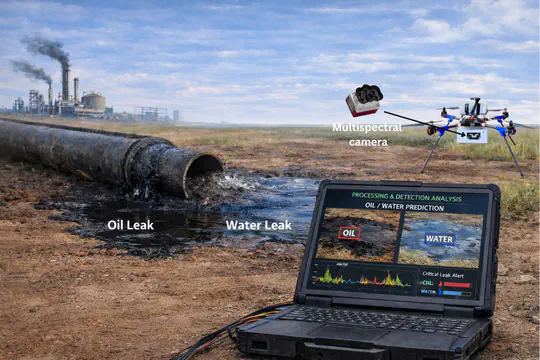
Pipeline leakages involving oil and water pose significant environmental and economic risks, motivating the need for timely and reliable surface leak detection techniques. This paper presents a proof-of-concept study that investigates the use of UAV-based multispectral imagery and deep learning for detecting and distinguishing surface oil and water leaks over soil backgrounds. Multispectral data were acquired using a UAV-mounted camera under controlled experimental conditions and processed through a multispectral processing pipeline. Spectral analysis was performed to assess band-wise separability, highlighting the effectiveness of red and red-edge bands for oil–water discrimination. Multiple deep learning object detection models, including YOLOv11, RT-DETR, Faster R-CNN, and a fusion-based YOLOv11-RGBT variant, were evaluated using red and red-edge inputs. Experimental results demonstrate that single-band models achieve robust detection performance, with YOLOv11 attaining detection accuracies of 92.8% for oil and 98.1% for water, while RT-DETR and Faster R-CNN demonstrated comparable accuracy. The fusion-based YOLOv11-RGBT model exhibited lower performance, reflecting the challenges of multispectral fusion under limited data conditions. Overall, the findings indicate that UAV-based multispectral sensing combined with deep learning provides a practical and efficient solution for localized surface leakage monitoring.
Test Setup 2: Controlled Oil–Water–Soil Patch Experiment
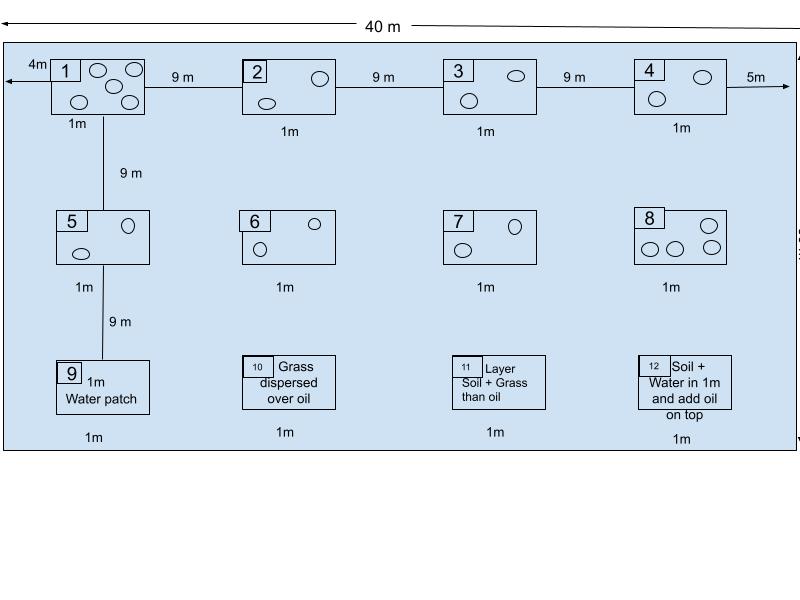
Patch-wise configuration:
- Patch 1: Five small oil patches, total oil volume 5 ml.
- Patch 2: Two oil patches, total oil volume 10 ml.
- Patch 3: Two oil patches, total oil volume 20 ml.
- Patch 4: Two oil patches, total oil volume 50 ml.
- Patch 5: One oil patch (10 ml) and one water patch (400 ml).
- Patch 6: One oil patch (25 ml) and one water patch (400 ml).
- Patch 7: One oil patch (50 ml) and one water patch (150 ml).
- Patch 8: Two oil patches (20 ml total) and two water patches (100 ml total).
- Patch 9: Soil and water covering a 1 m patch with dry soil boundaries. Spectral differentiation between oil and water was not feasible; hence this configuration was excluded from labeling.
- Patch 10: Soil layered with oil, with grass patches covering approximately 60% of the area sprinkled over the oil.
- Patch 11: Soil layered with grass patches covering approximately 60% of the area, with oil sprinkled on top.
- Patch 12: Soil and water covering a 1 m patch with dry soil boundaries and an oil patch of 25 ml.
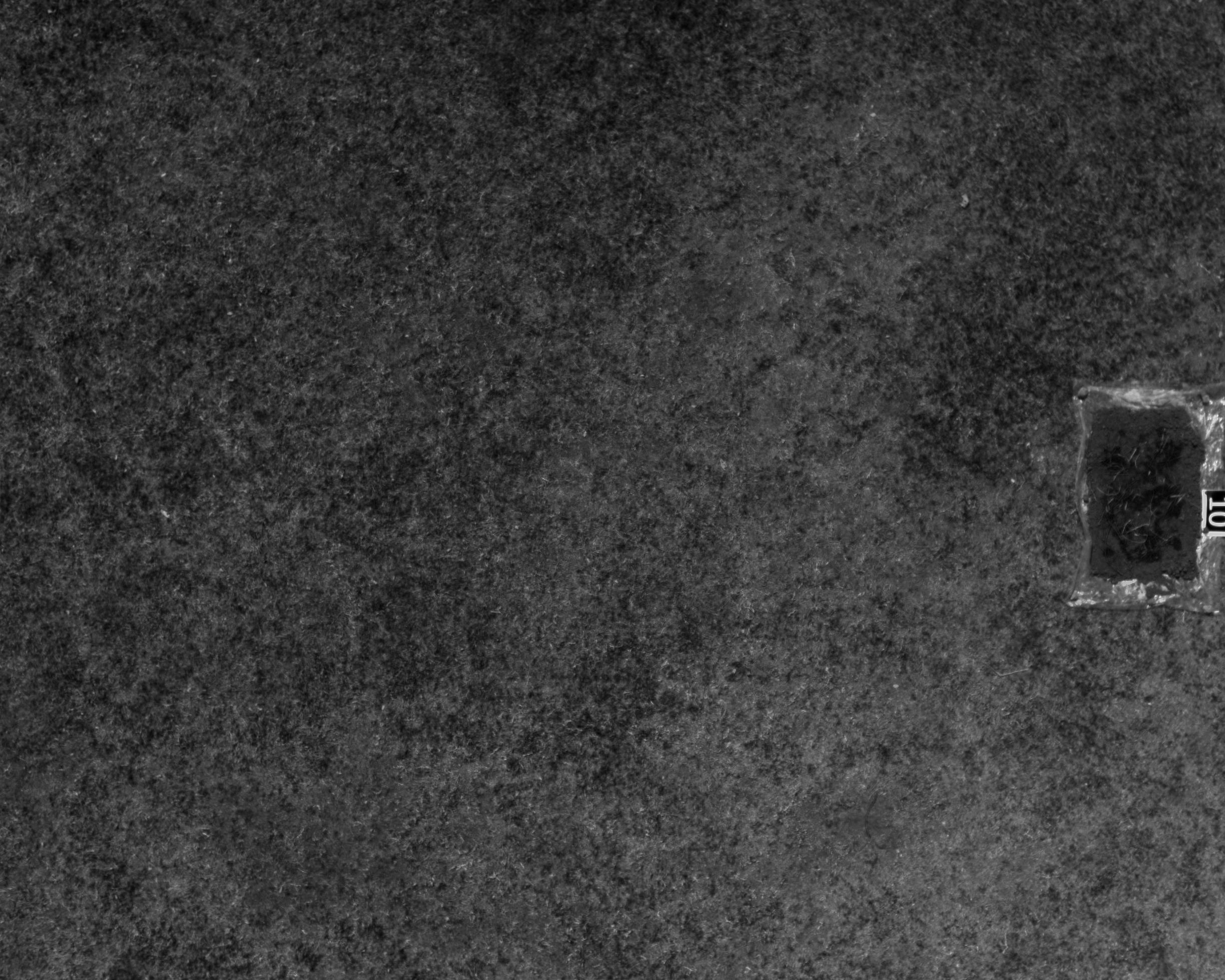
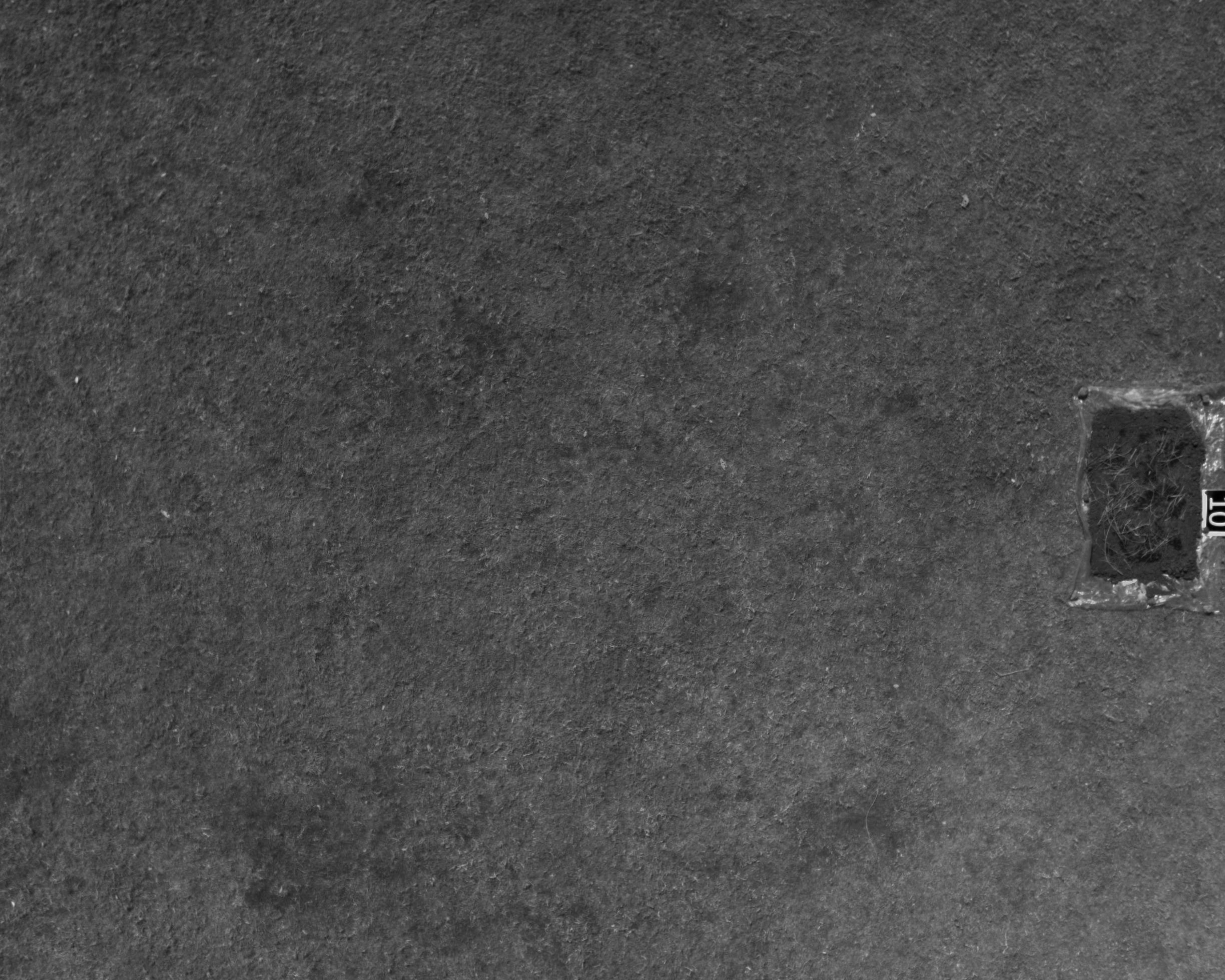
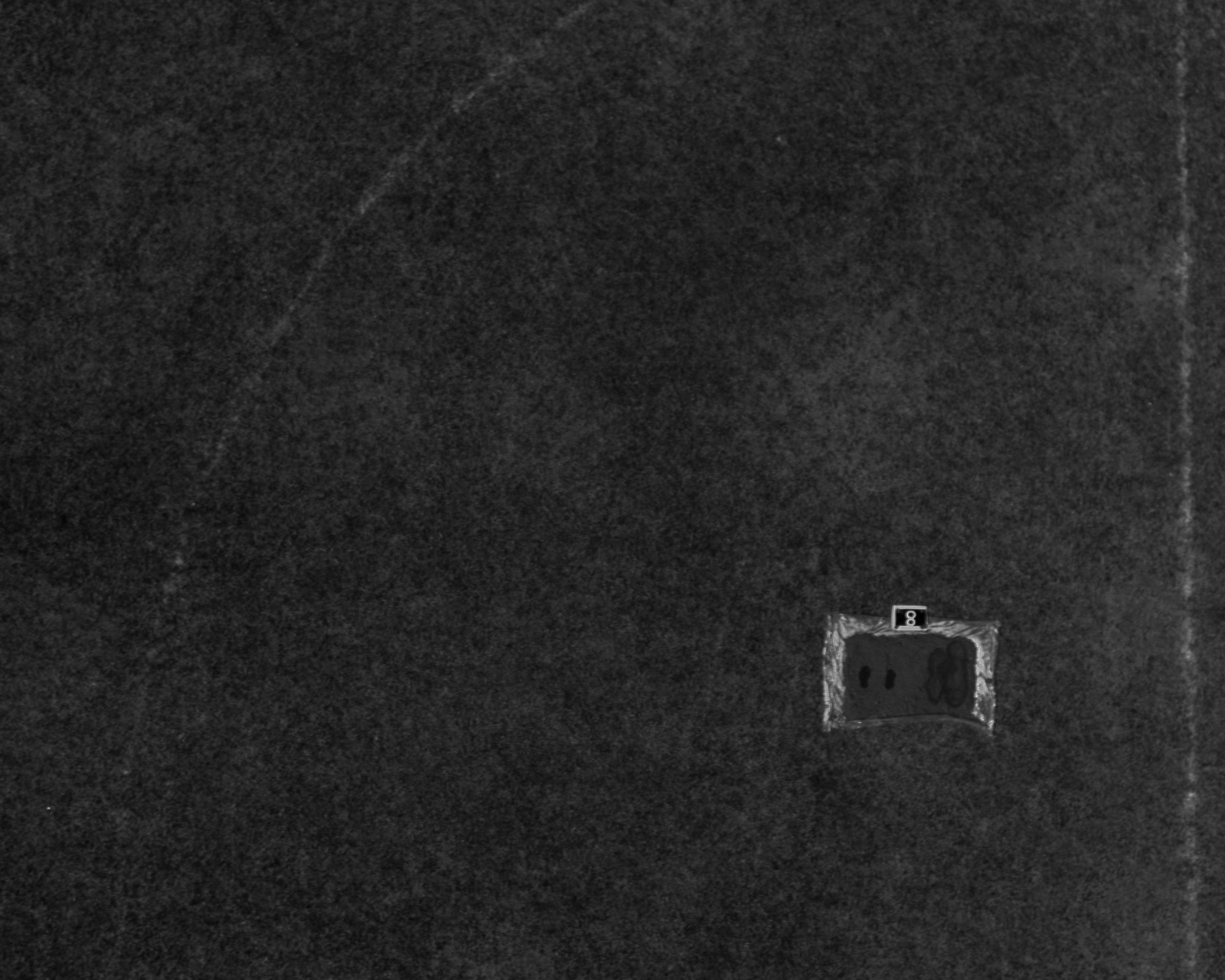
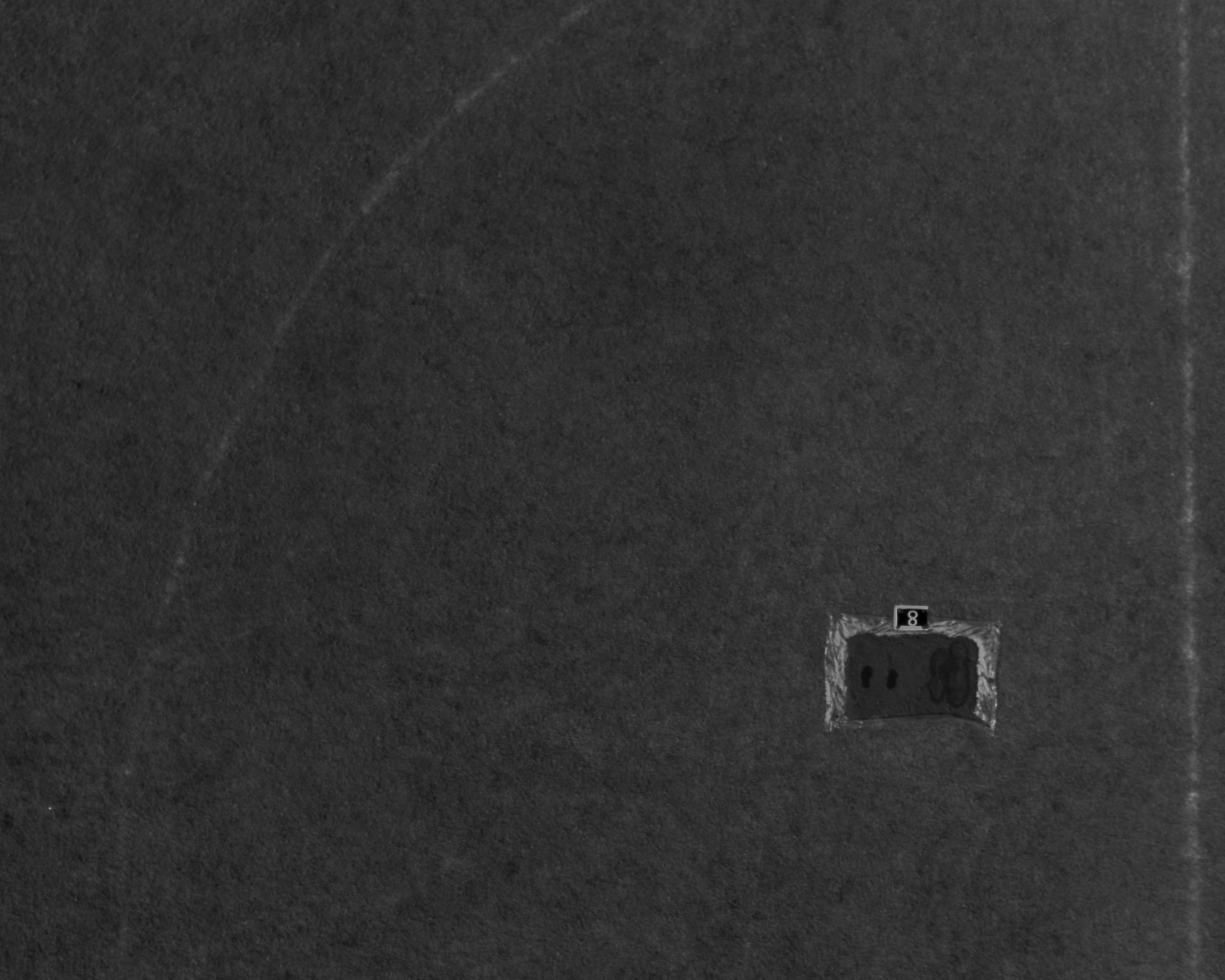
Test Images
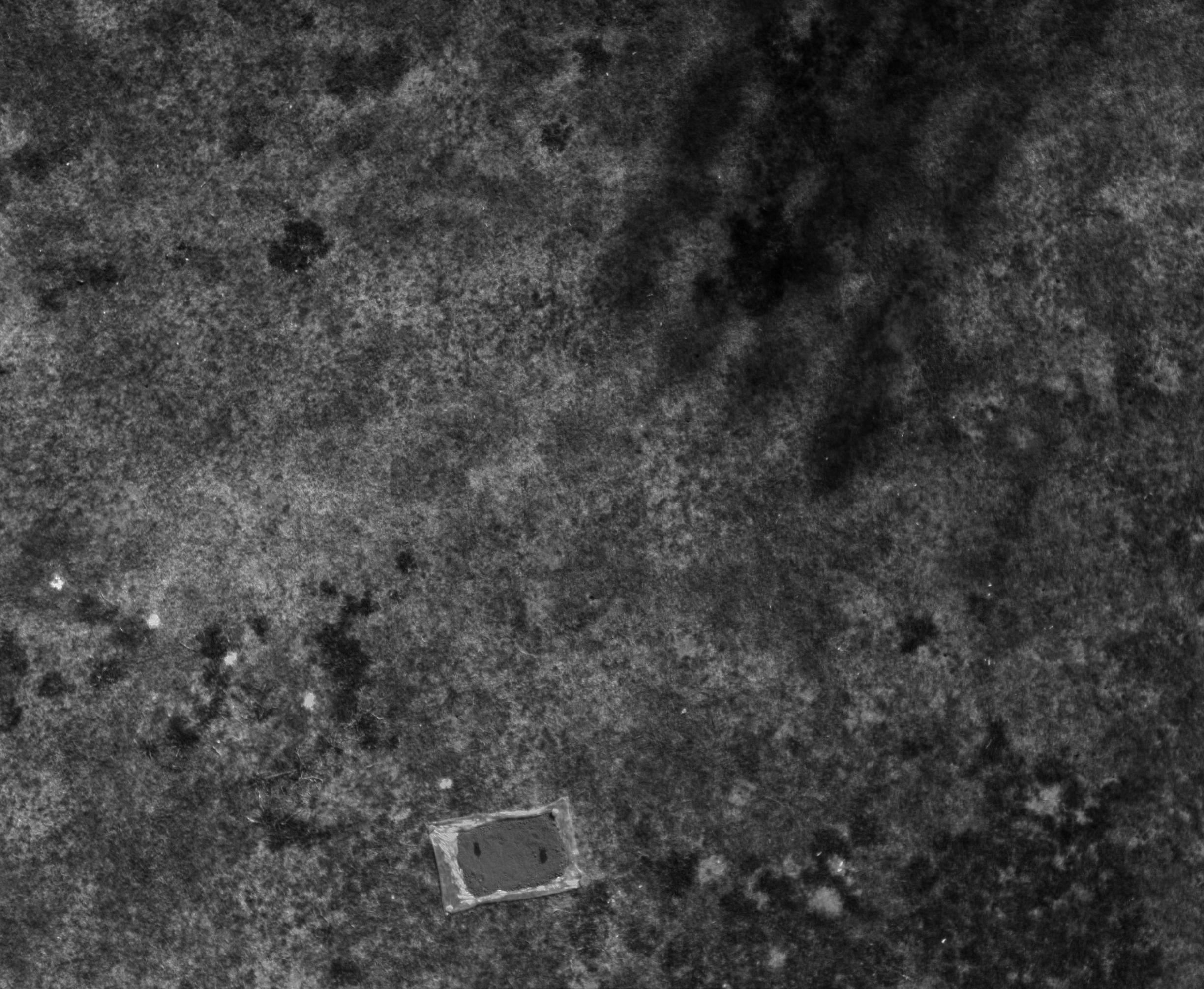
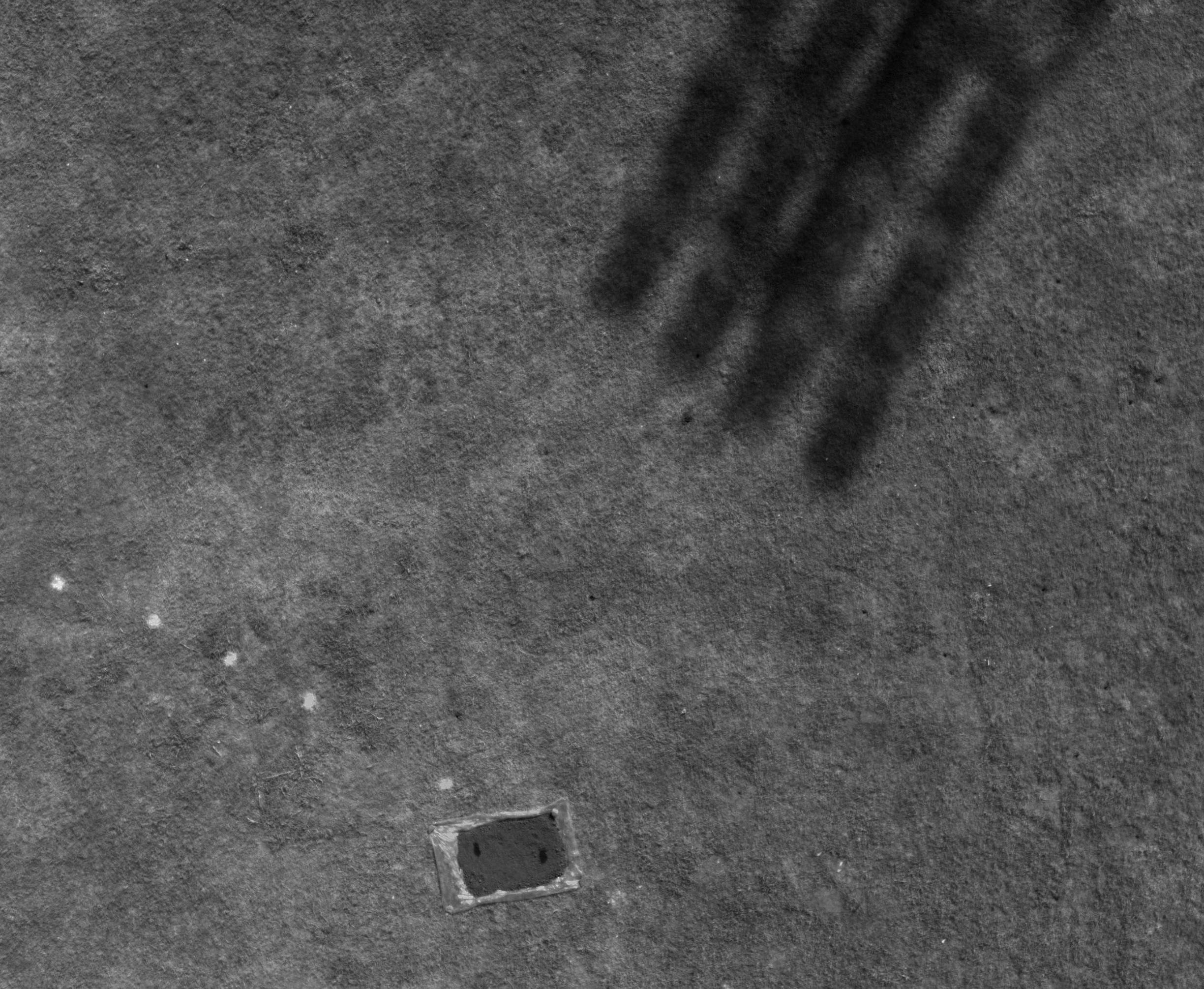
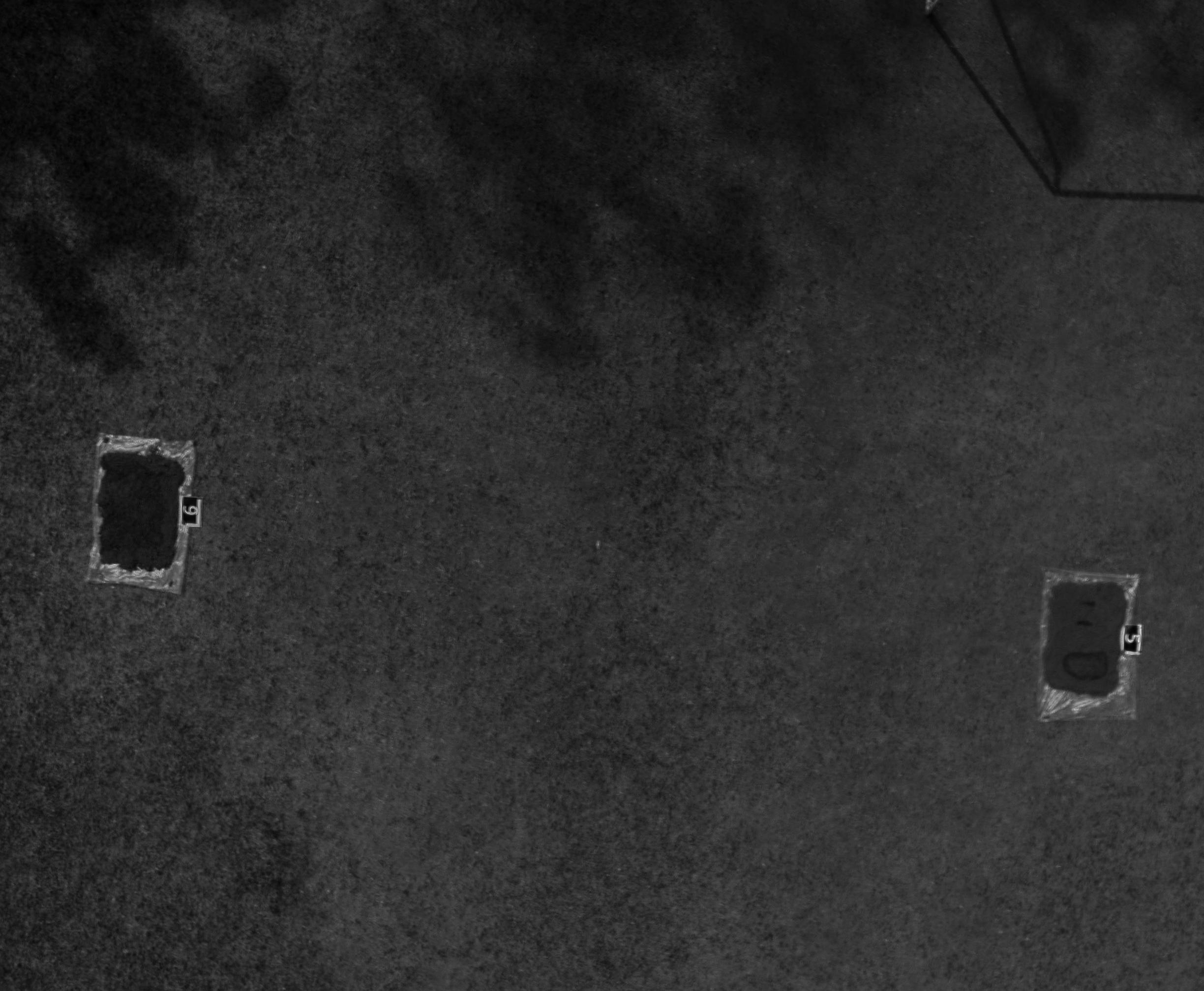
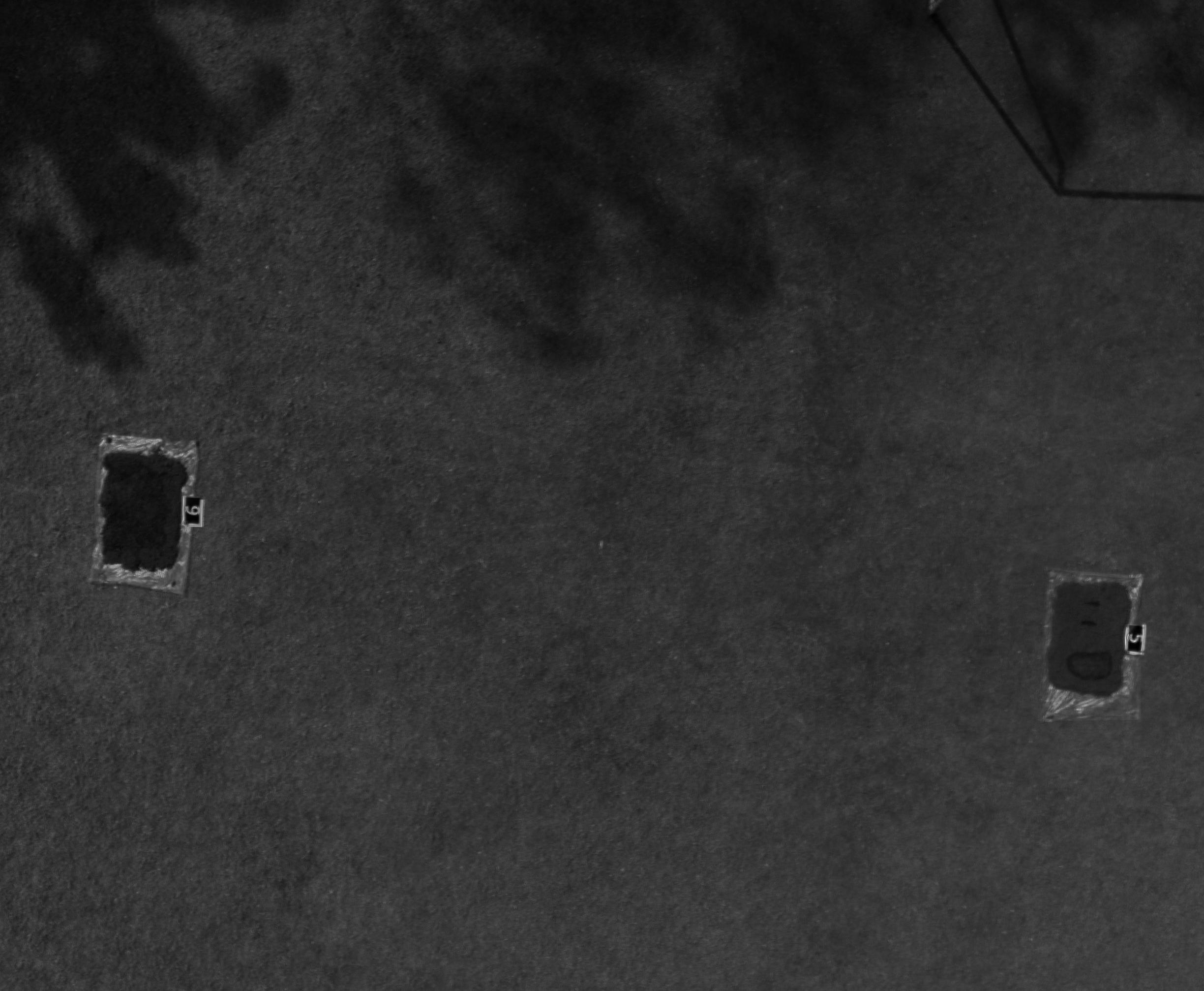
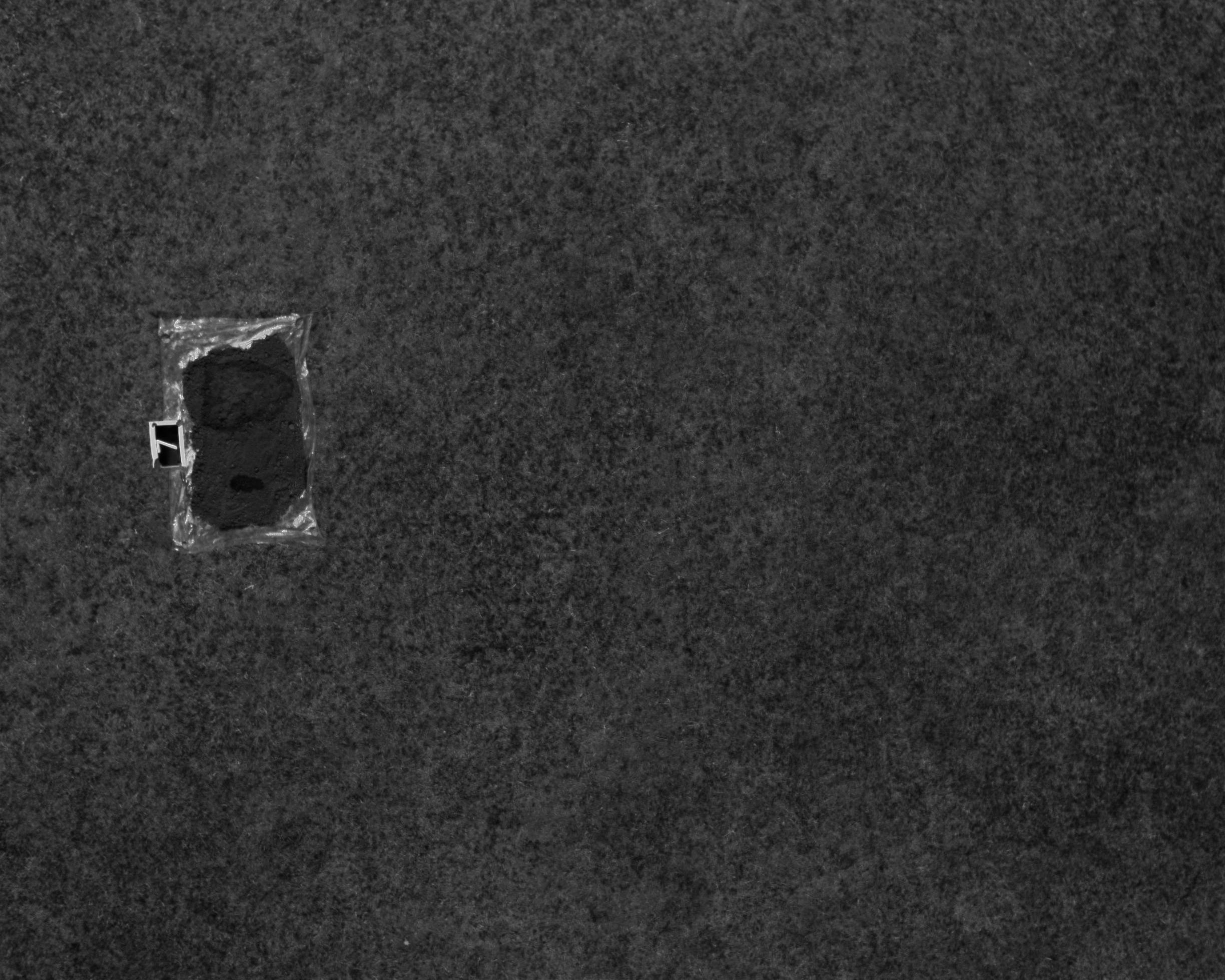
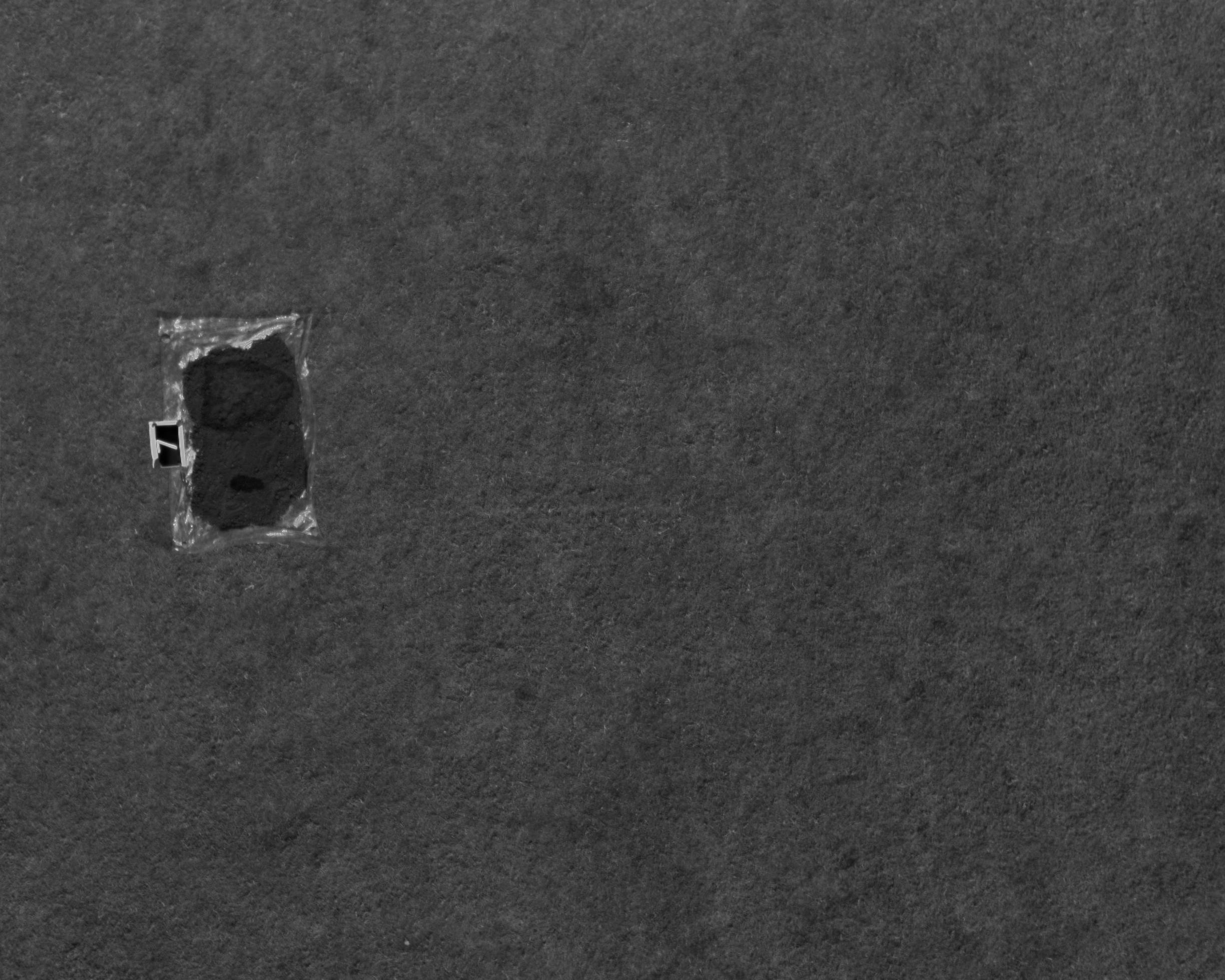
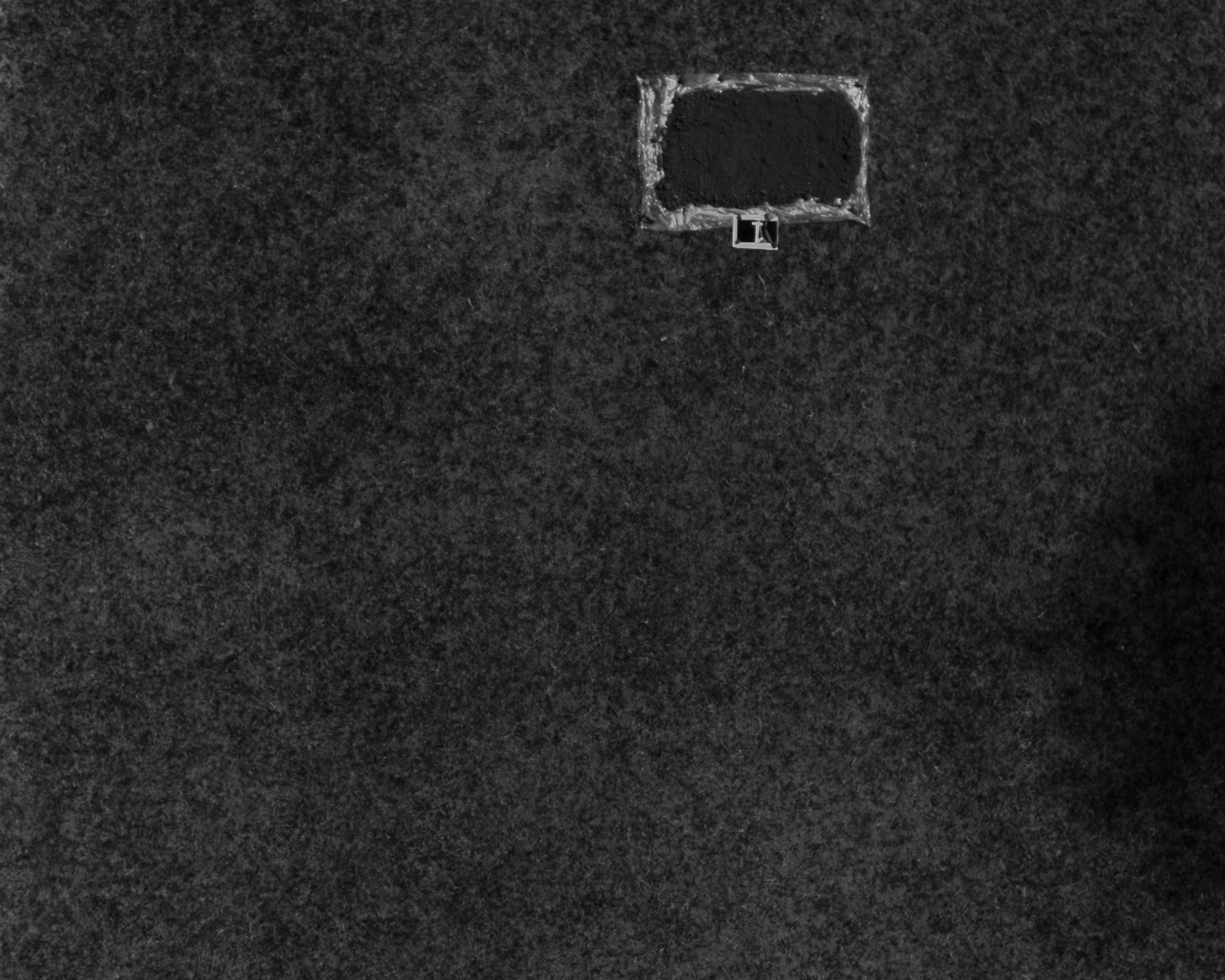
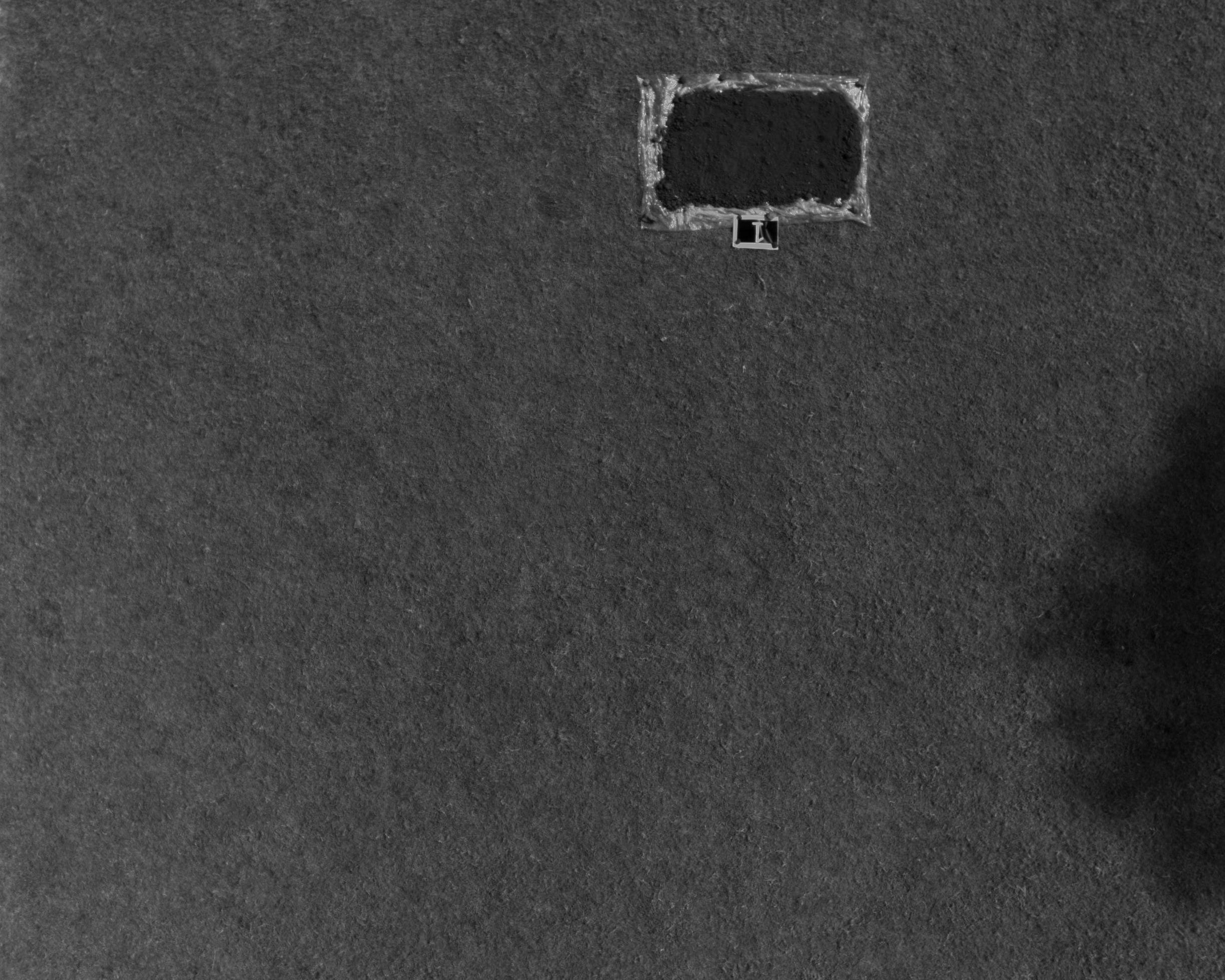
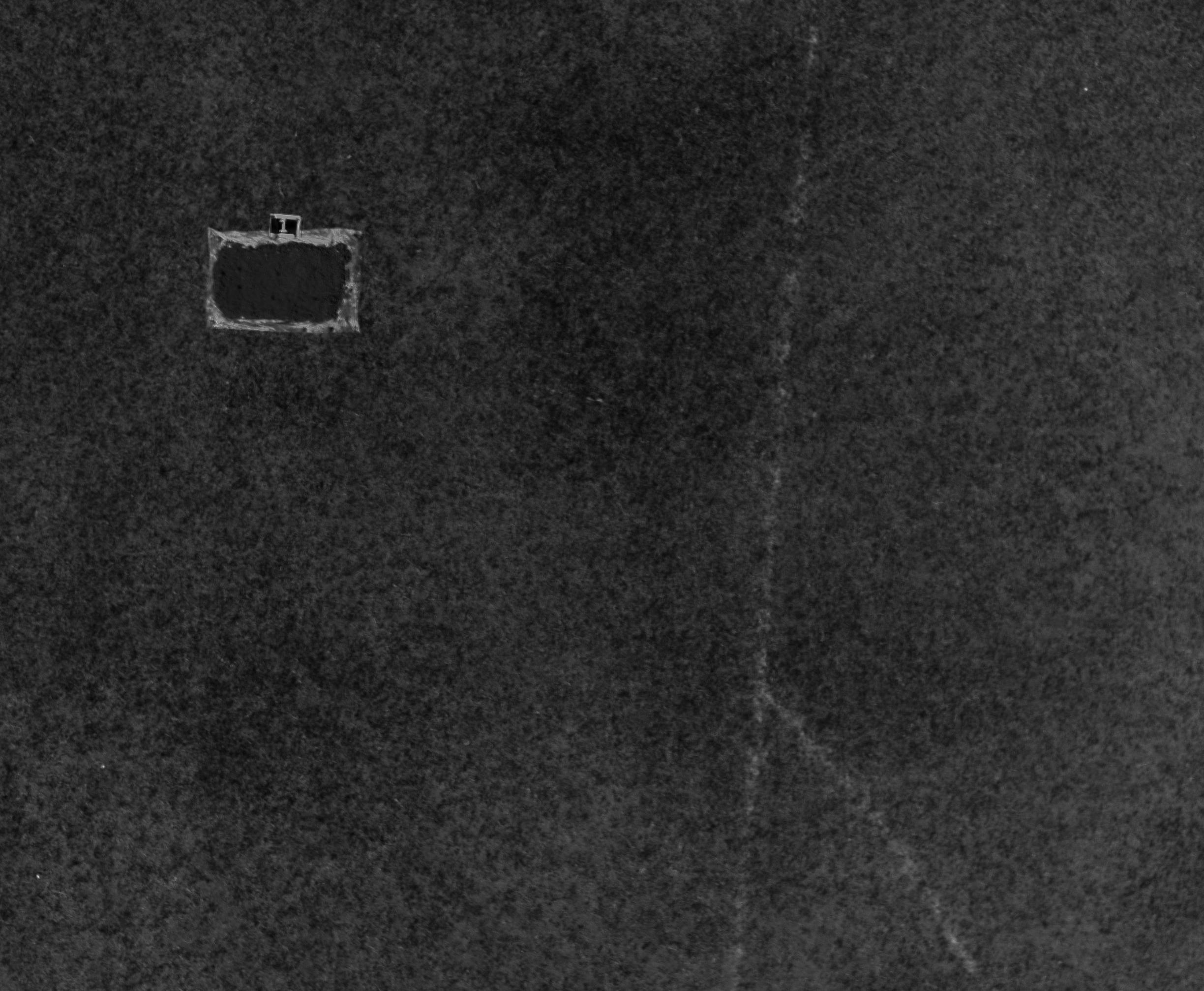
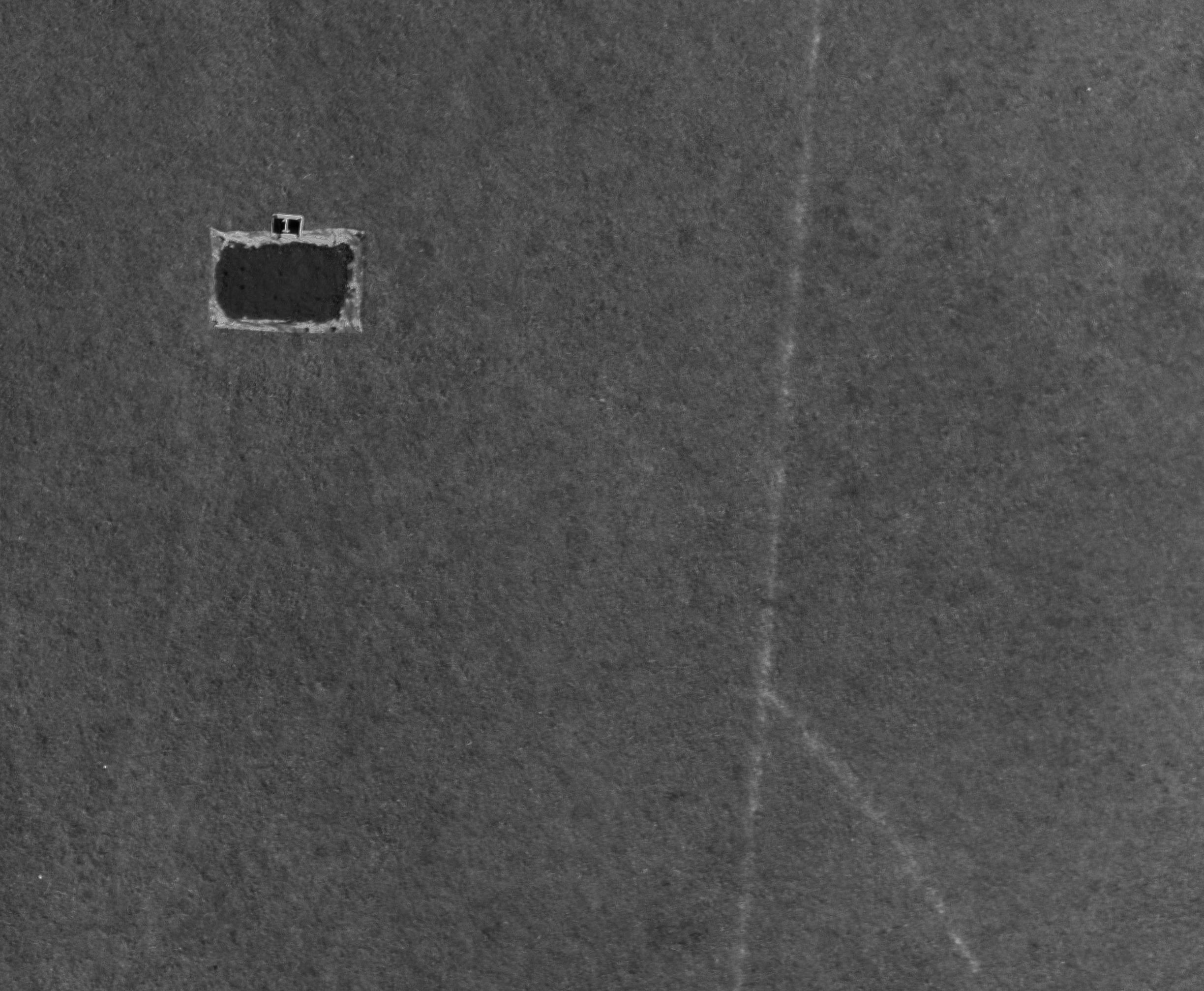
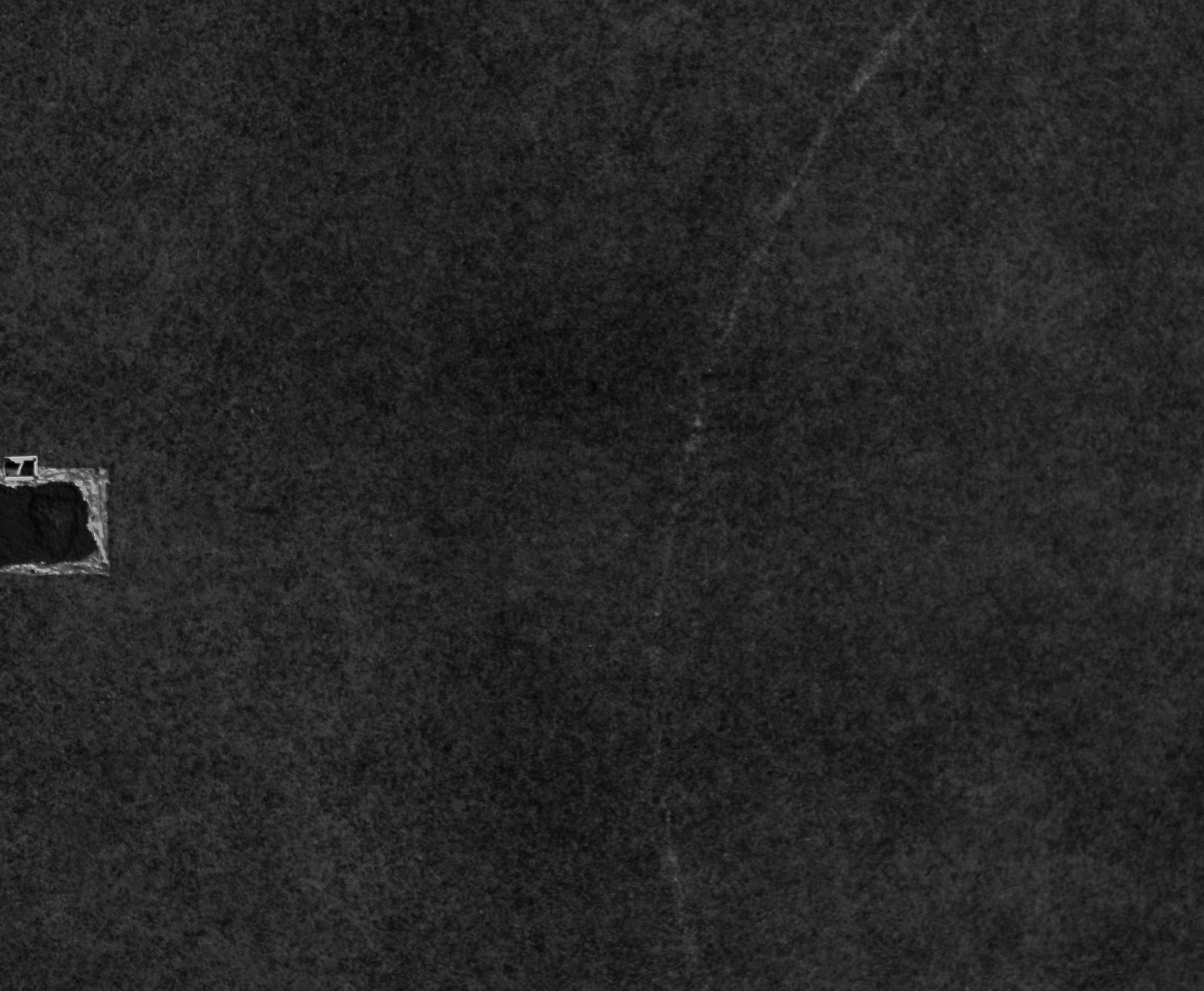
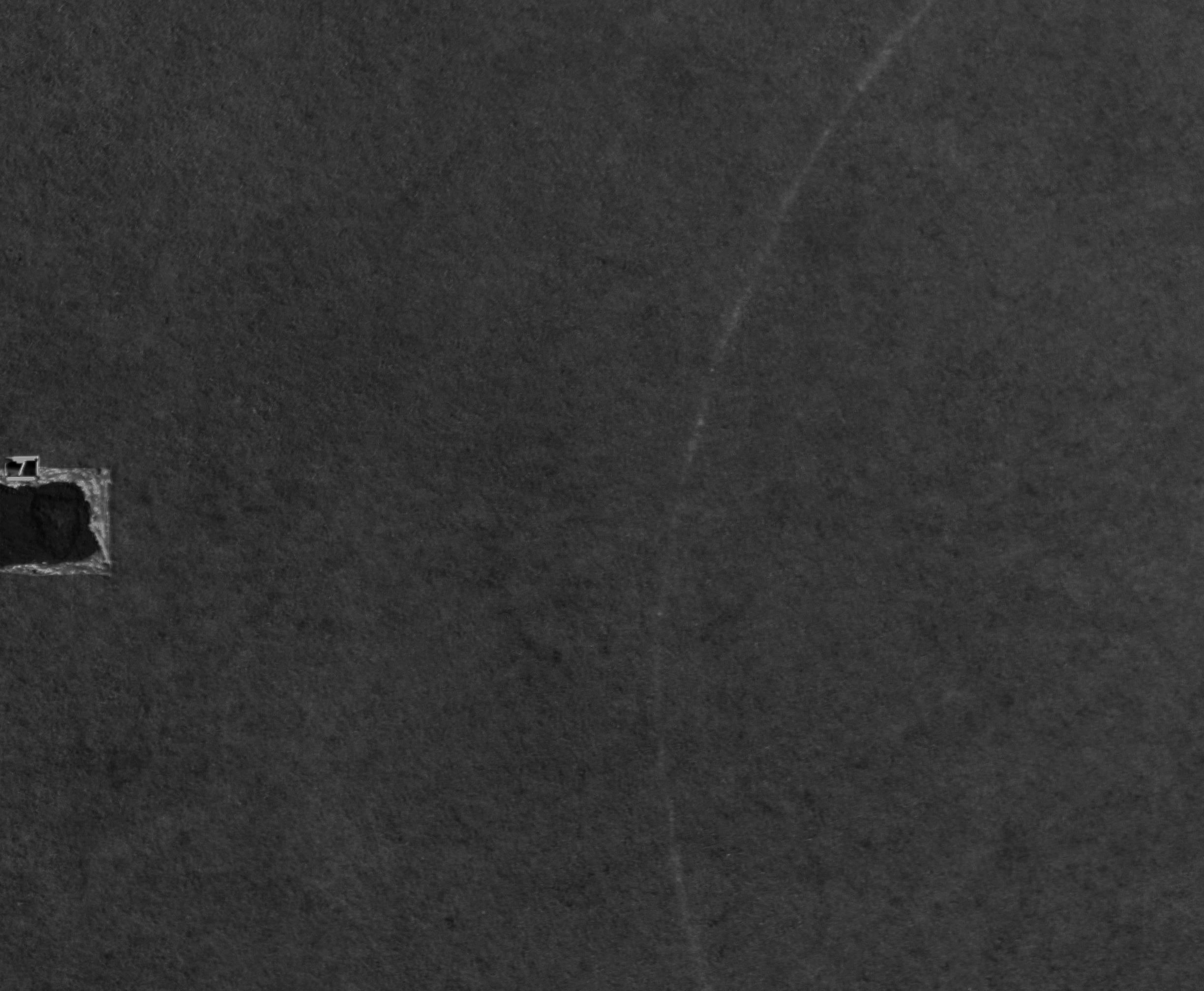
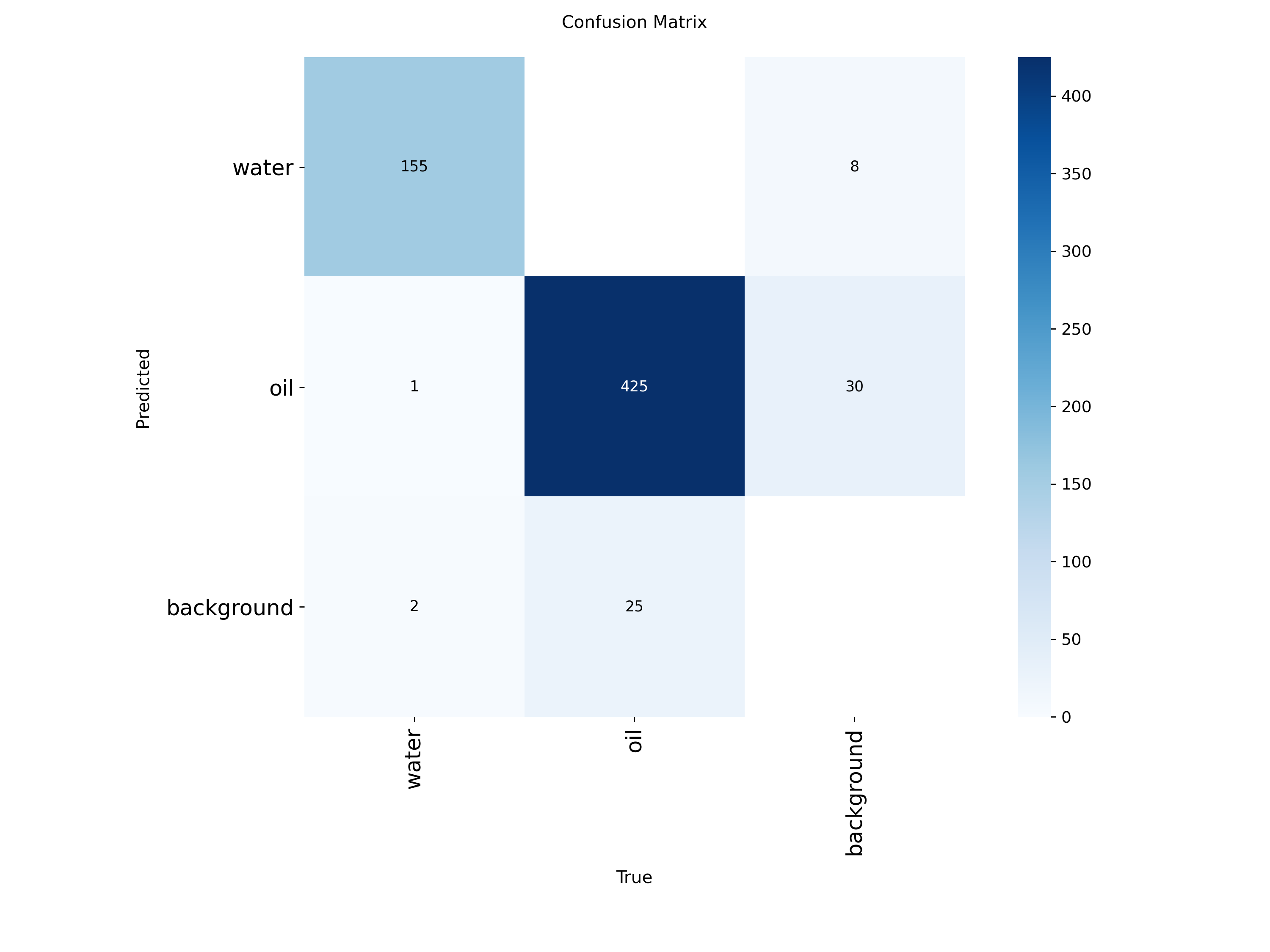
Model Performance - YOLOv11
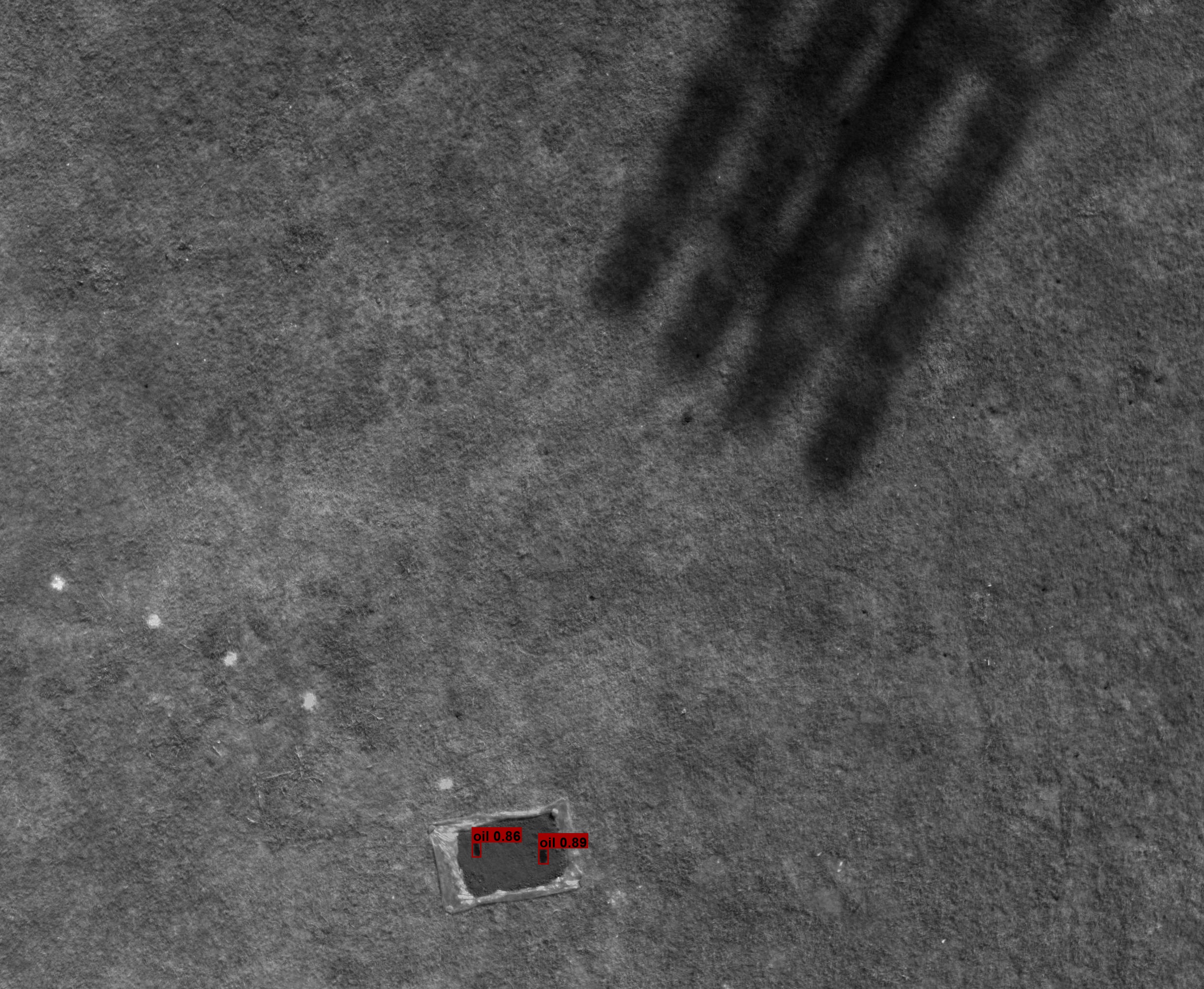
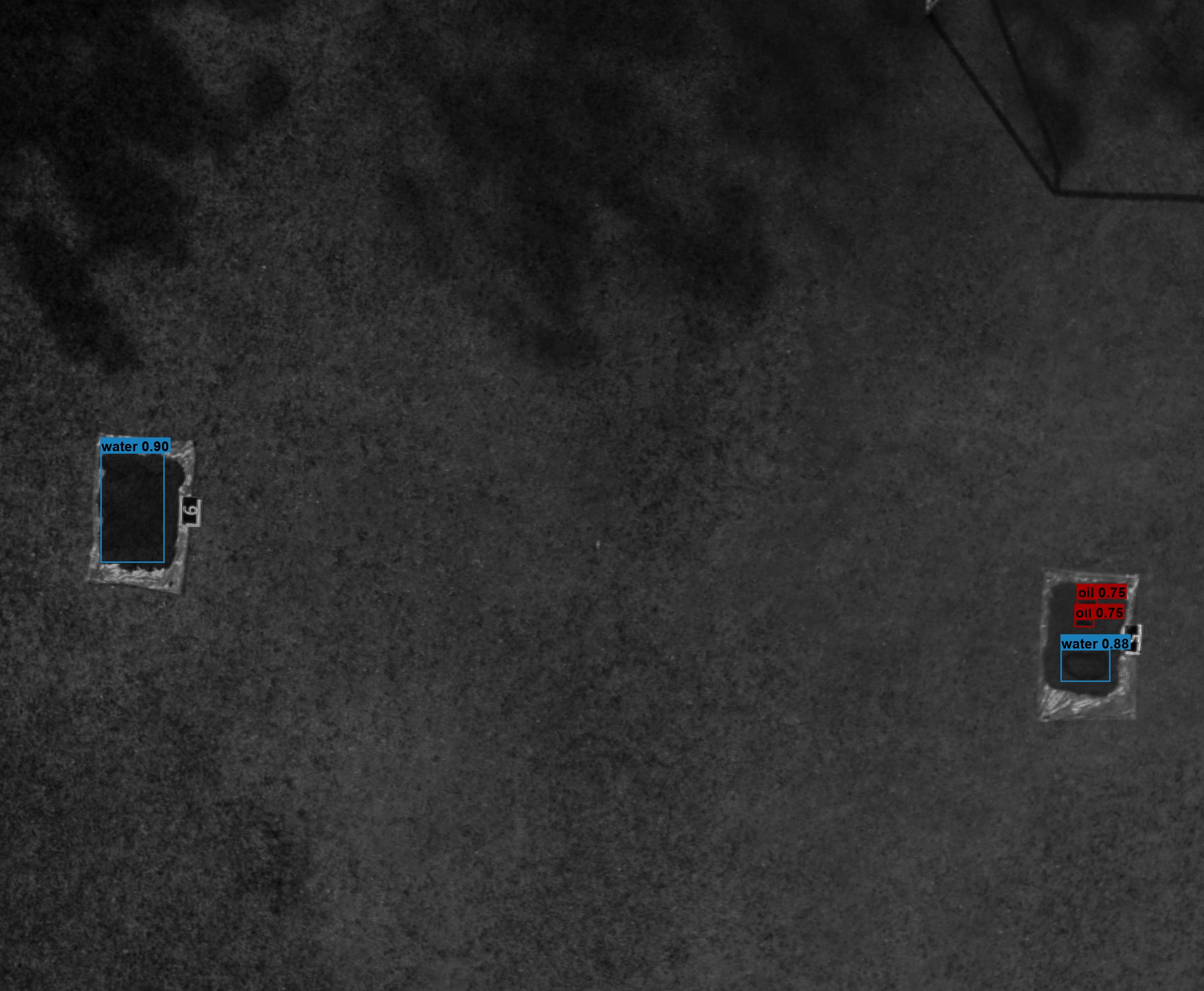
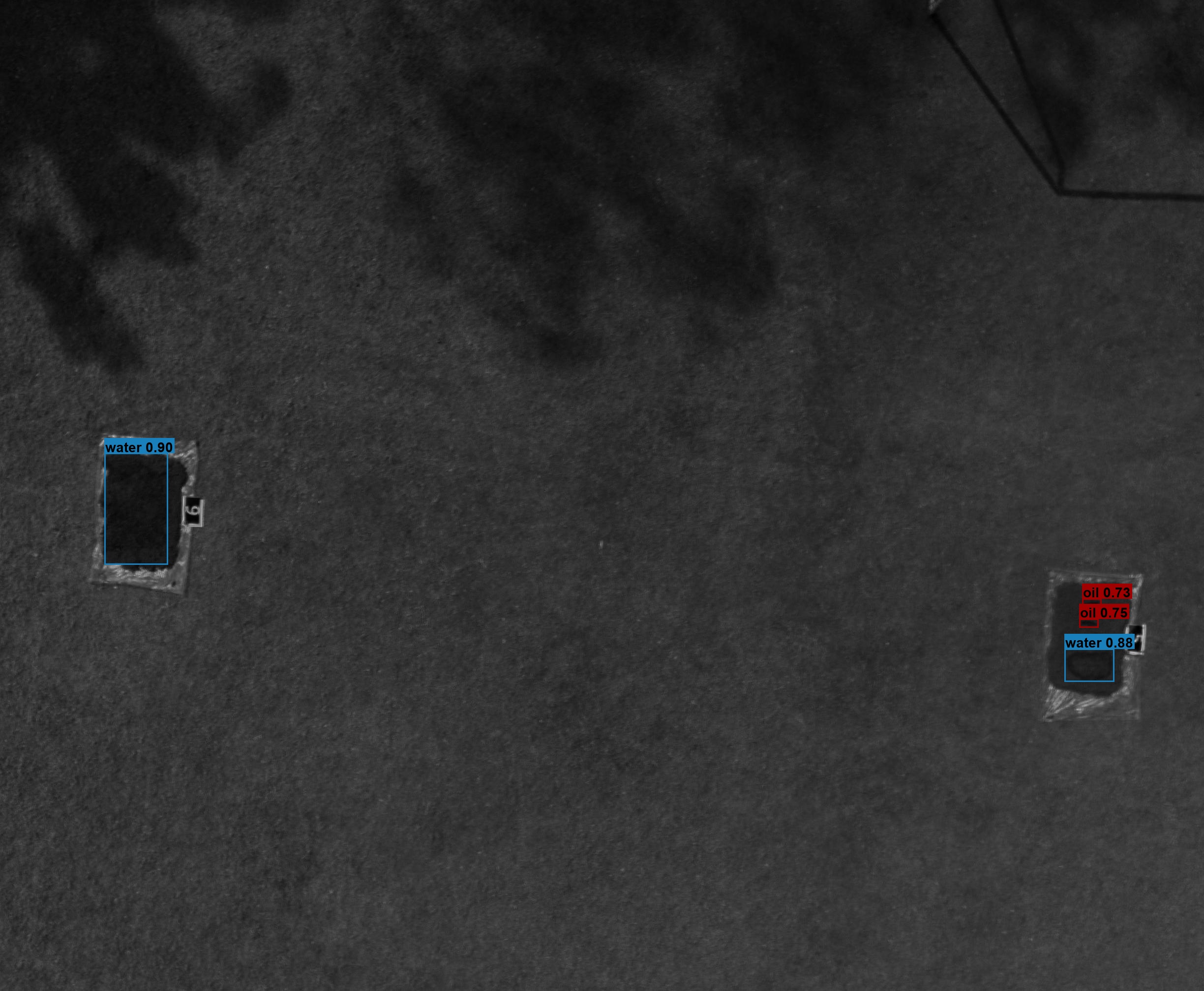
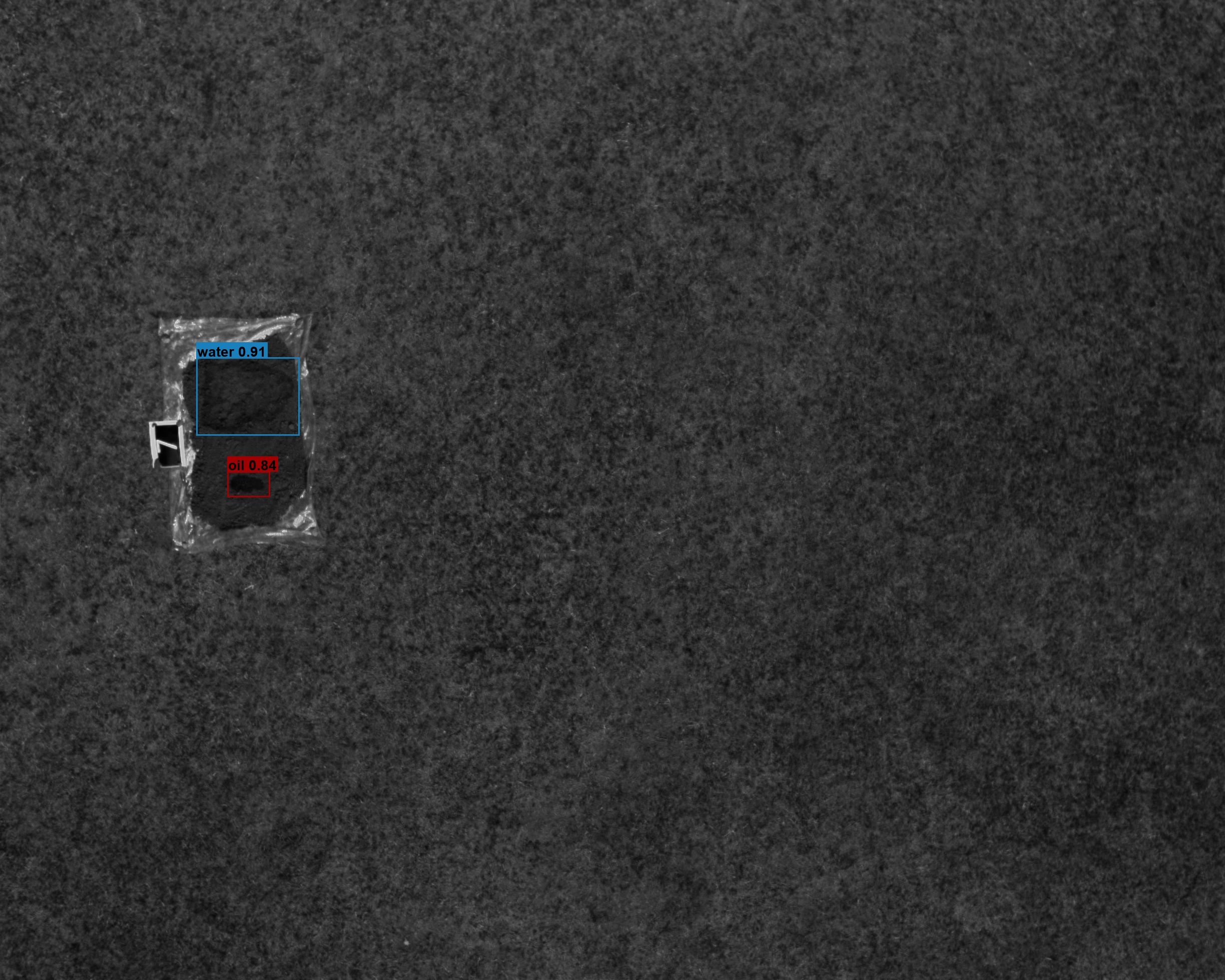
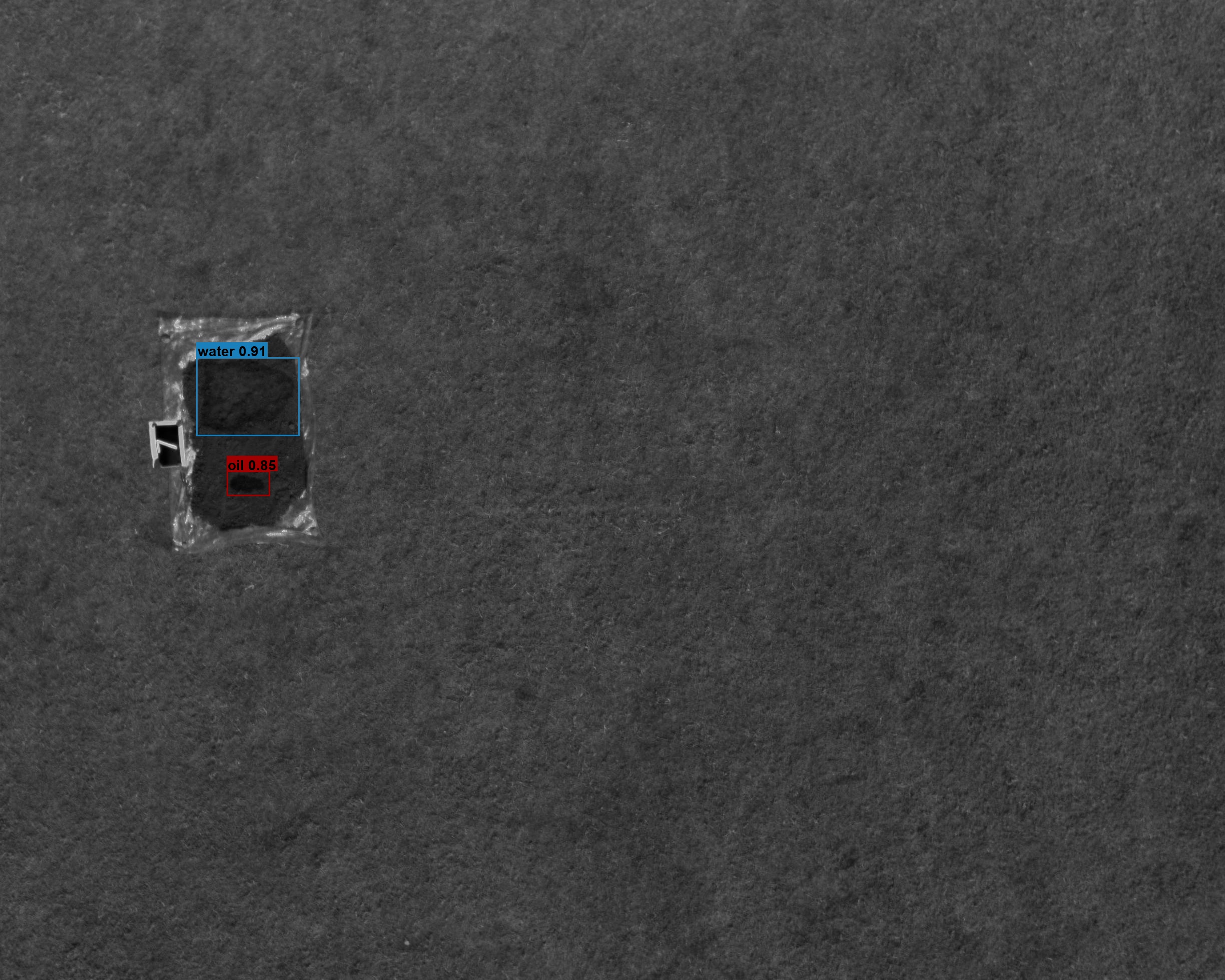
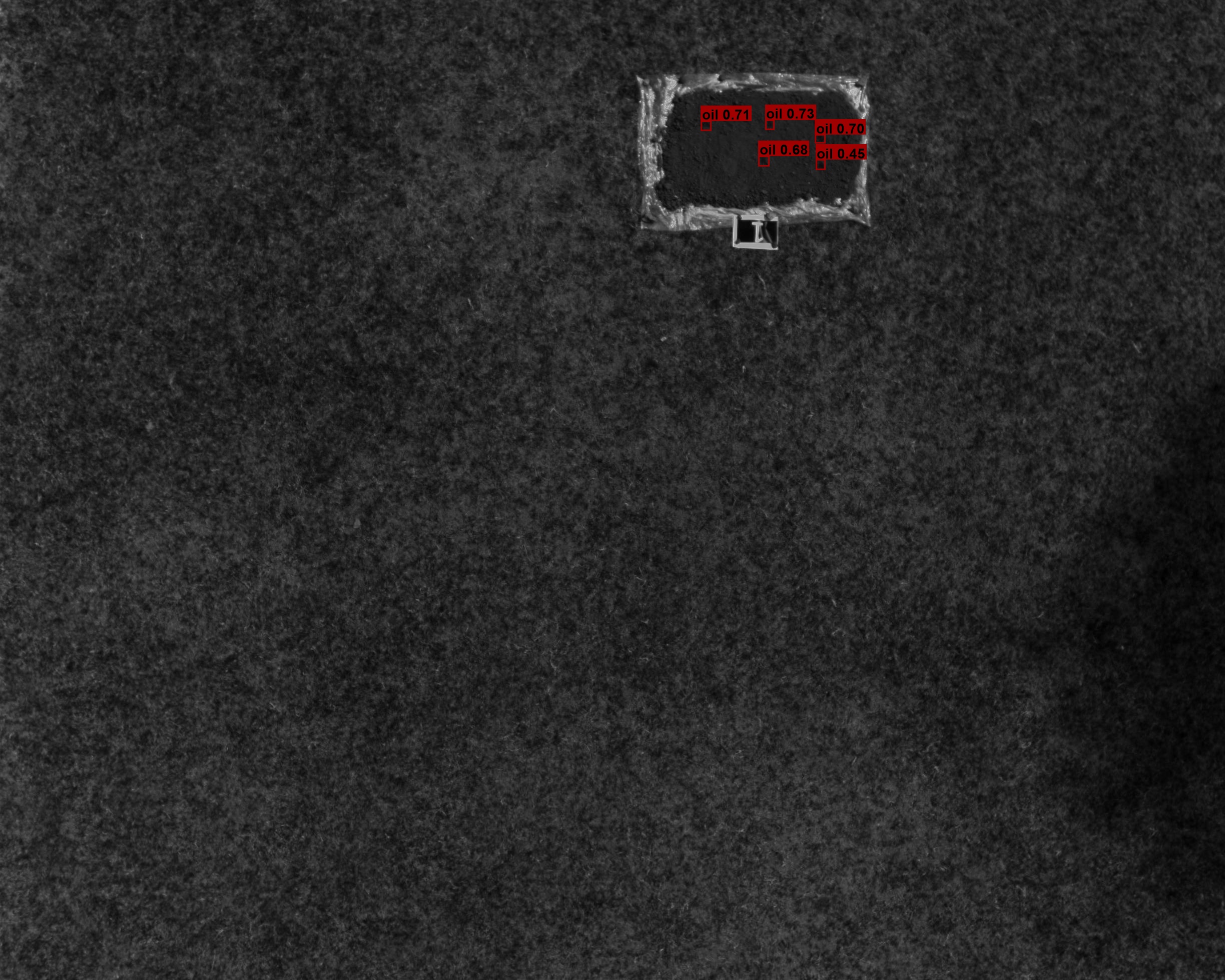
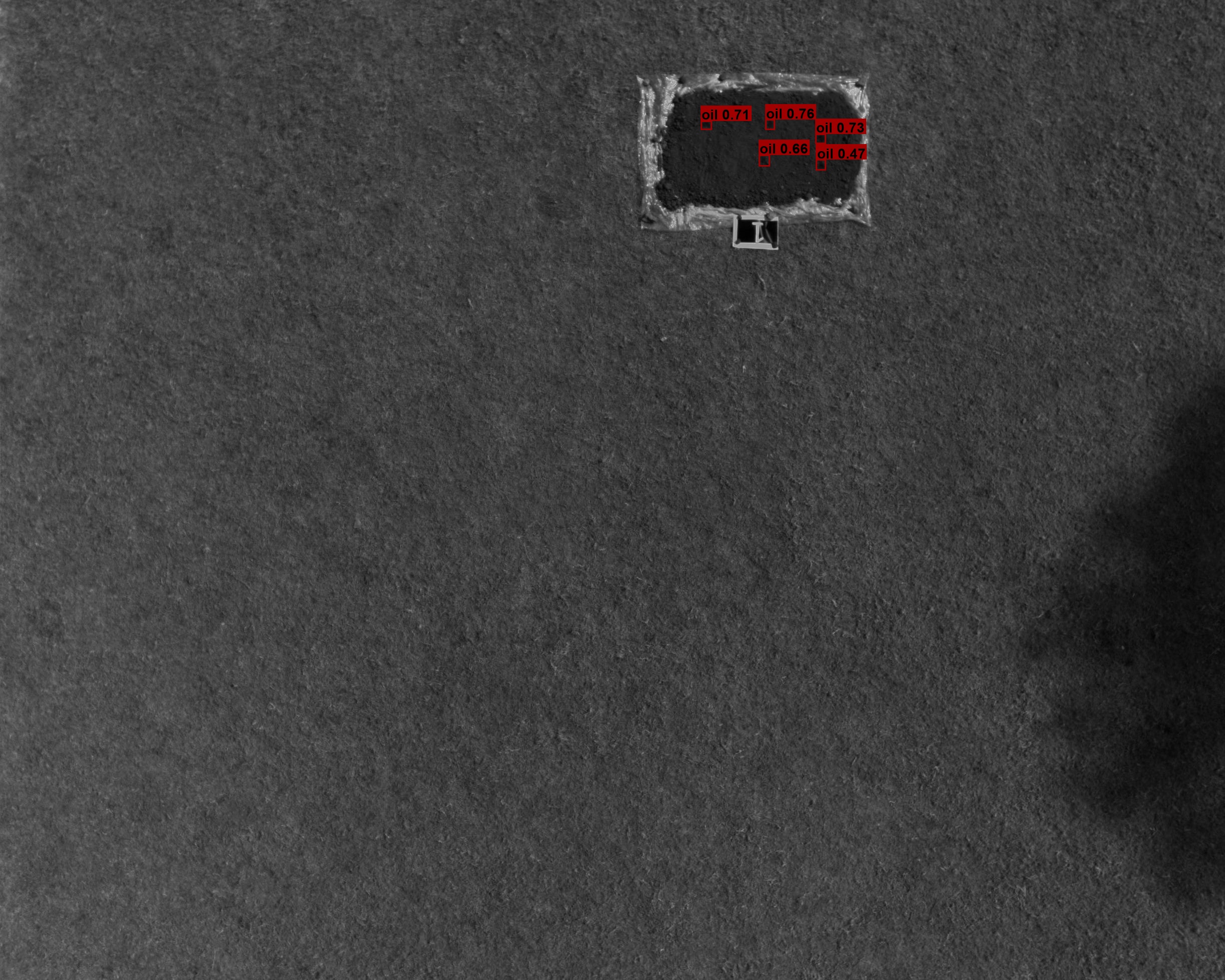
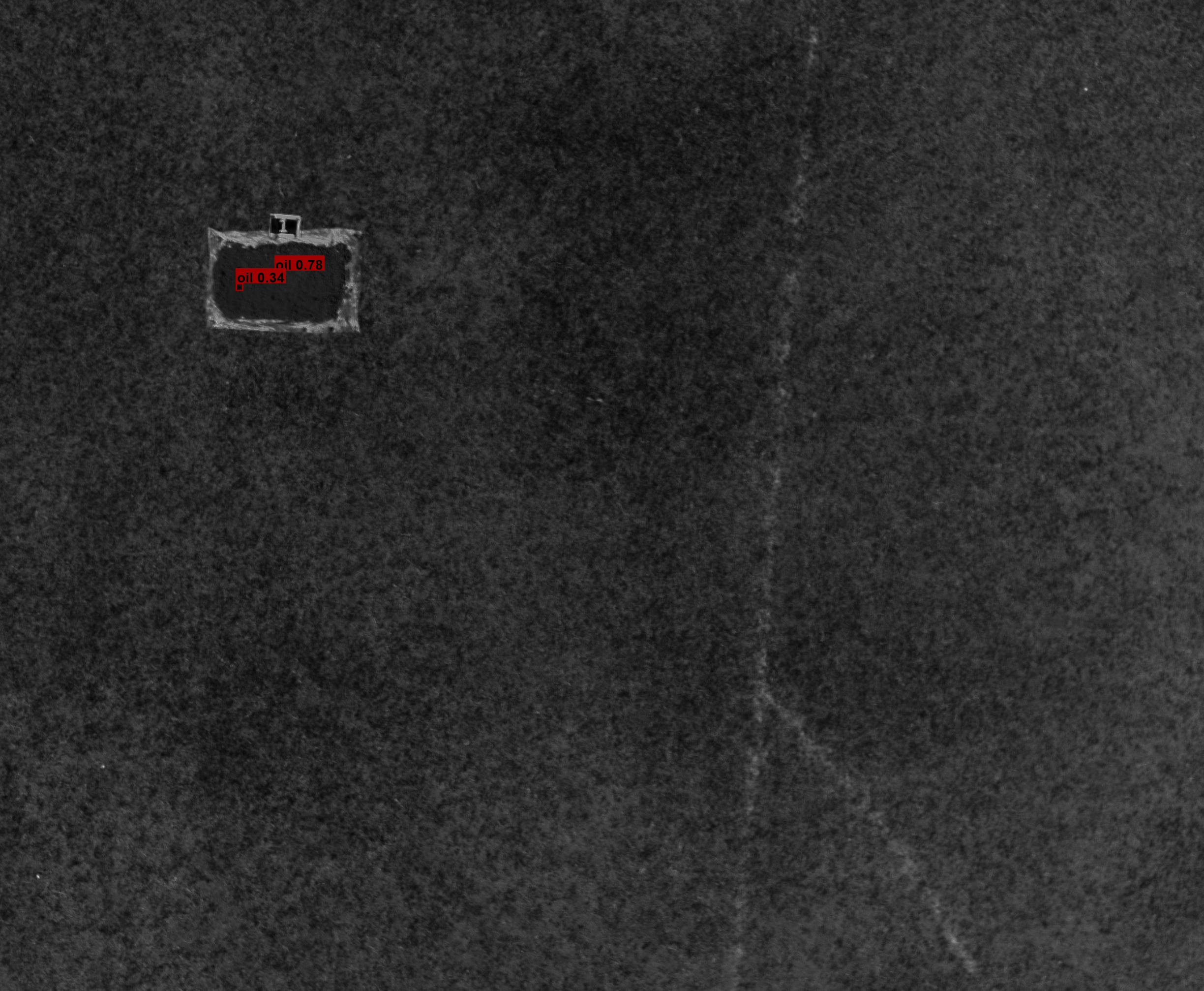
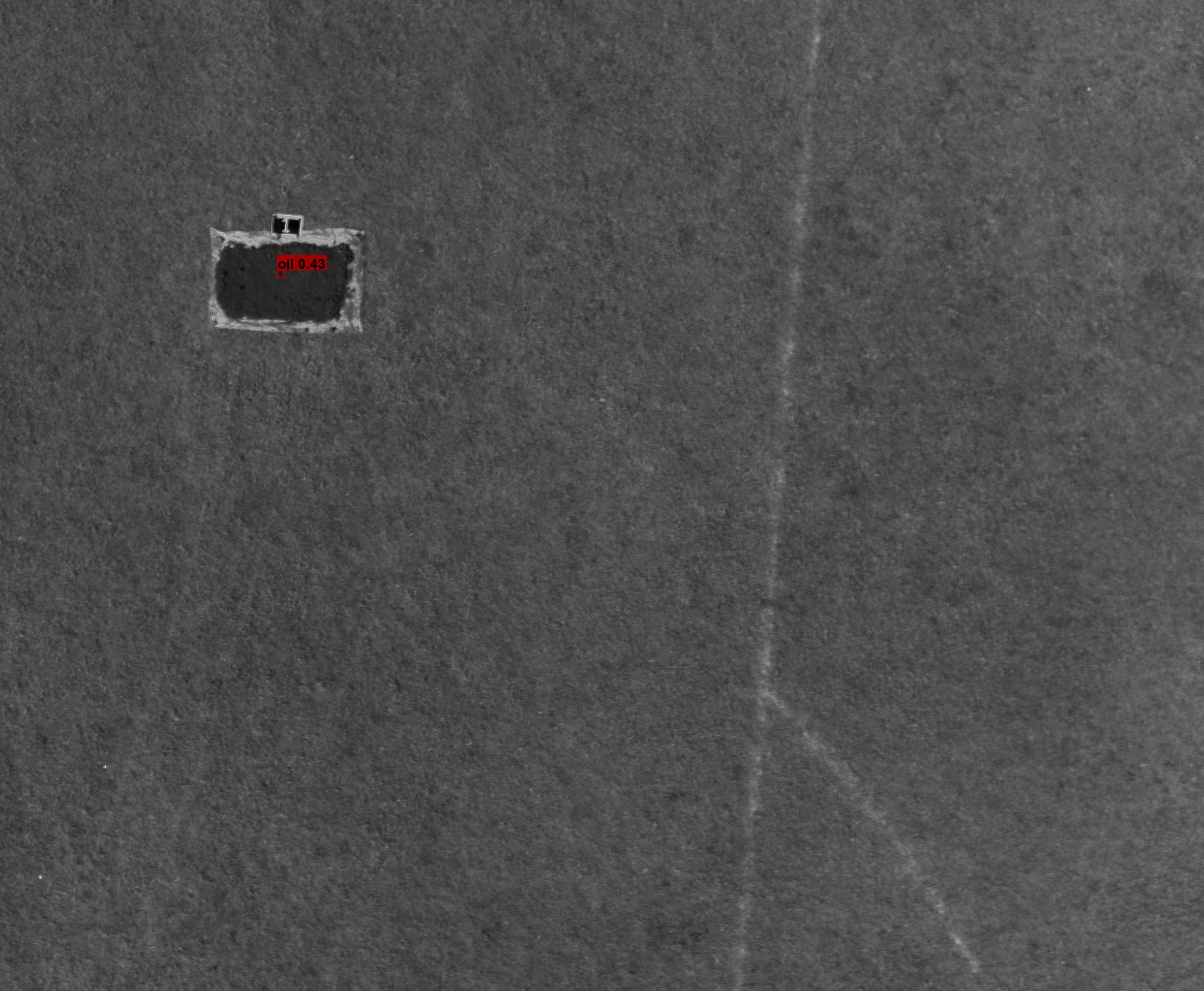
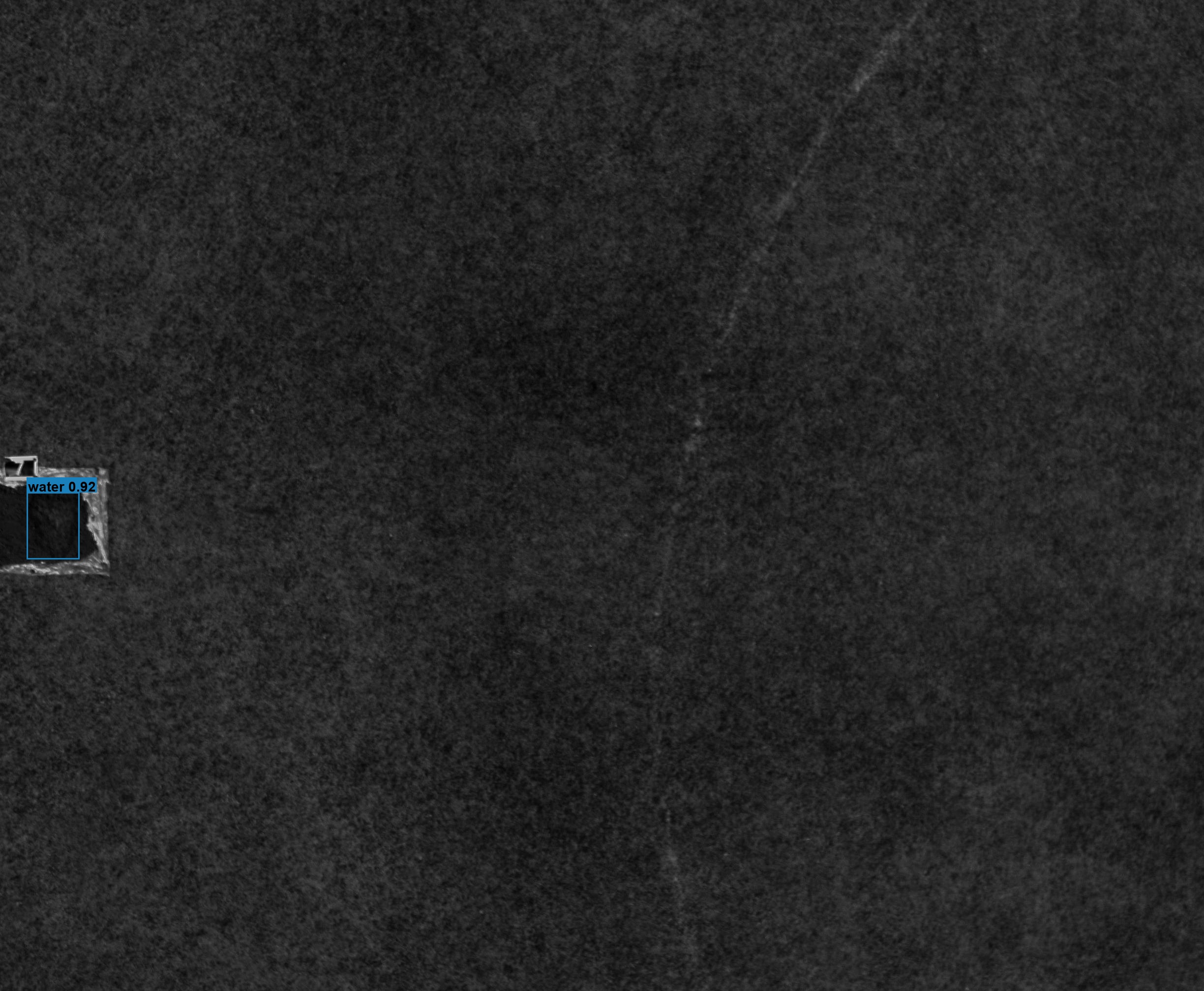
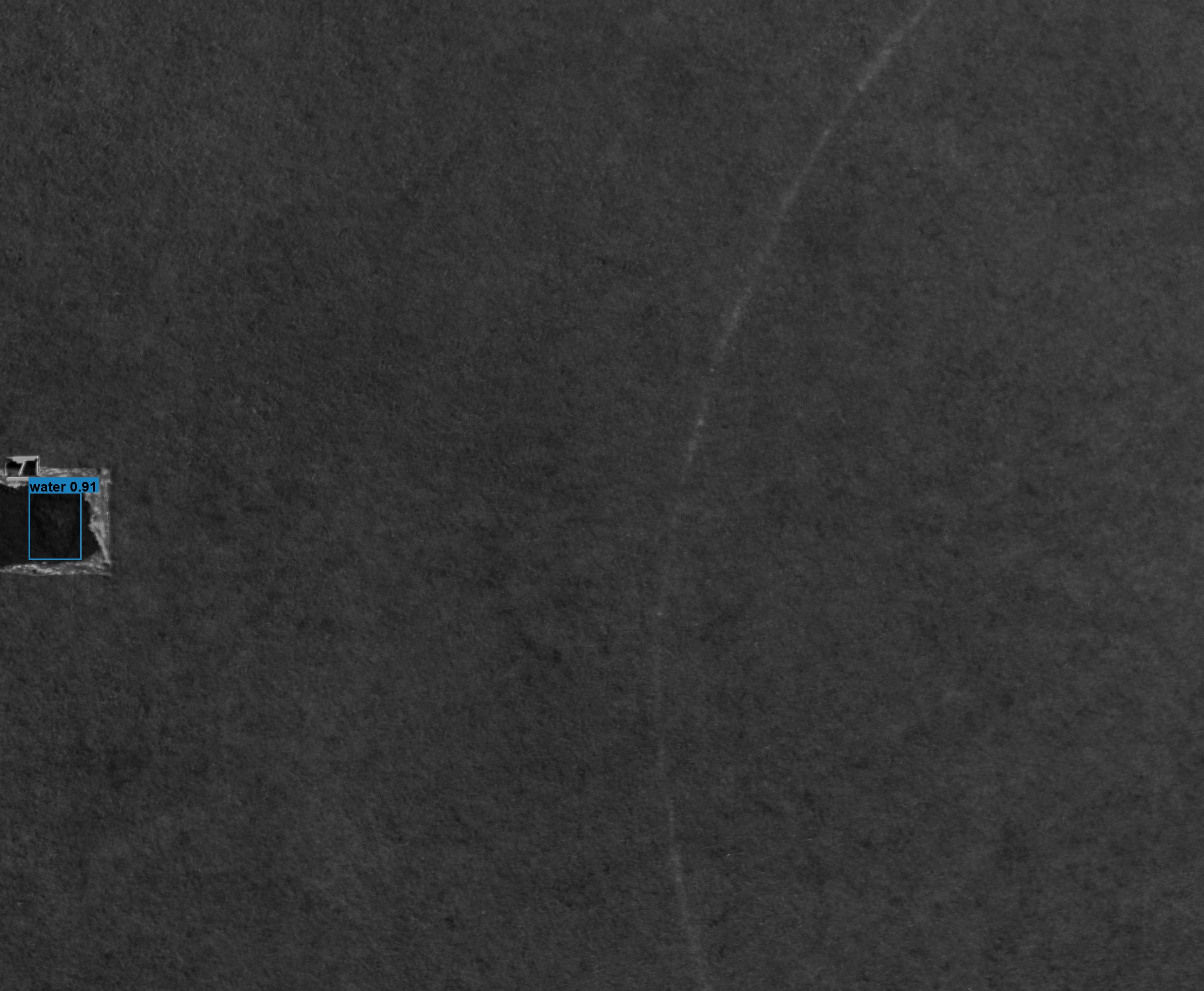
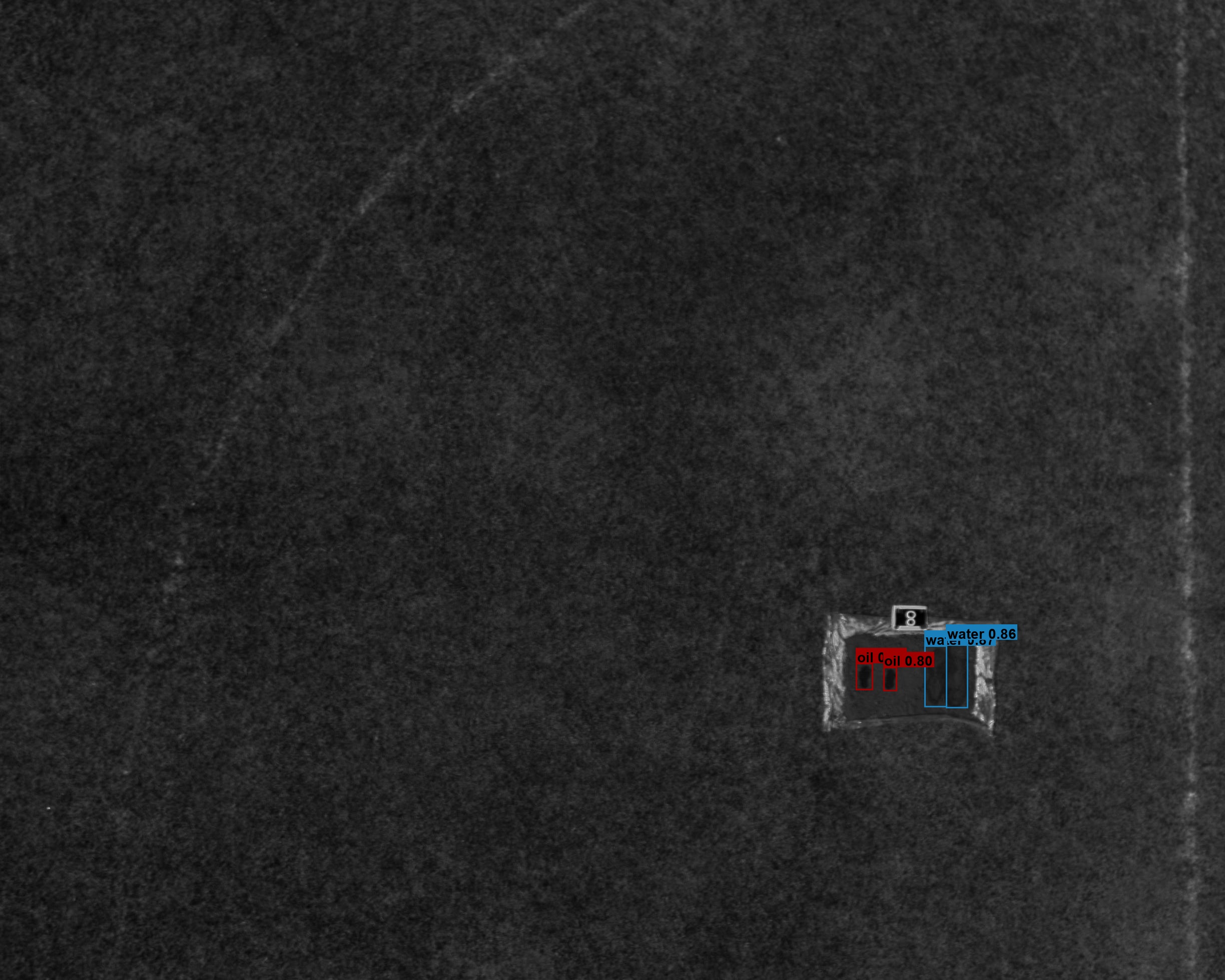
The model achieved an accuracy of 92.8% for Oil and 98.1% for Water.
| Class | mAP@50 | mAP@50:95 | Precision | Recall | F1-score |
|---|---|---|---|---|---|
| Oil | 0.984 | 0.714 | 0.96 | 0.914 | 0.937 |
| Water | 0.994 | 0.899 | 0.983 | 0.987 | 0.985 |
| Overall | 0.989 | 0.806 | 0.972 | 0.951 | 0.961 |
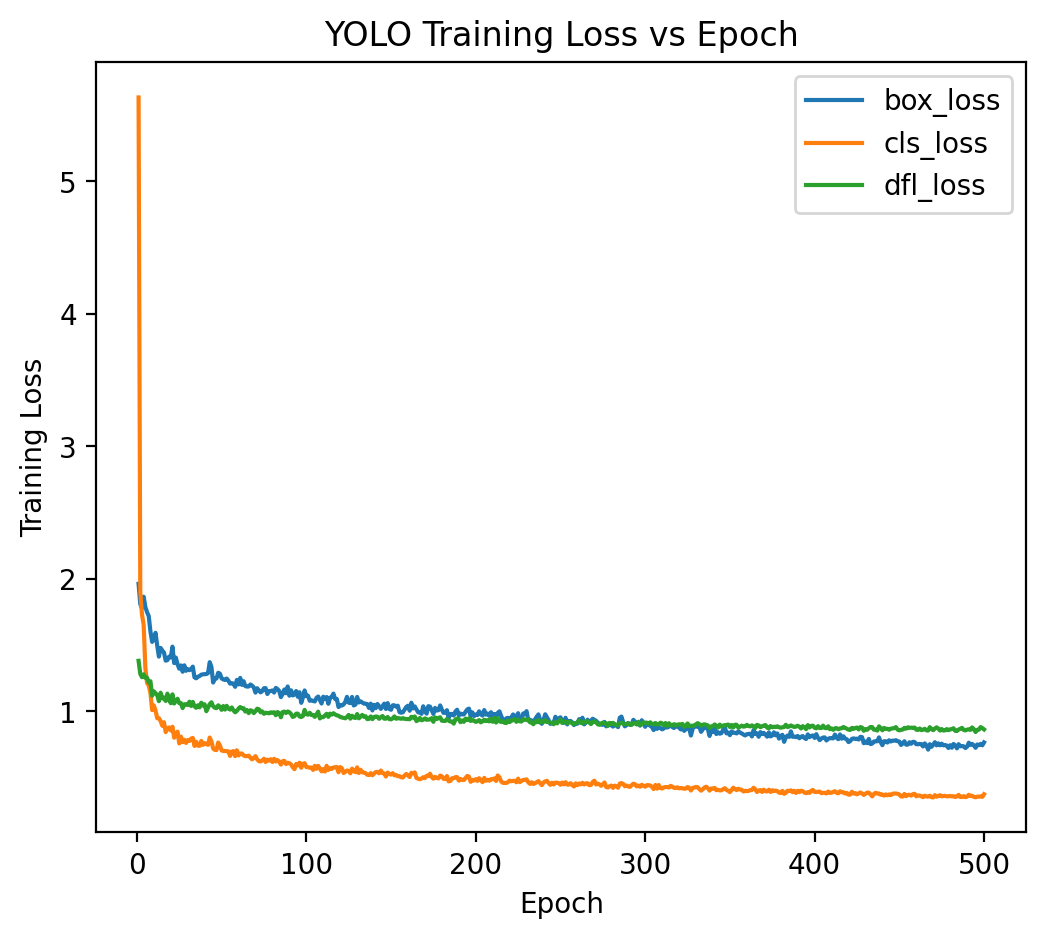
Training Loss
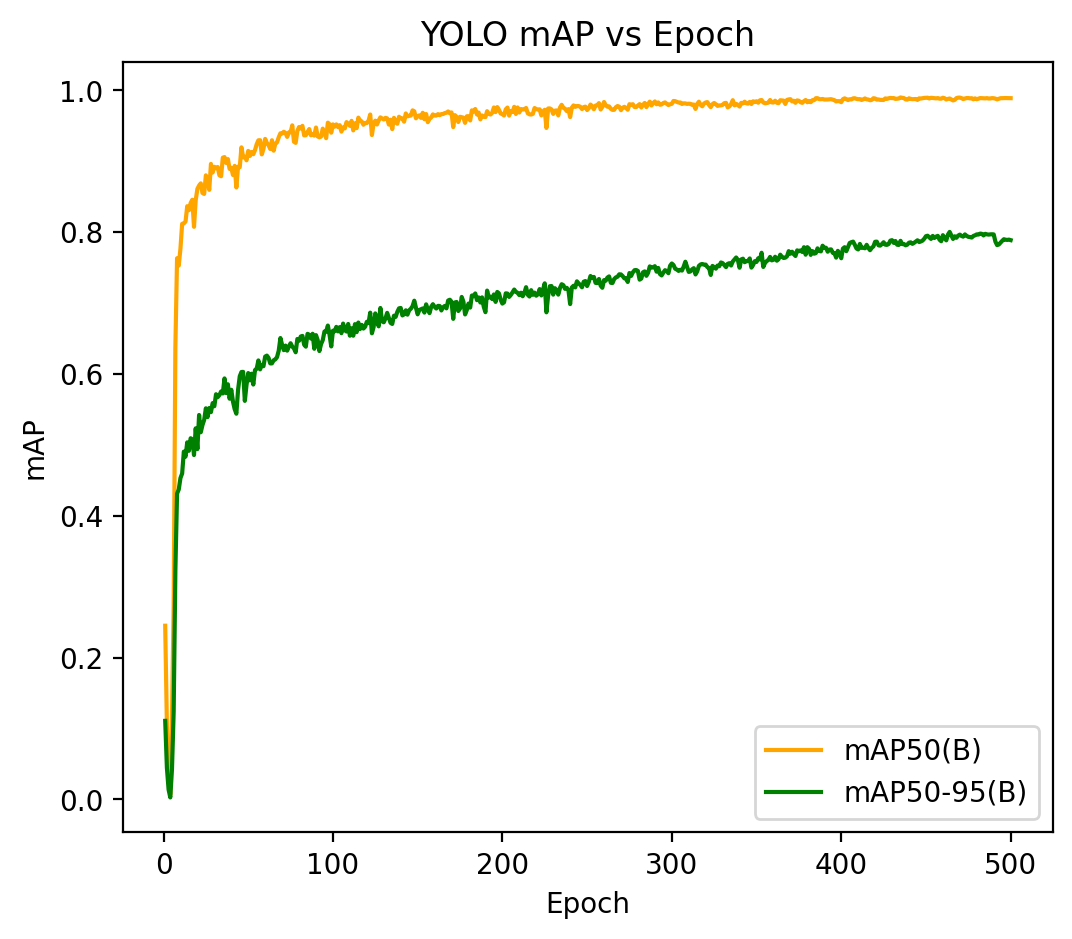
Validation mAP
Confusion Matrix
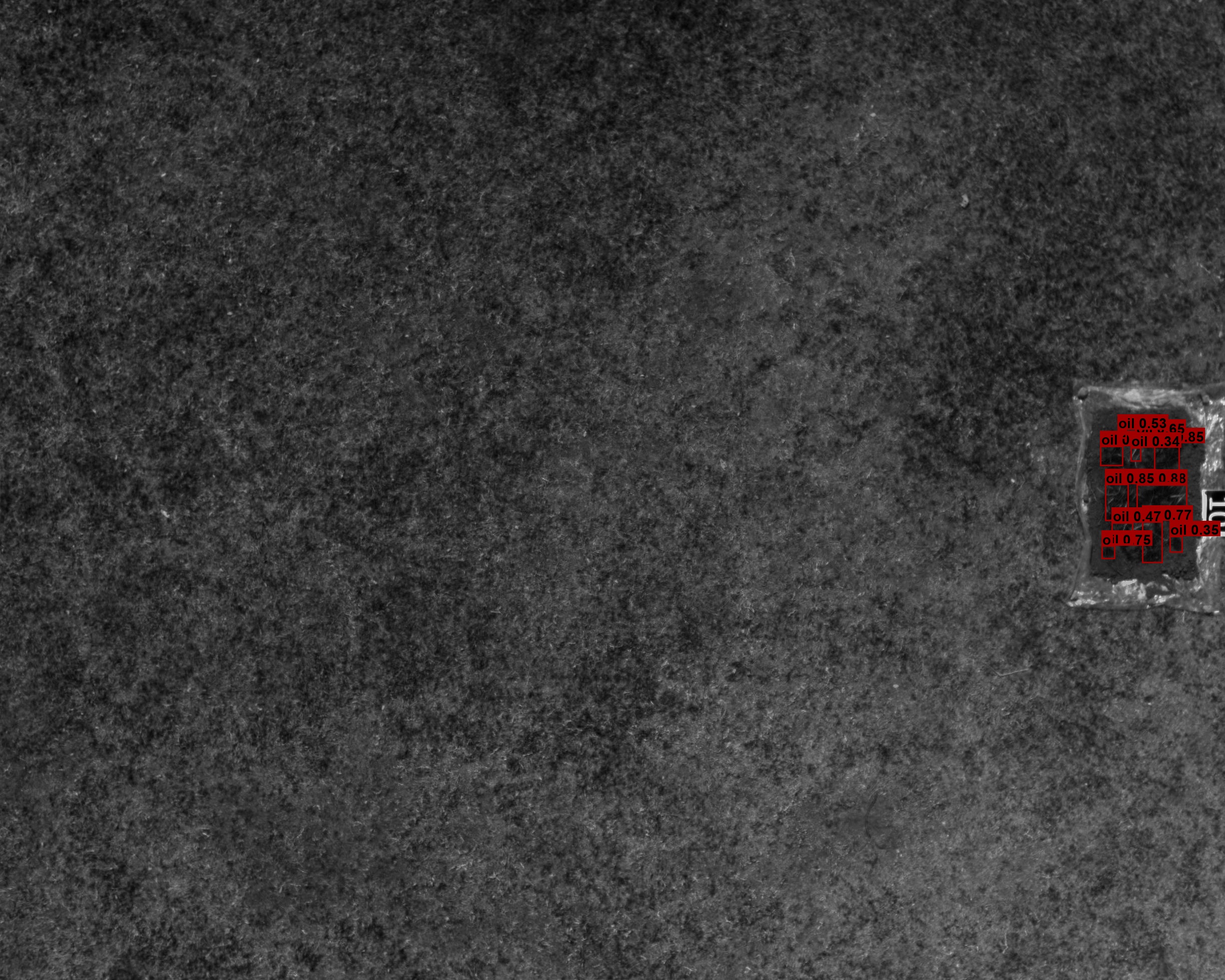
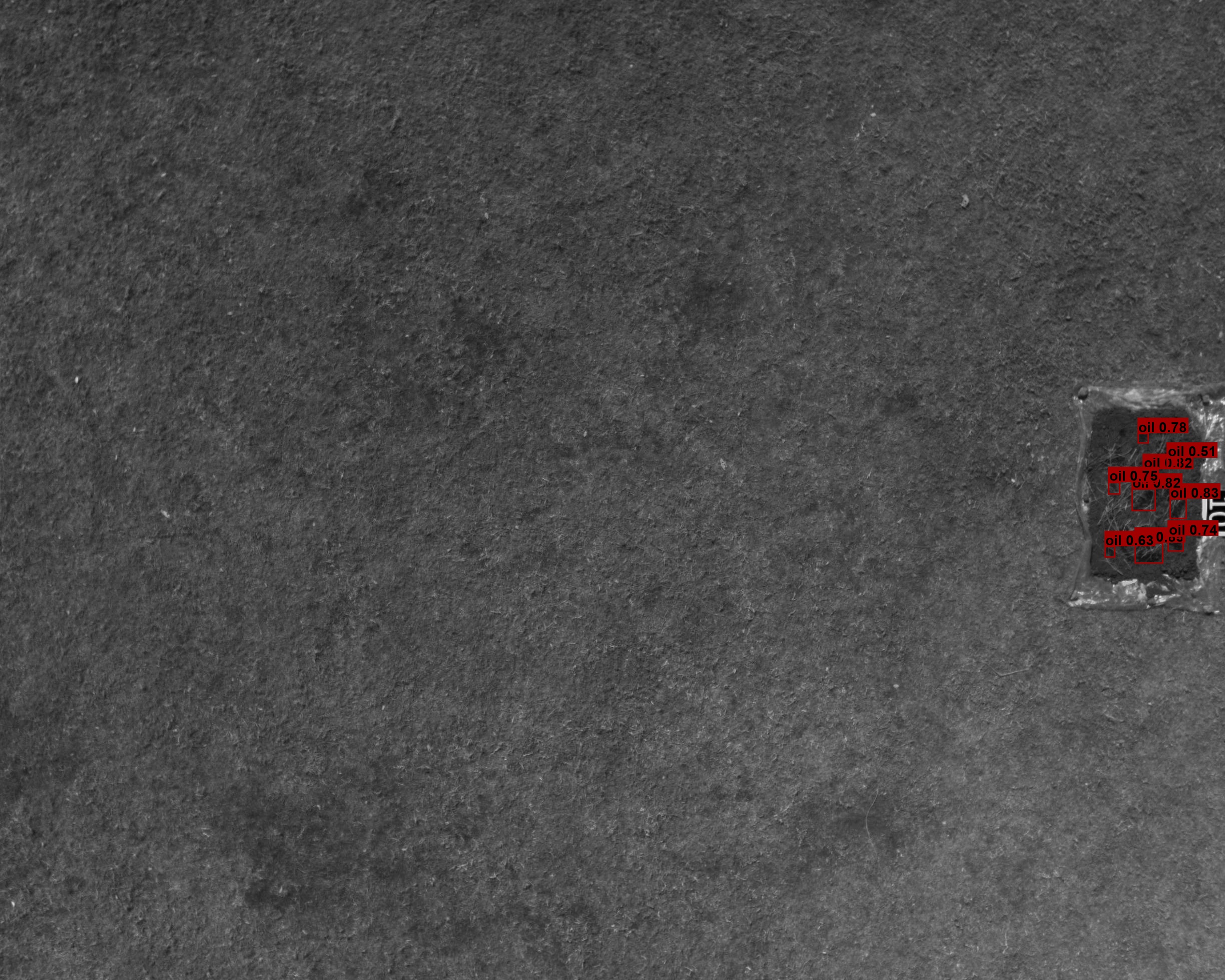
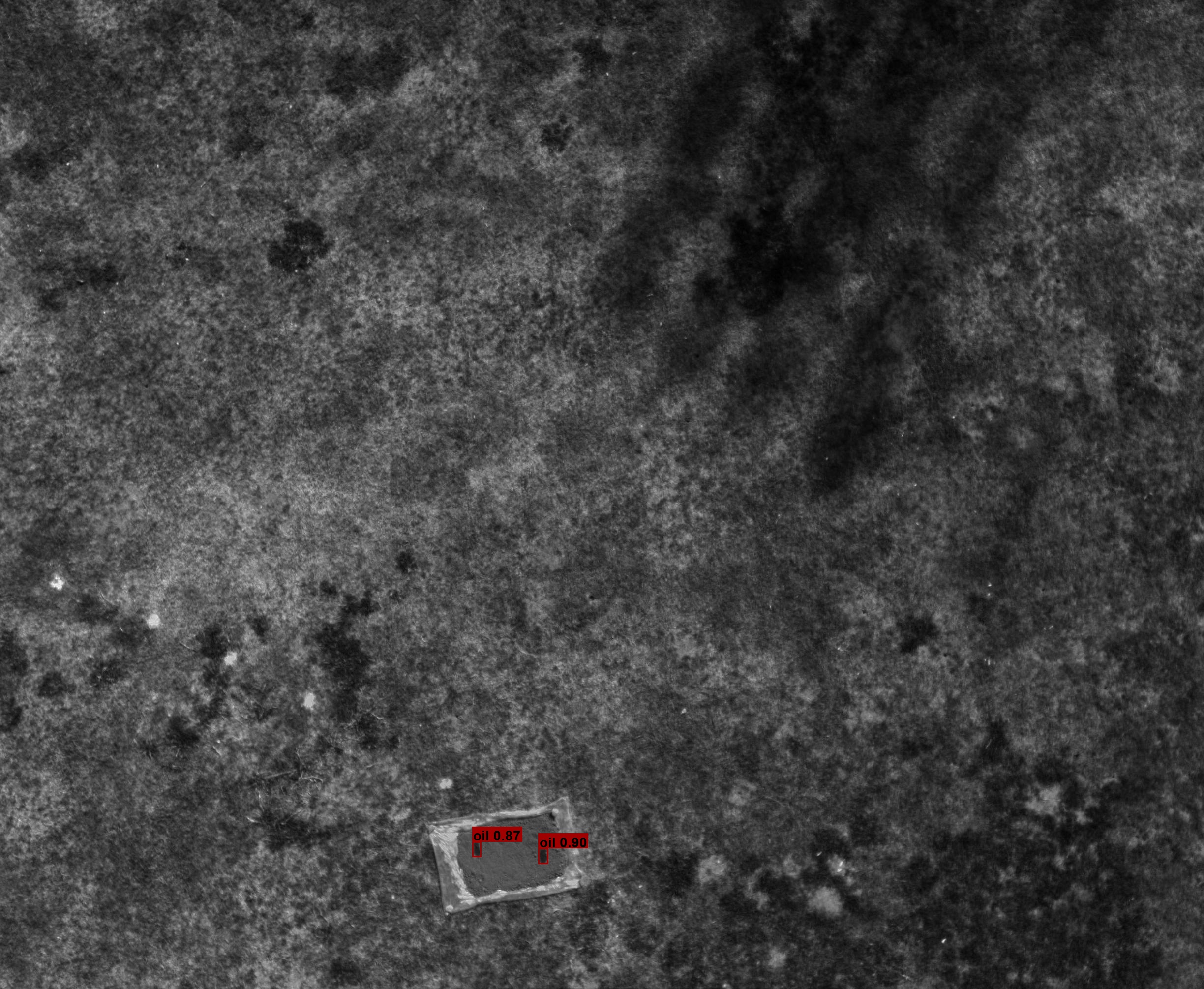
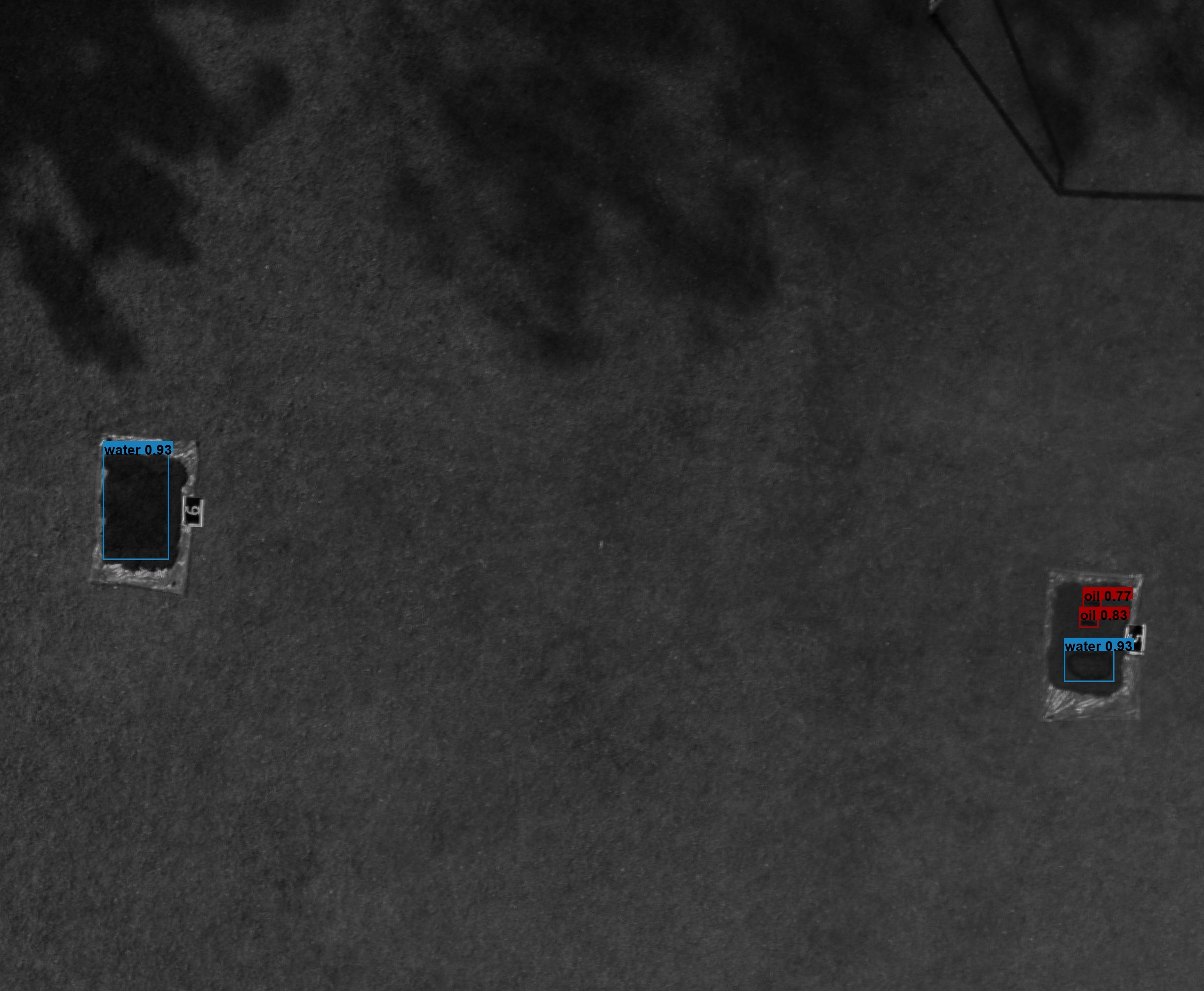
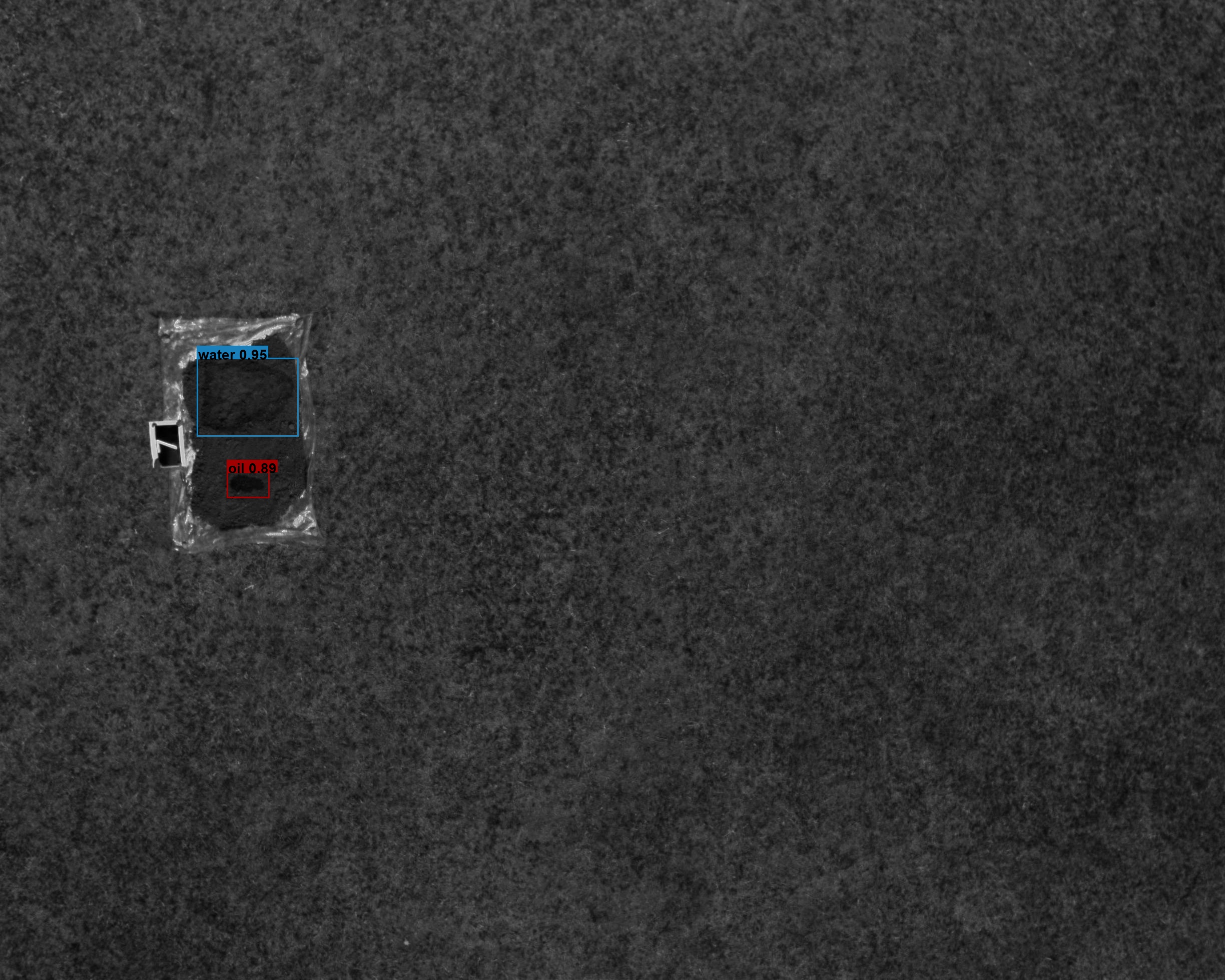
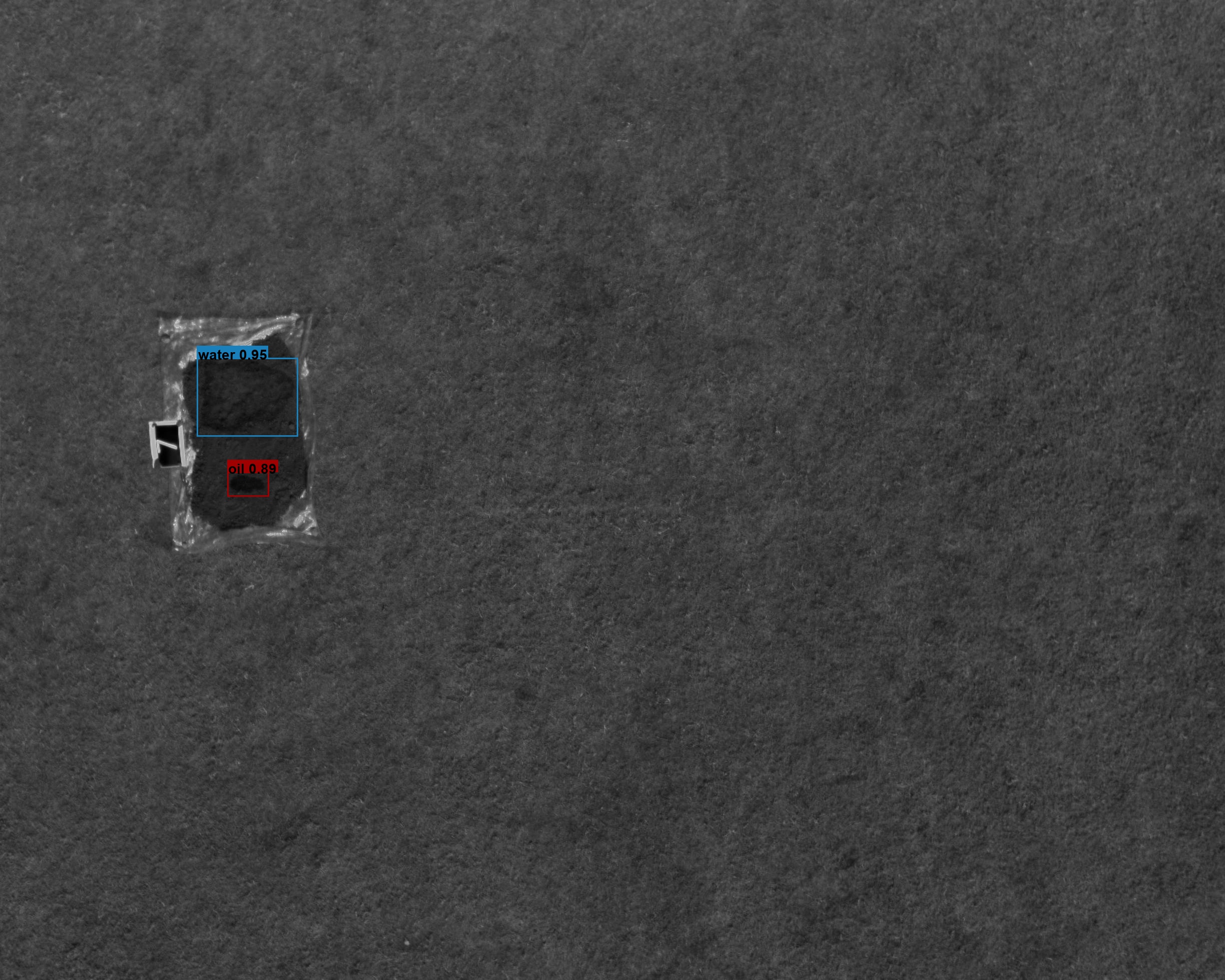
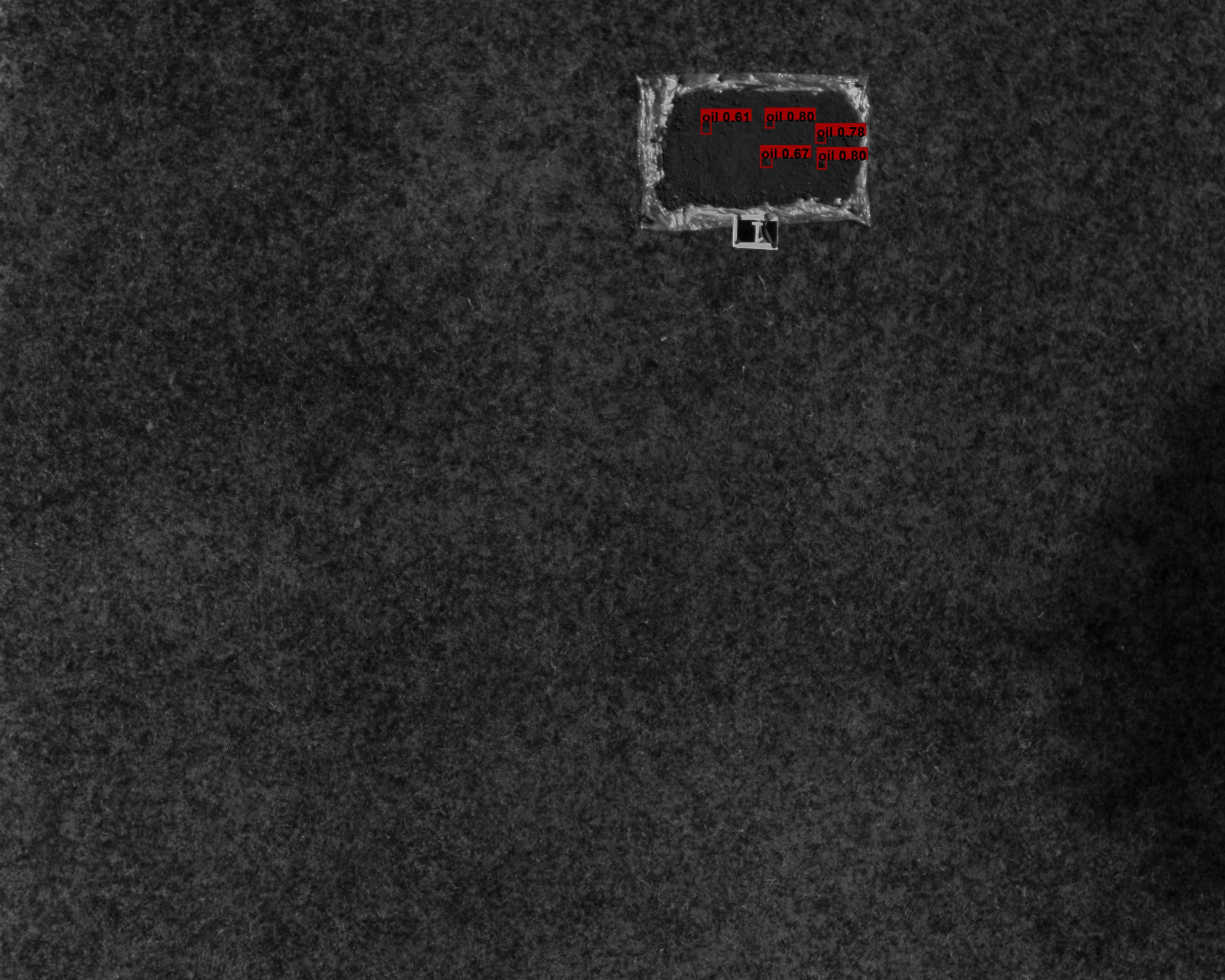
Test Results (YOLOv11)
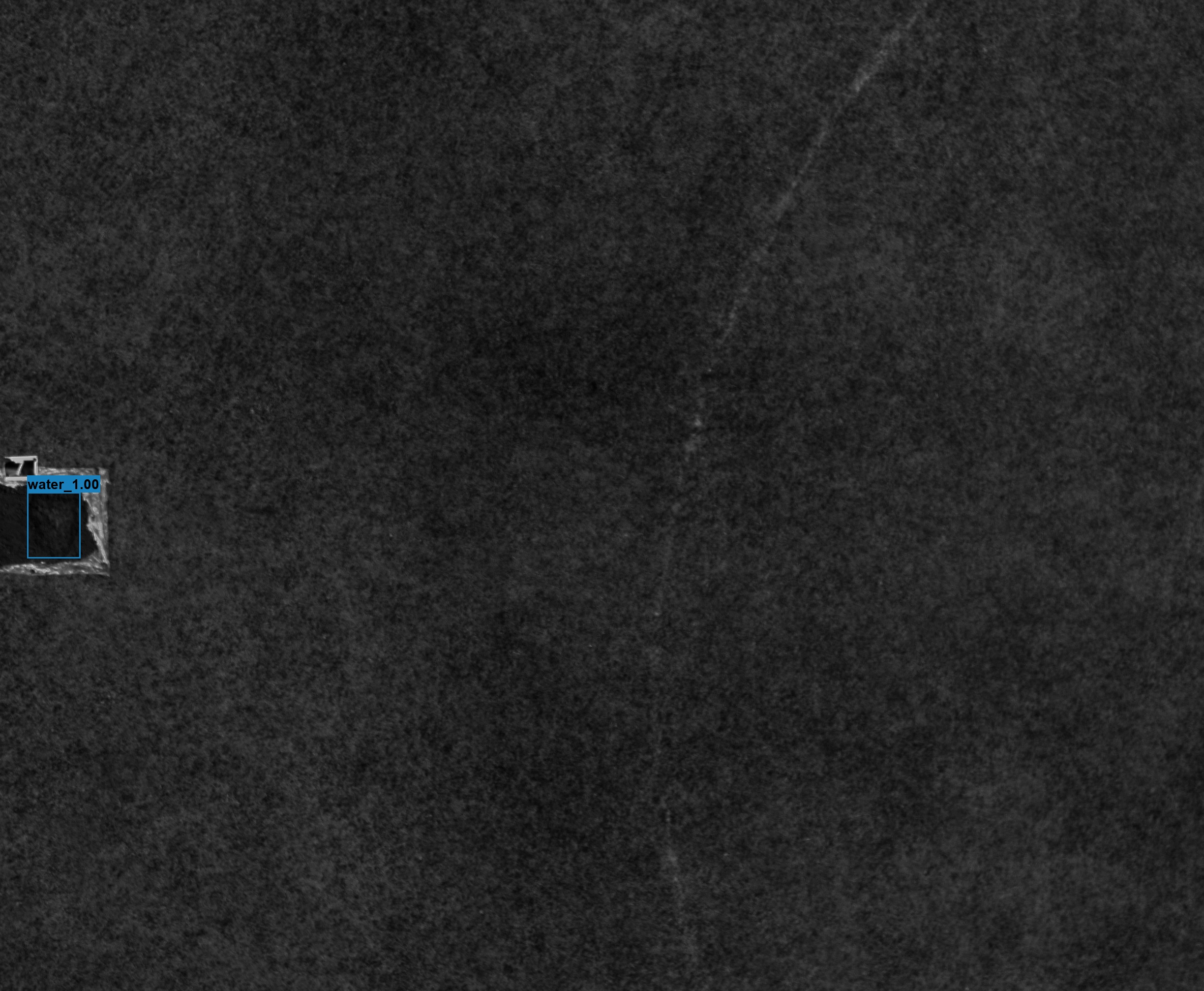
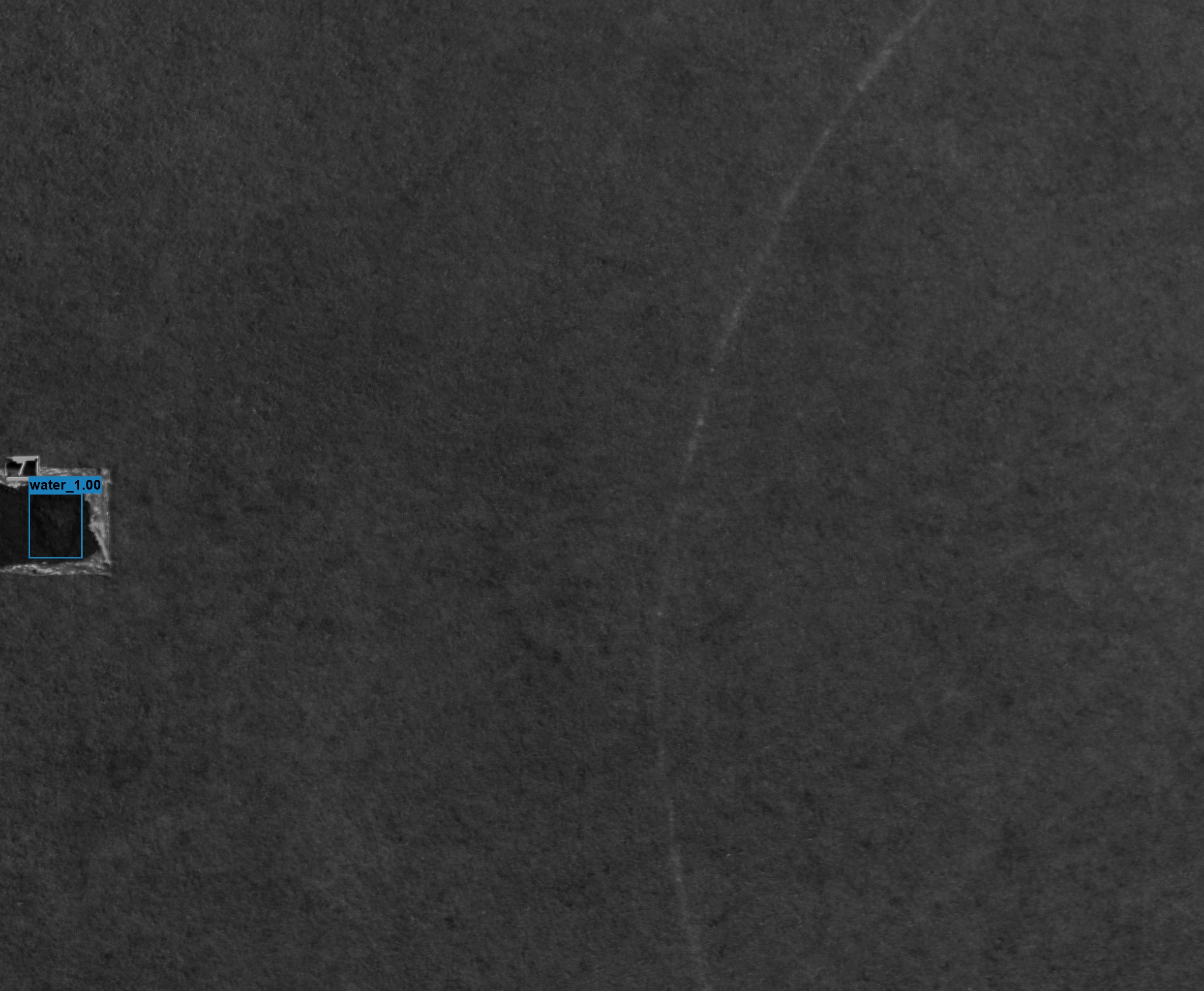
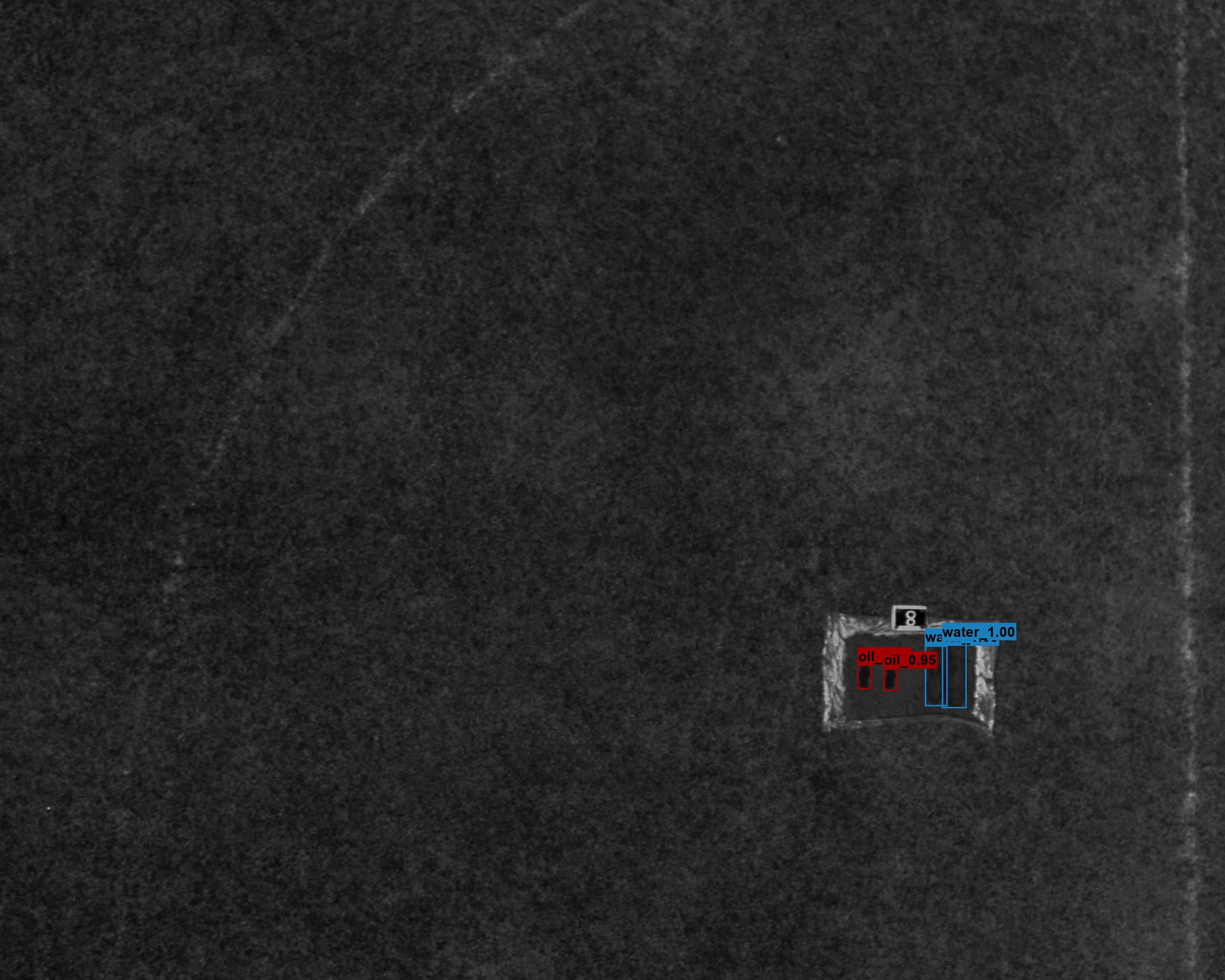
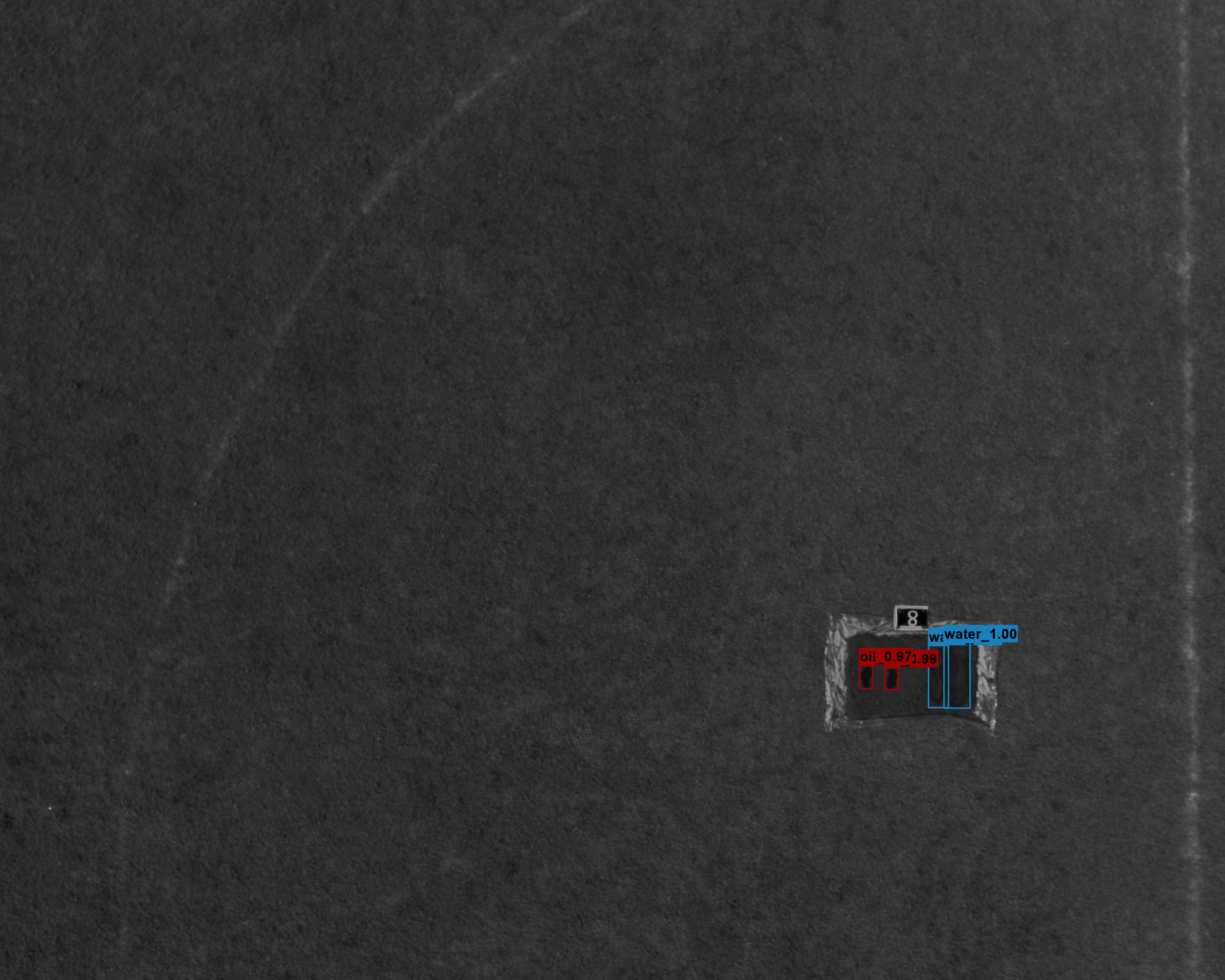
Model Performance - Faster-RCNN
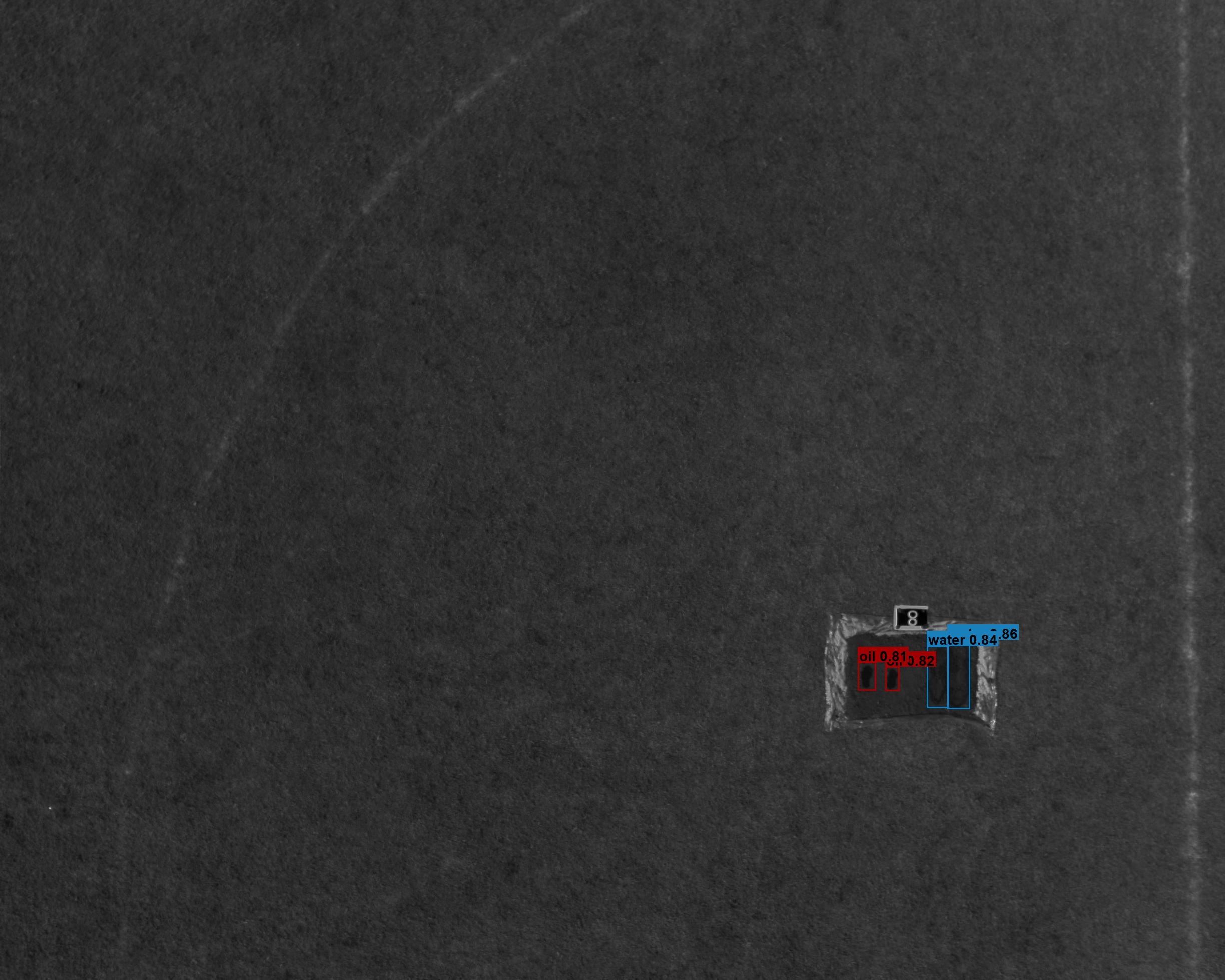
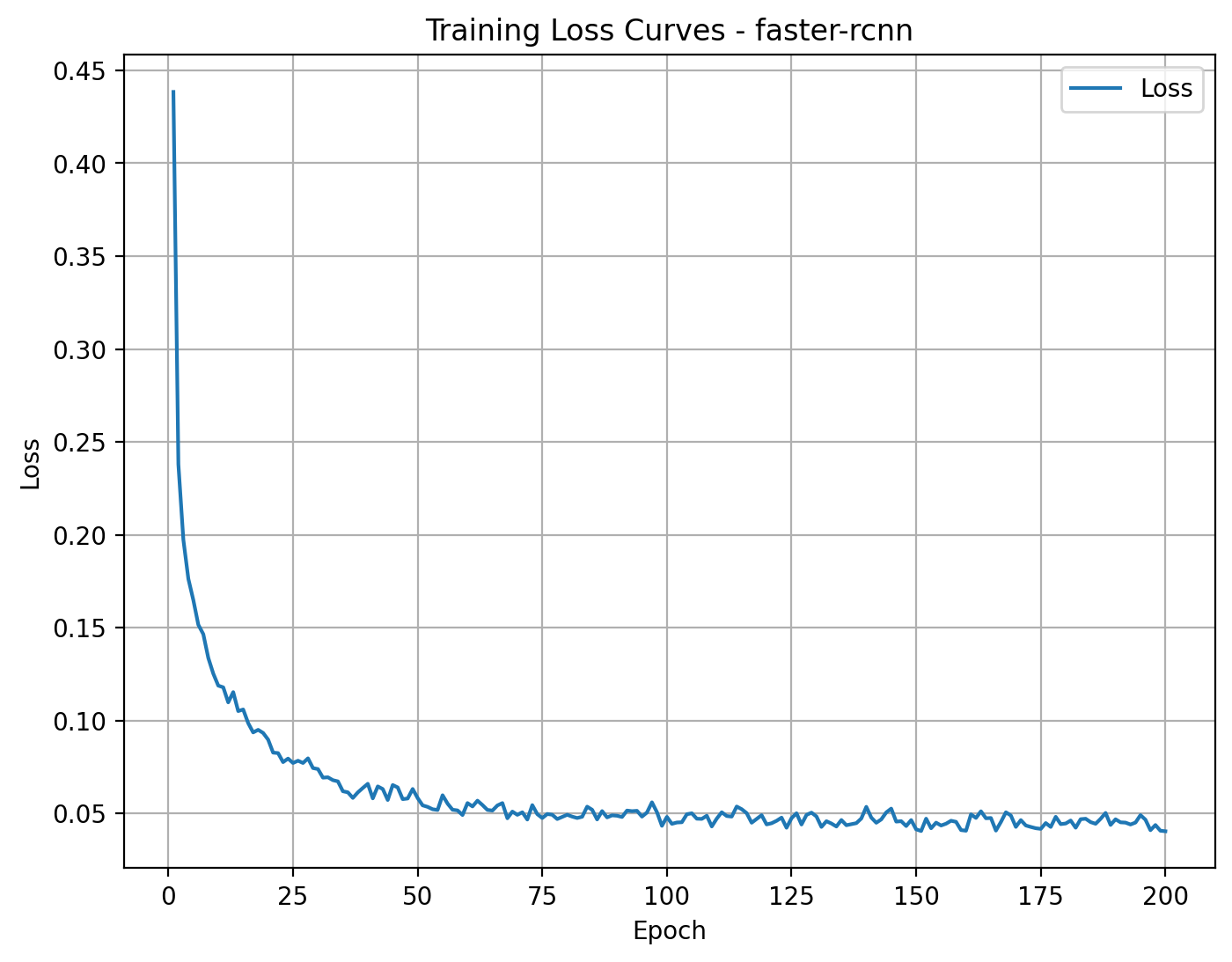
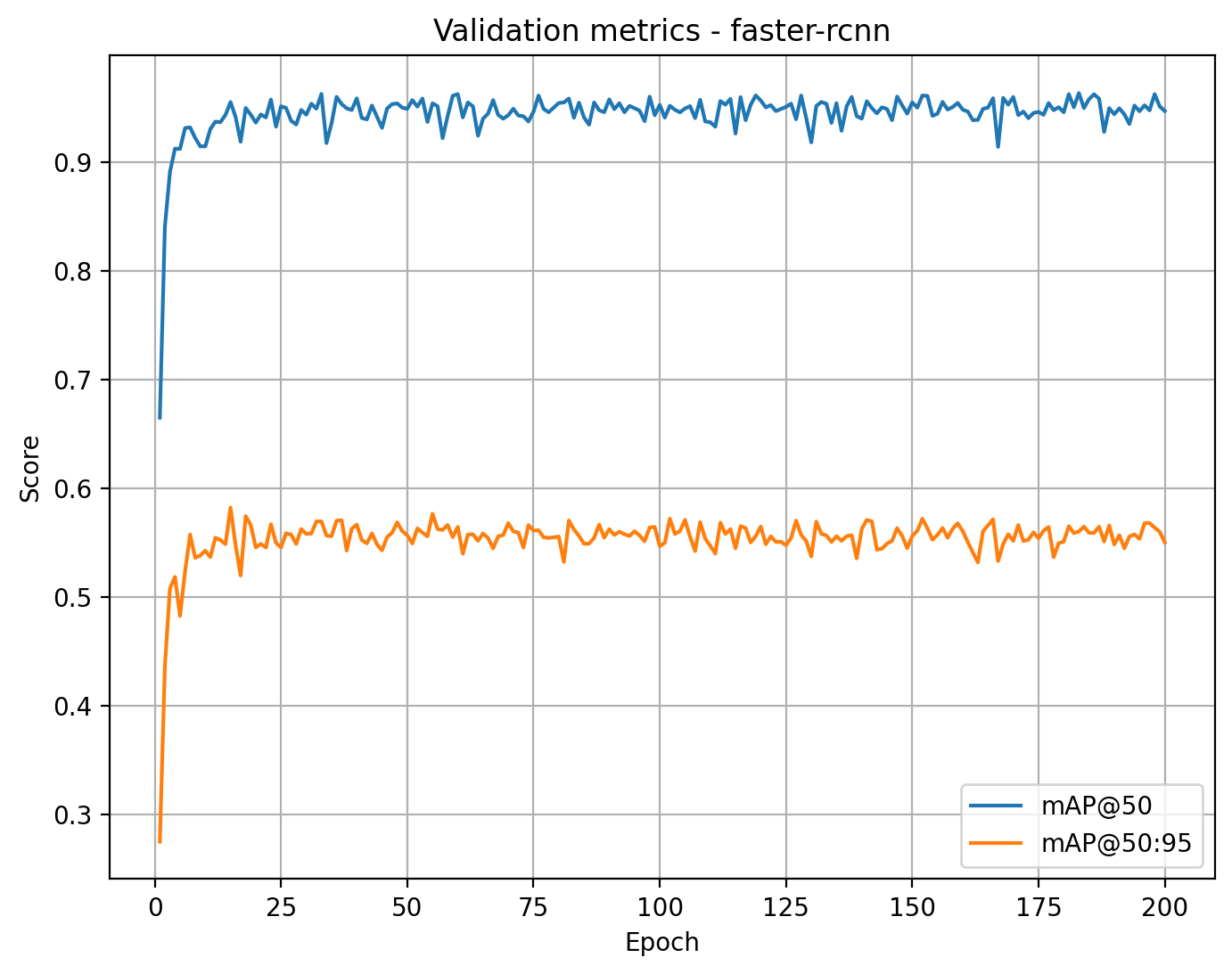
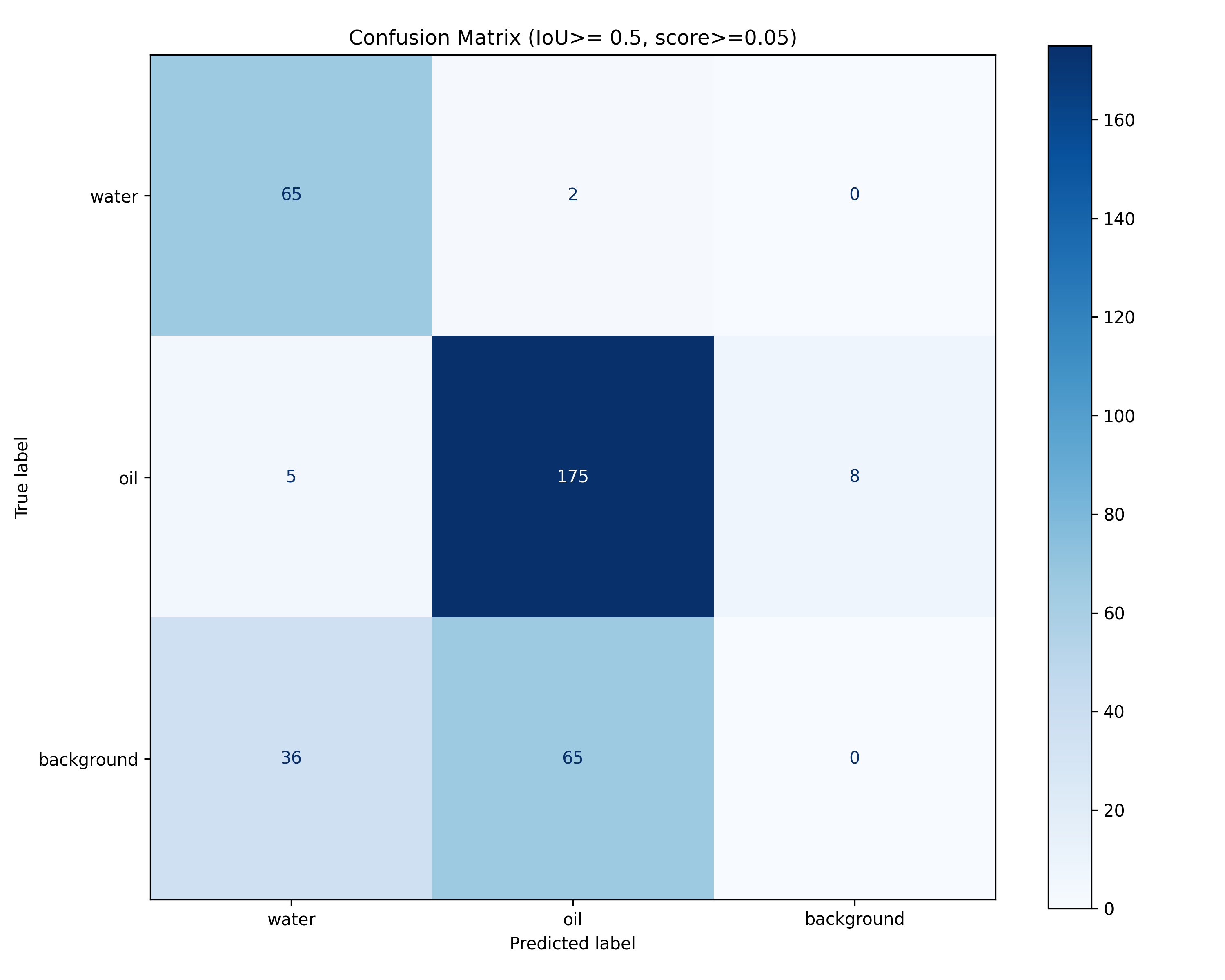
The model achieved an accuracy of 93.1% for Oil and 97.0% for Water.
| Class | mAP@50 | mAP@50:95 | Precision | Recall | F1-score |
|---|---|---|---|---|---|
| Oil | 0.933 | 0.427 | 0.933 | 0.957 | 0.945 |
| Water | 0.993 | 0.693 | 0.993 | 1.000 | 0.997 |
| Overall | 0.963 | 0.560 | 0.963 | 0.979 | 0.971 |
Training Loss
Validation mAP
Confusion Matrix
Test Results (Faster-RCNN)
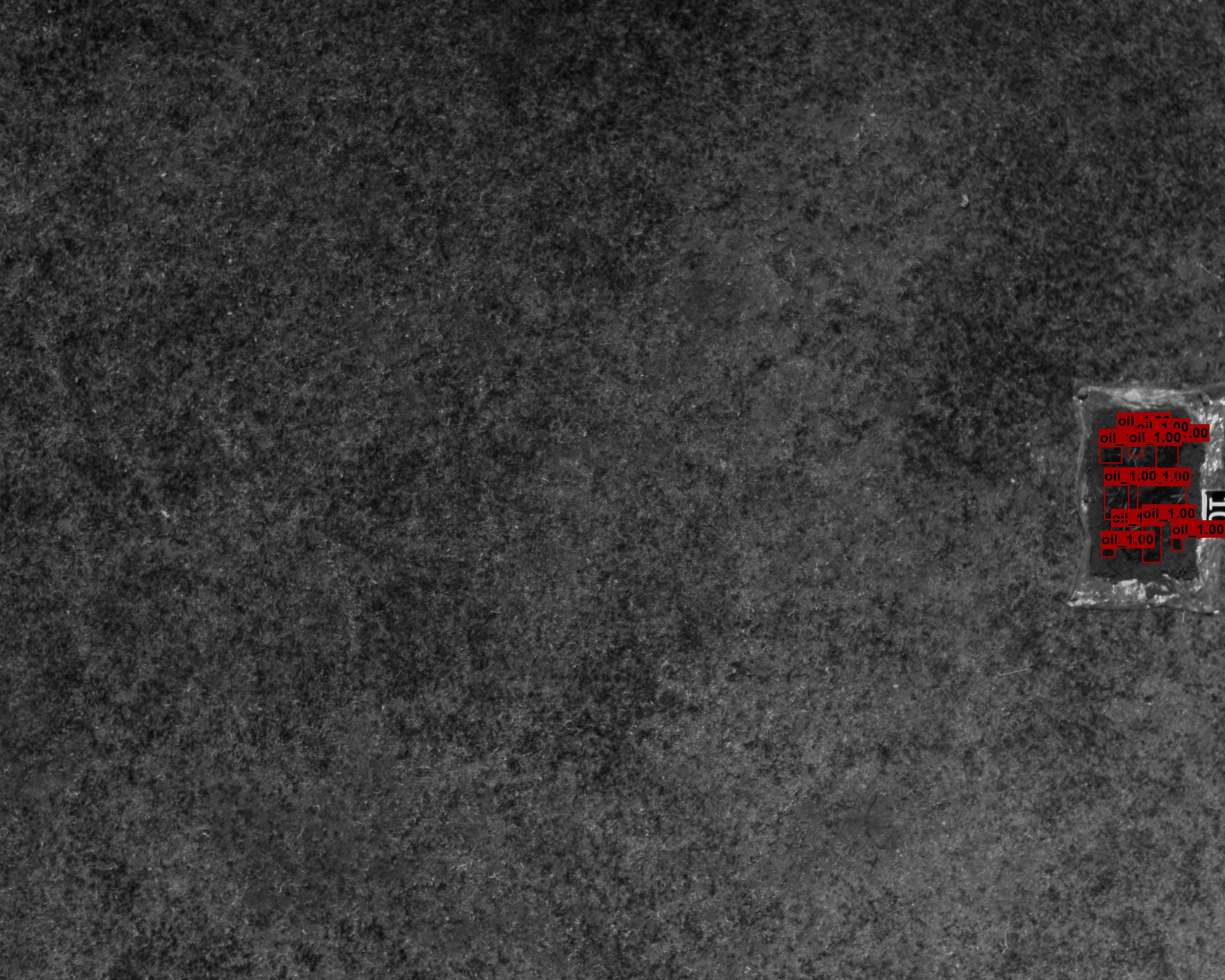
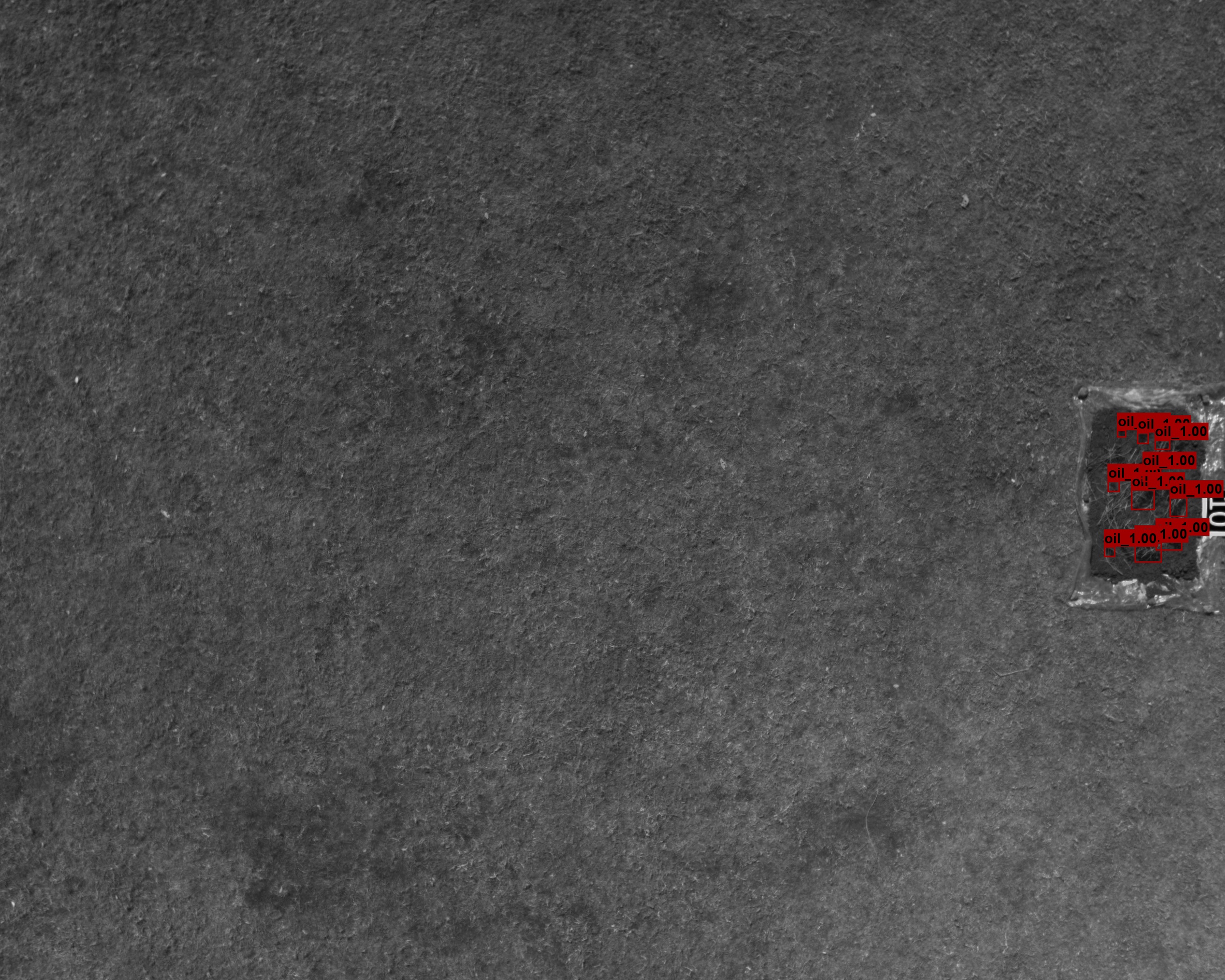
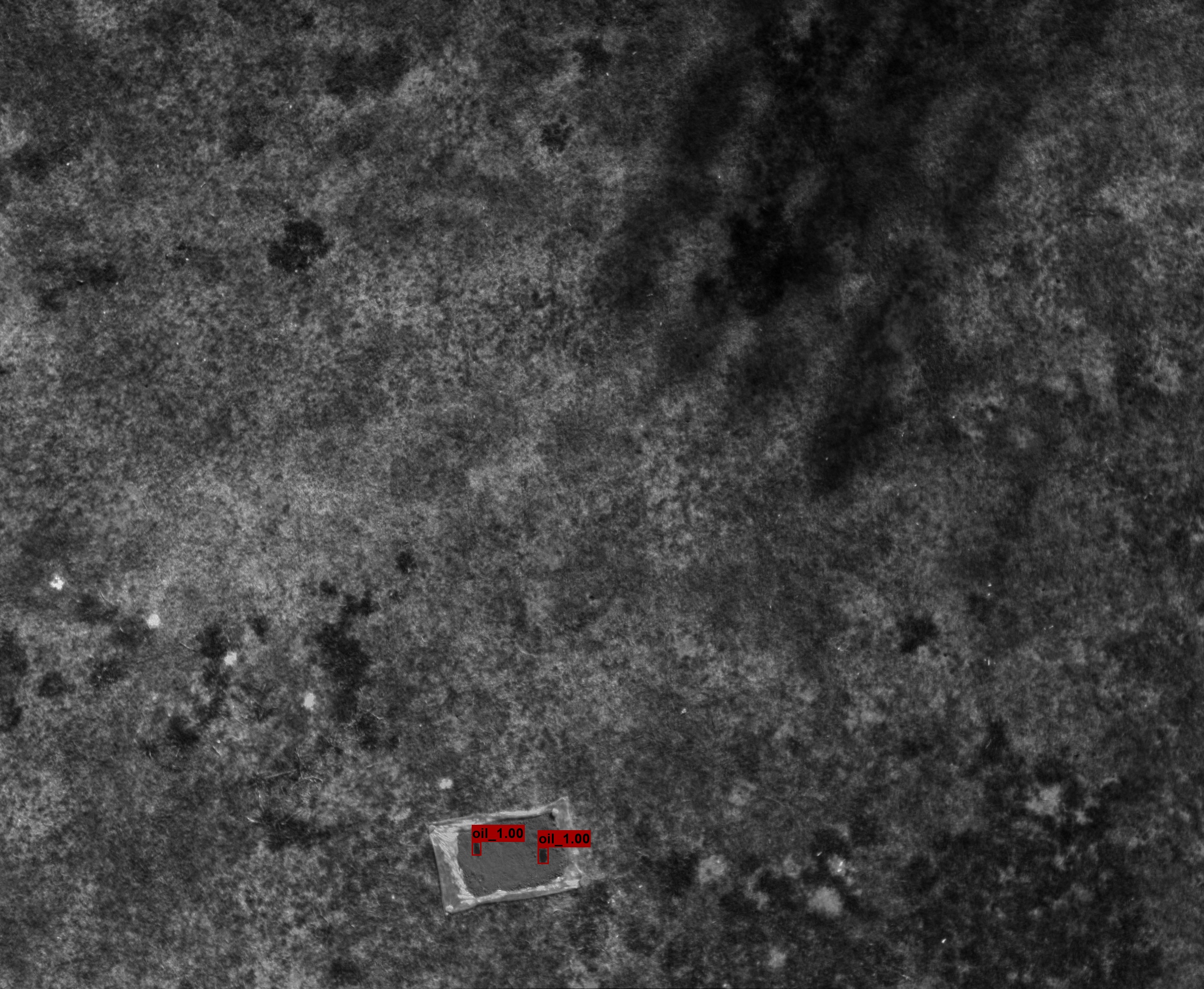
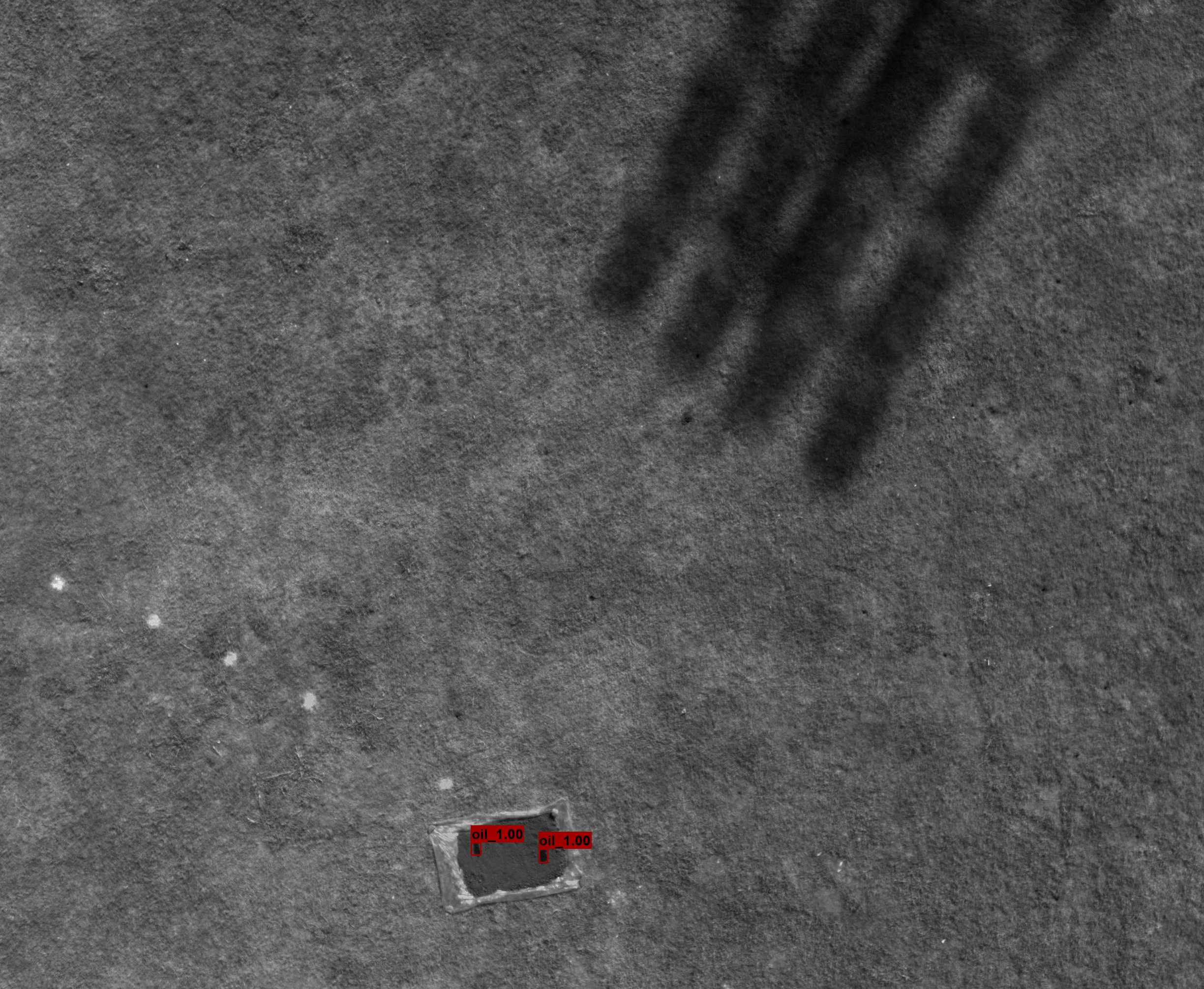
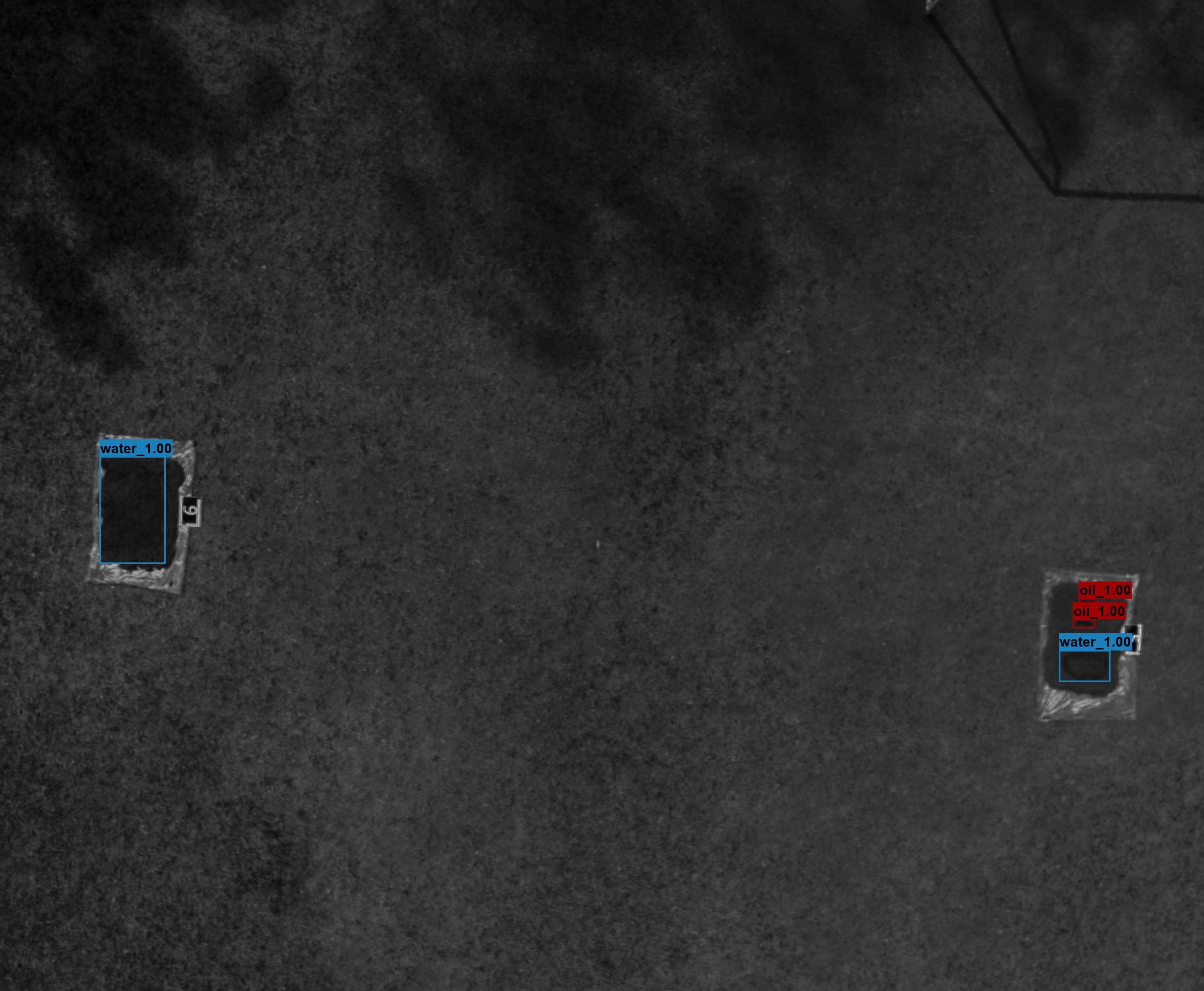
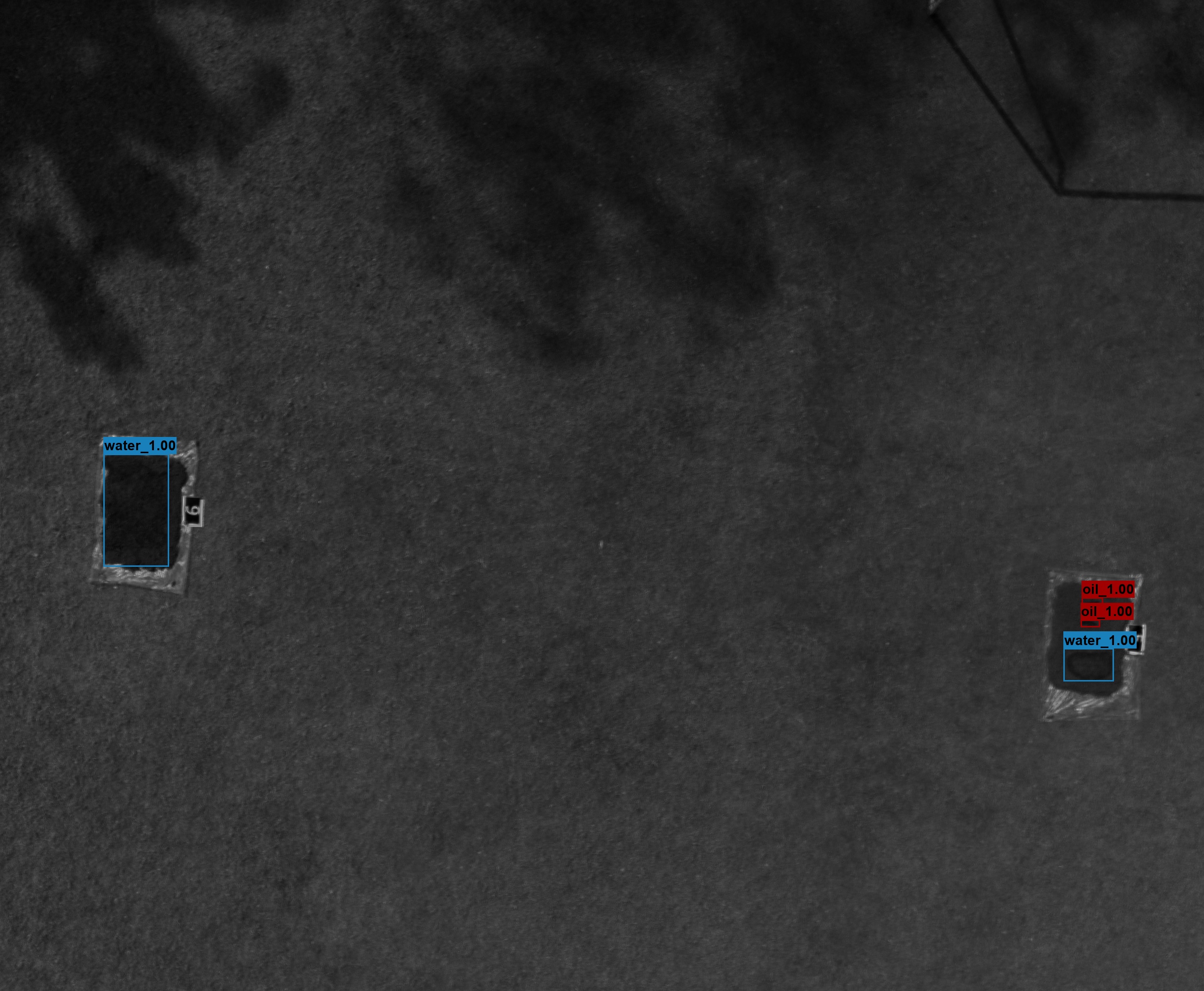
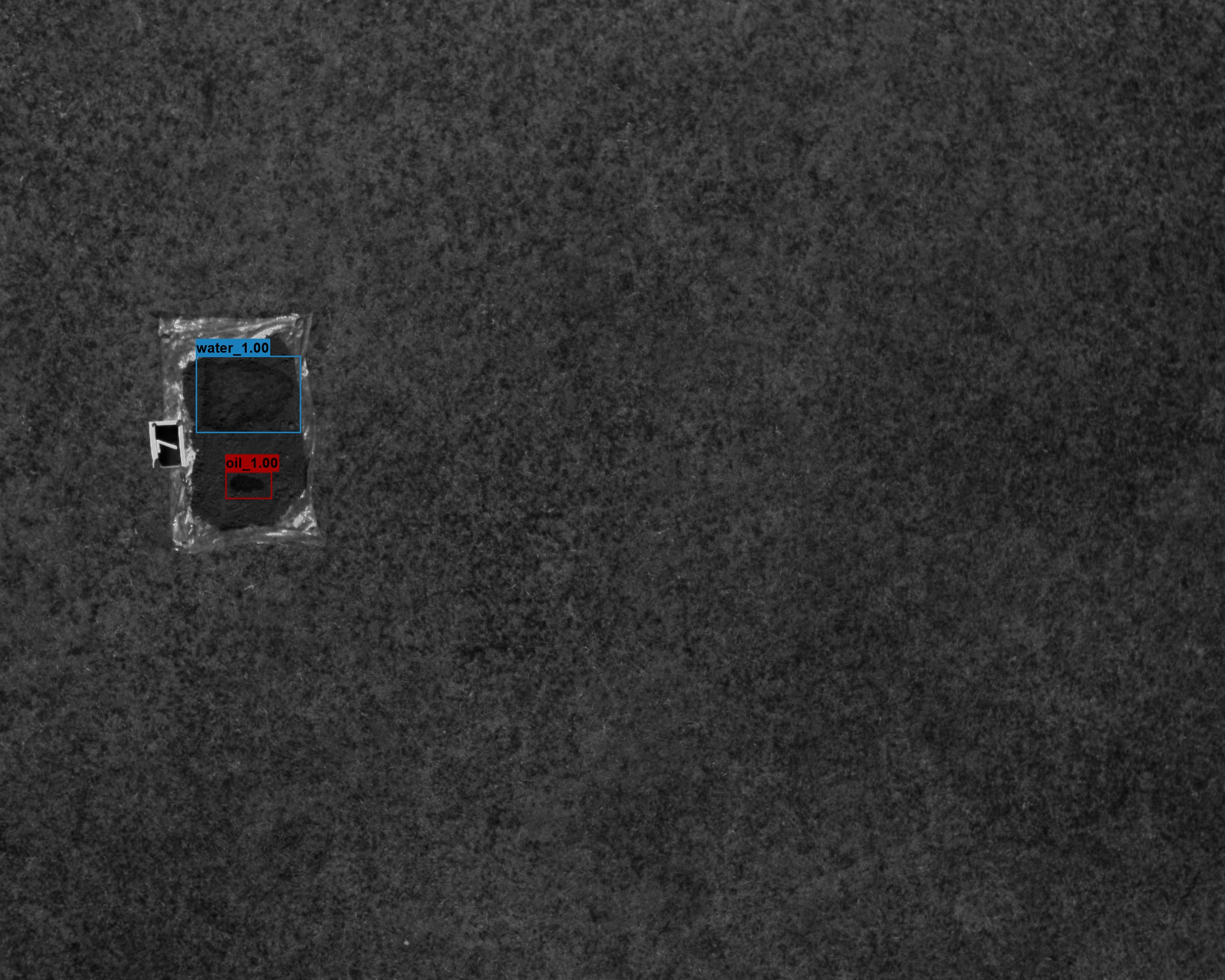
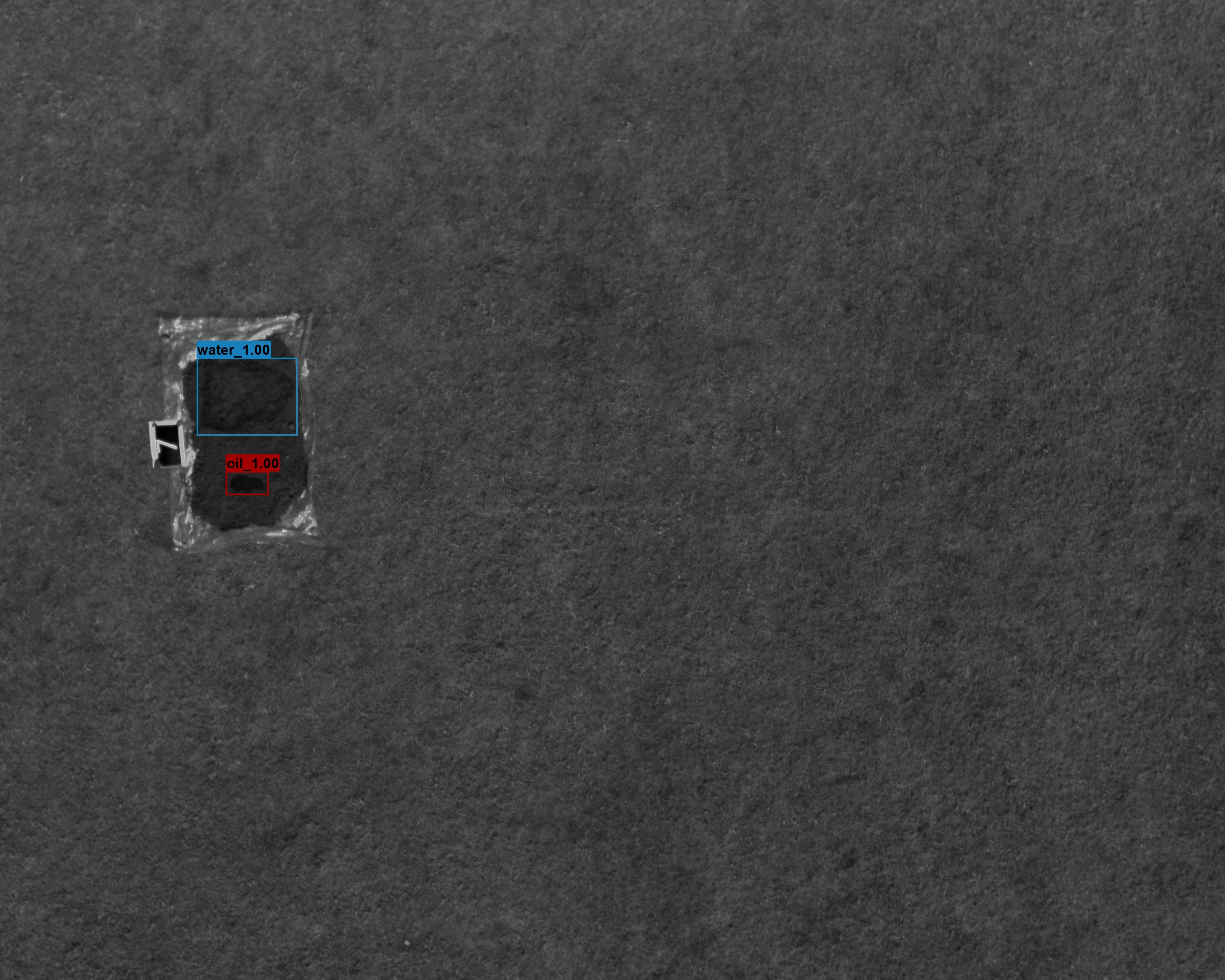
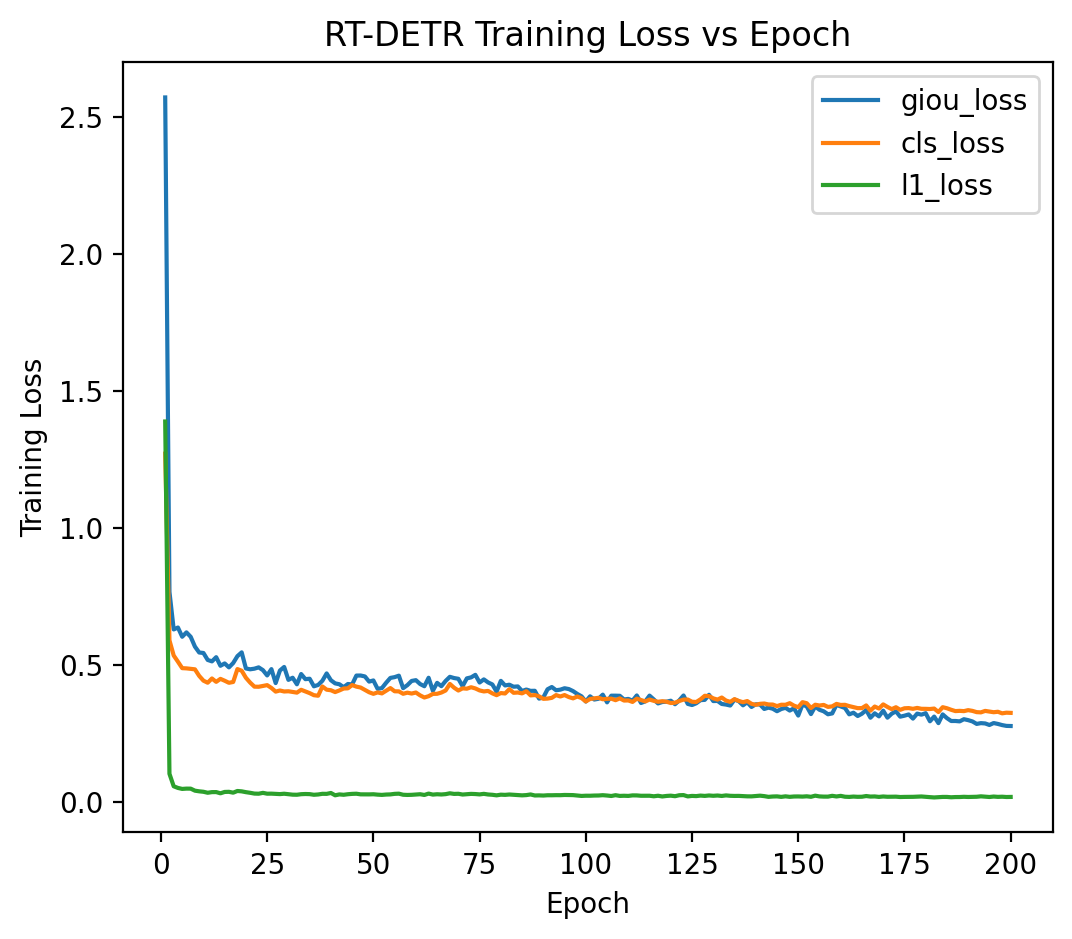
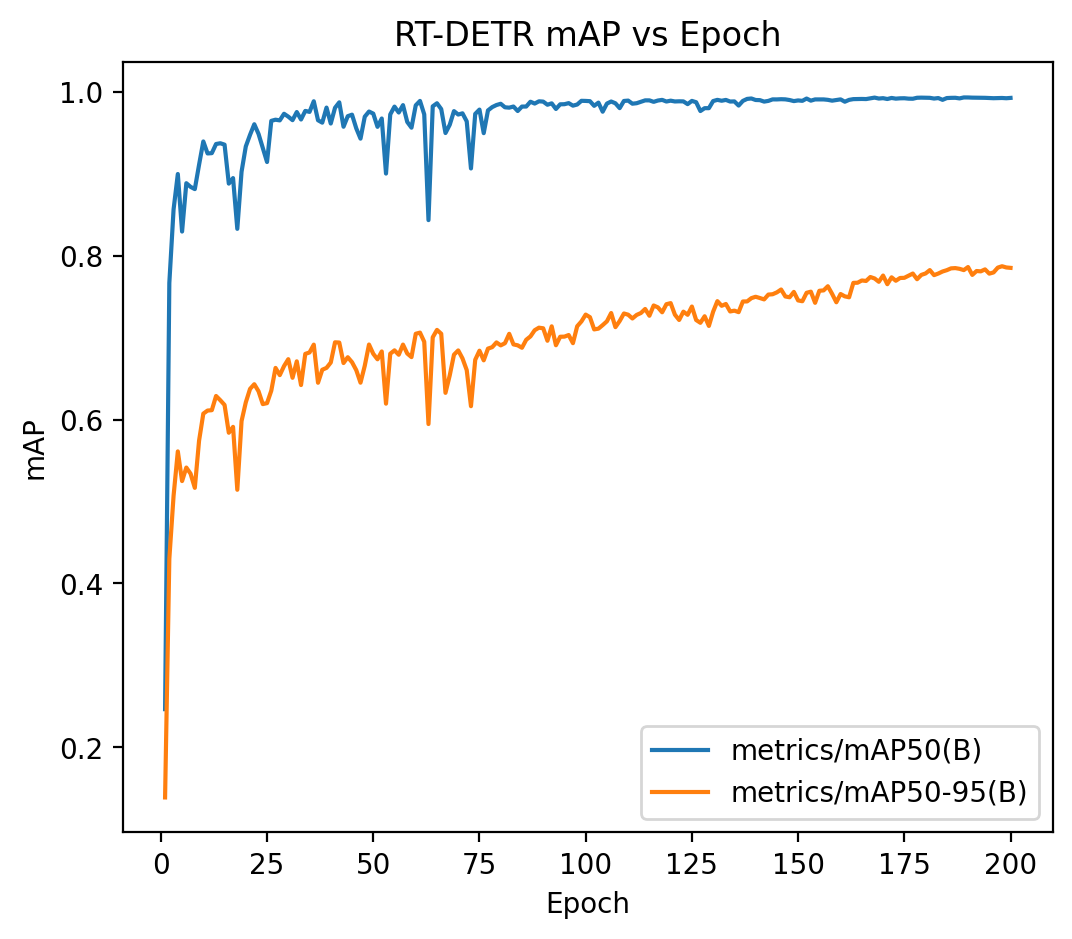
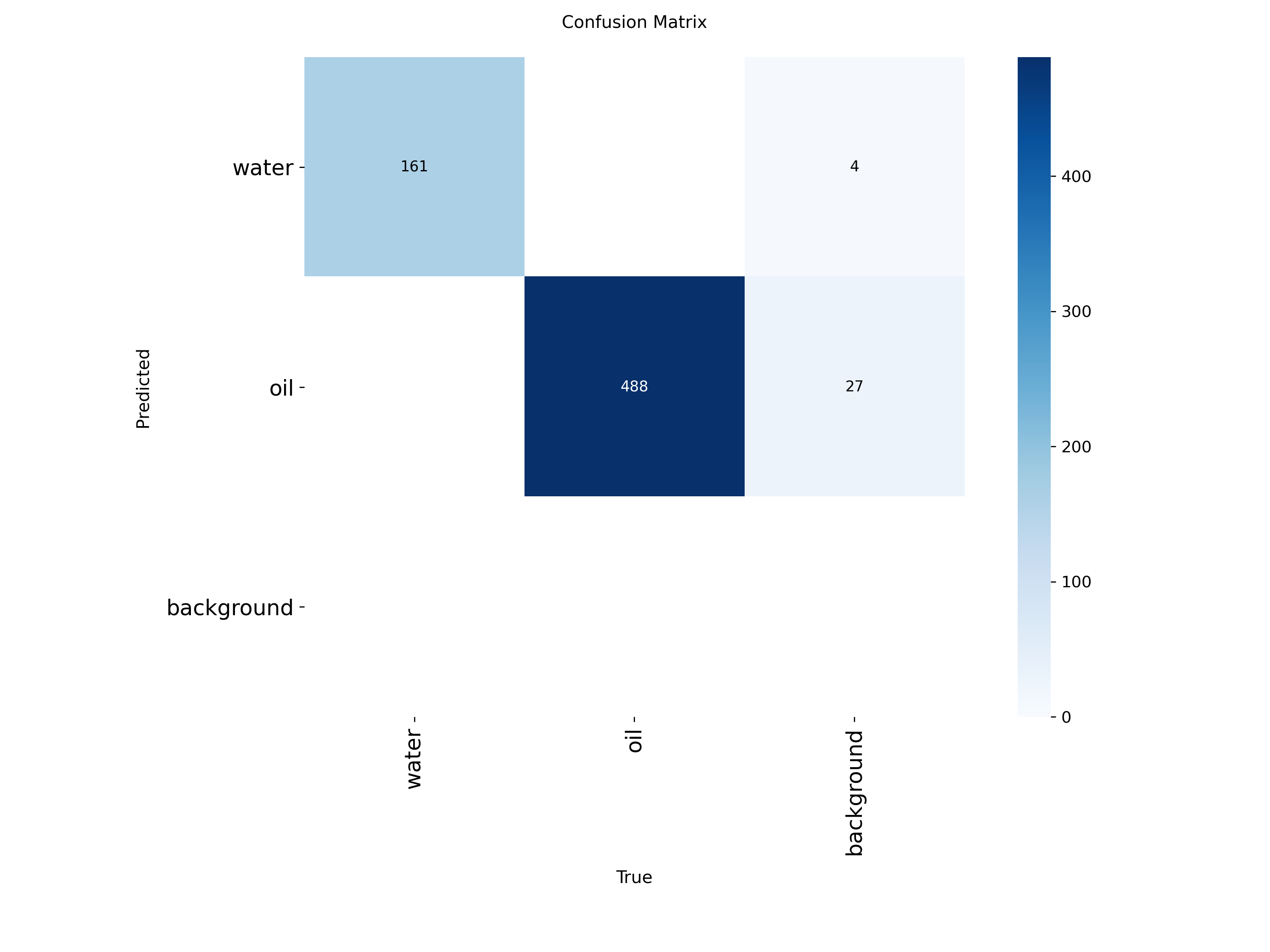
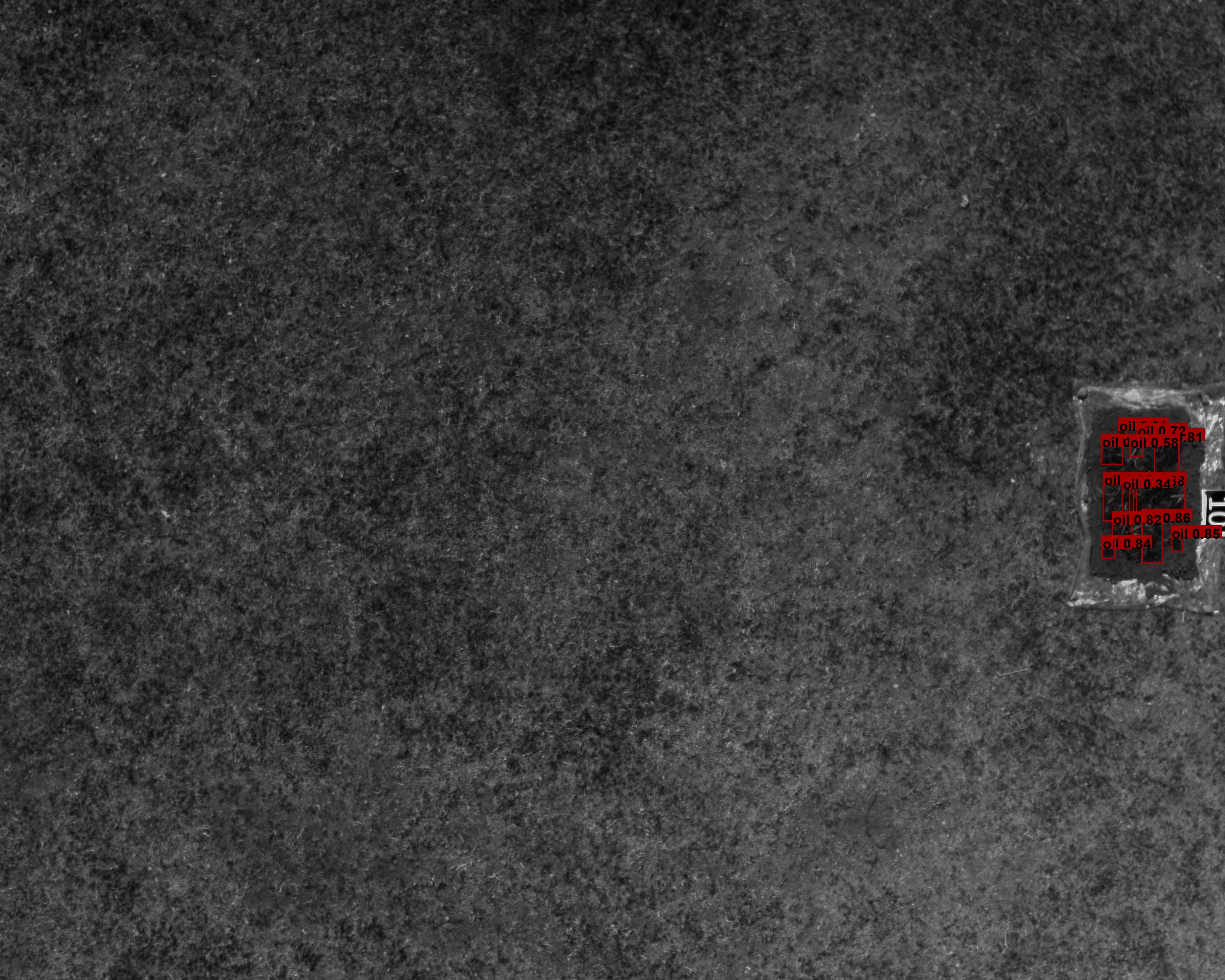
Model Performance - RT-DETR
The model achieved an accuracy of 94.7% for Oil and 97.6% for Water.
| Class | mAP@50 | mAP@50:95 | Precision | Recall | F1-score |
|---|---|---|---|---|---|
| Oil | 0.991 | 0.719 | 0.978 | 0.989 | 0.983 |
| Water | 0.994 | 0.877 | 0.988 | 0.992 | 0.990 |
| Overall | 0.992 | 0.798 | 0.983 | 0.990 | 0.987 |
Training Loss
Validation mAP
Confusion Matrix
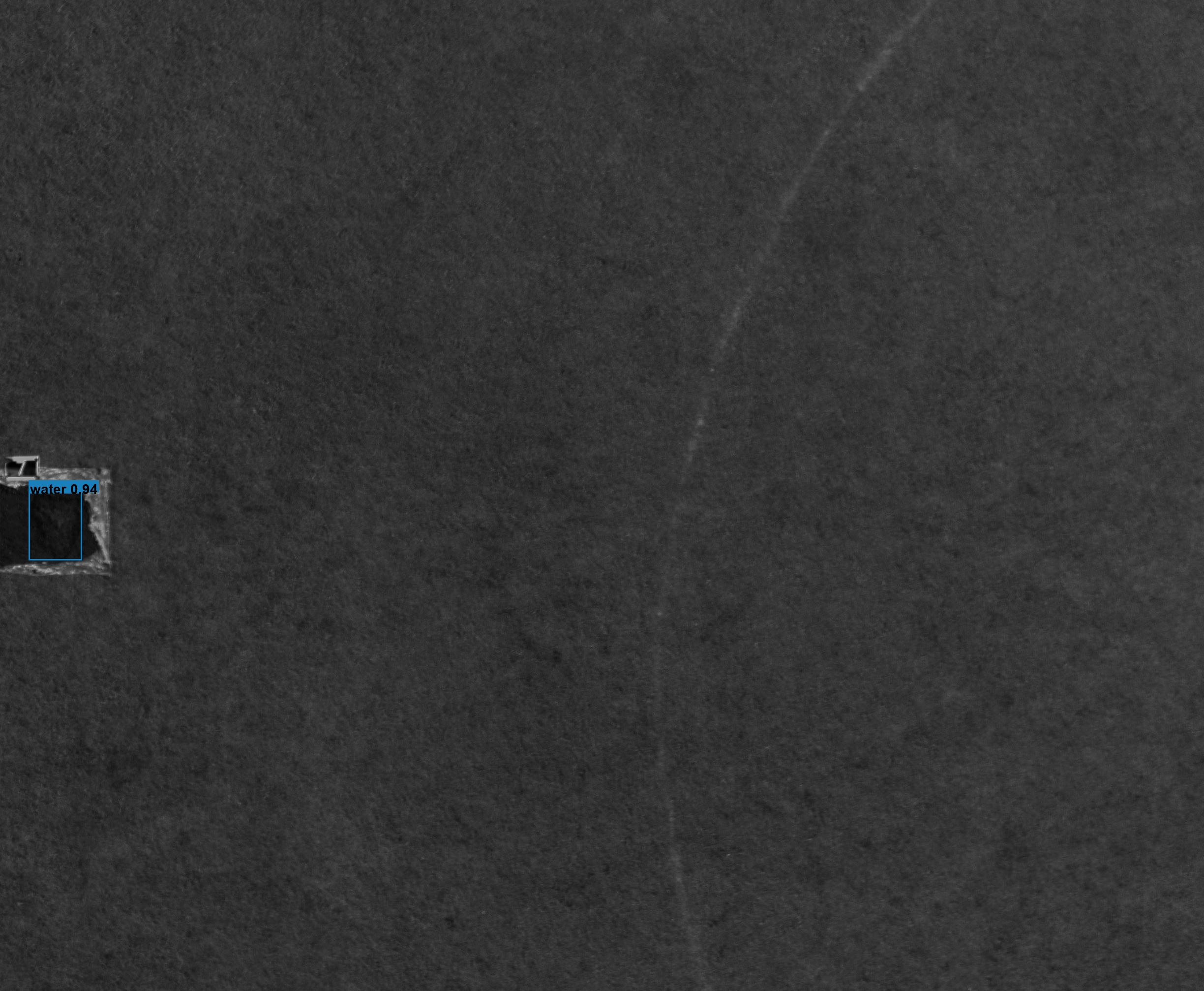
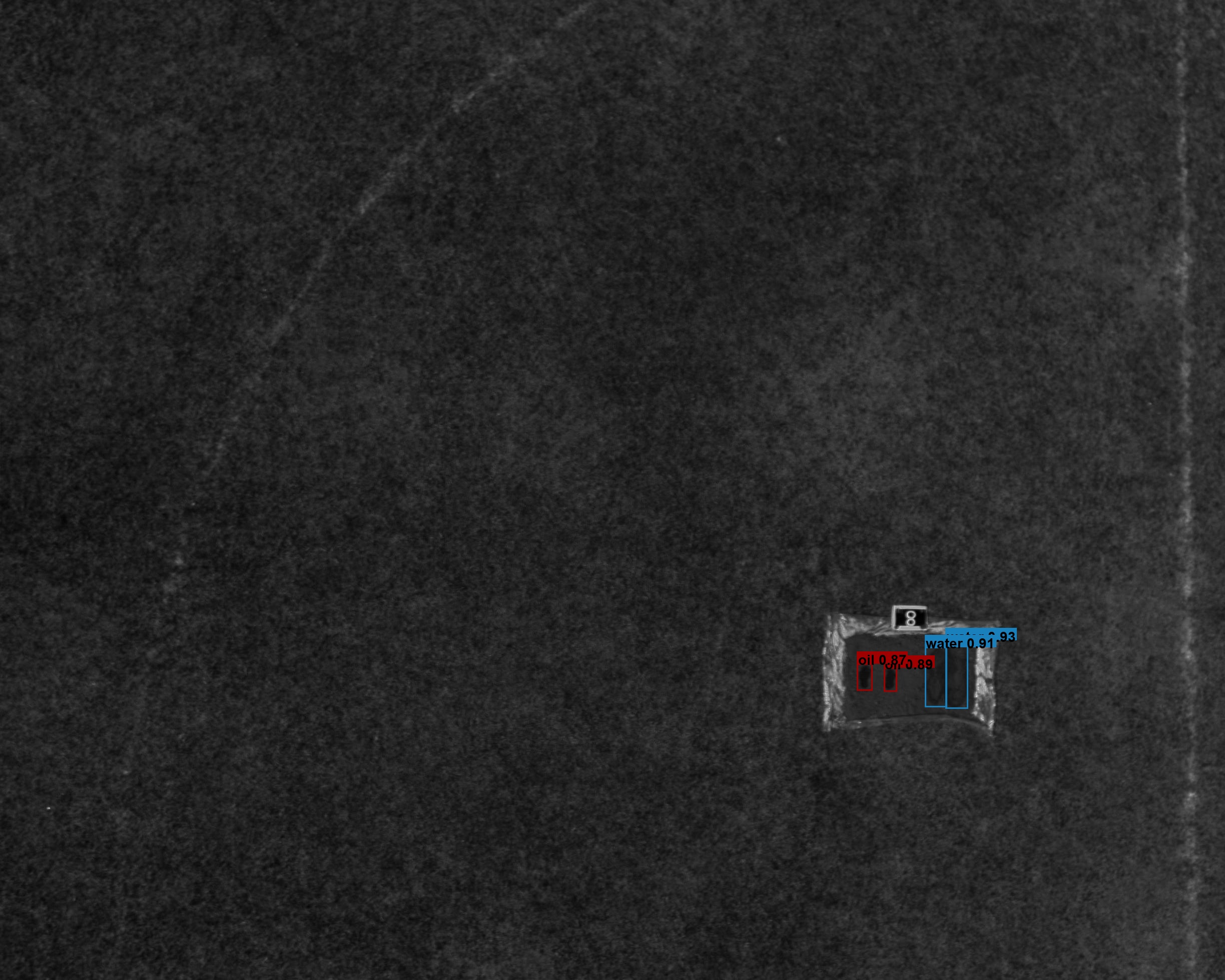
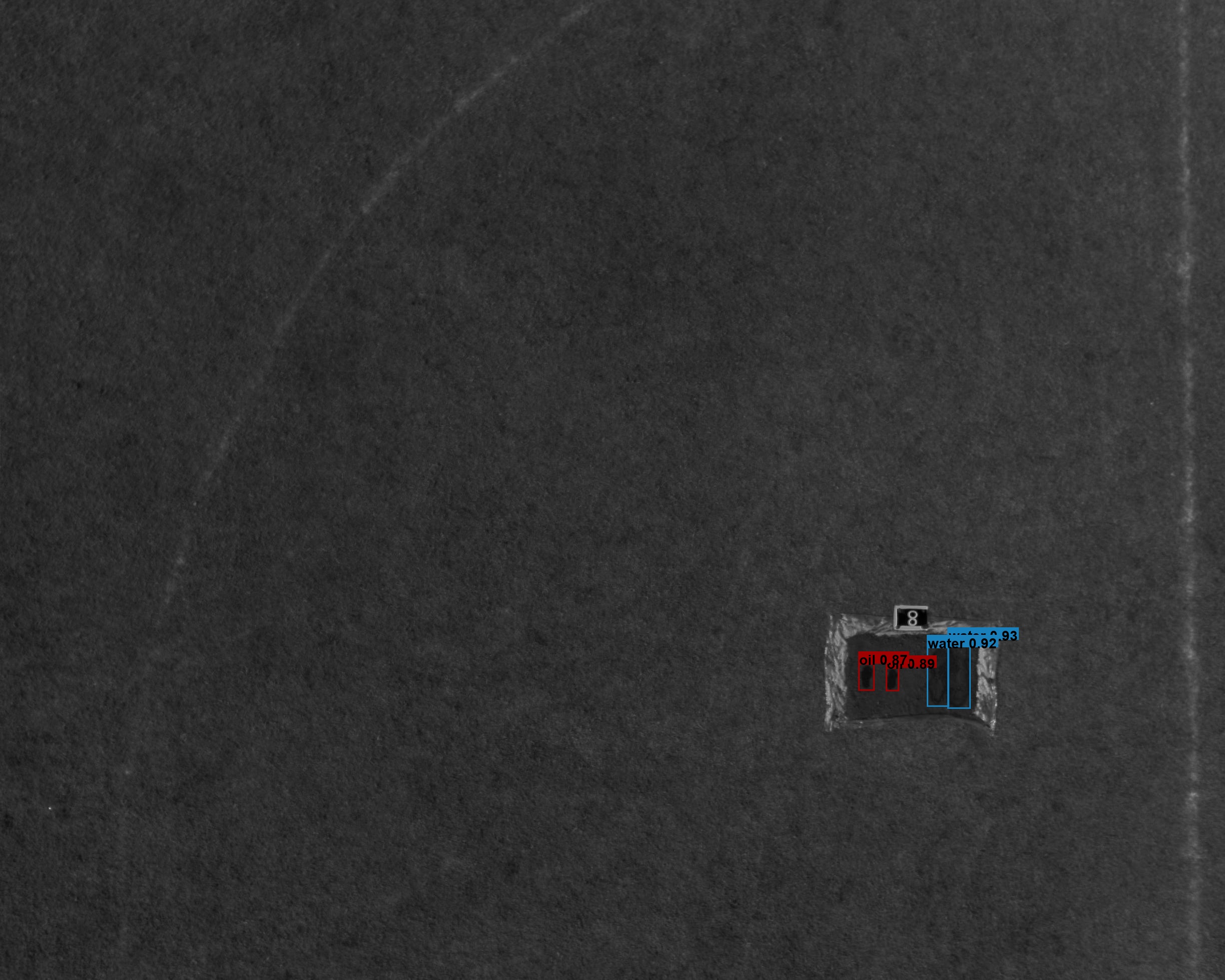
Test Results (RT-DETR)
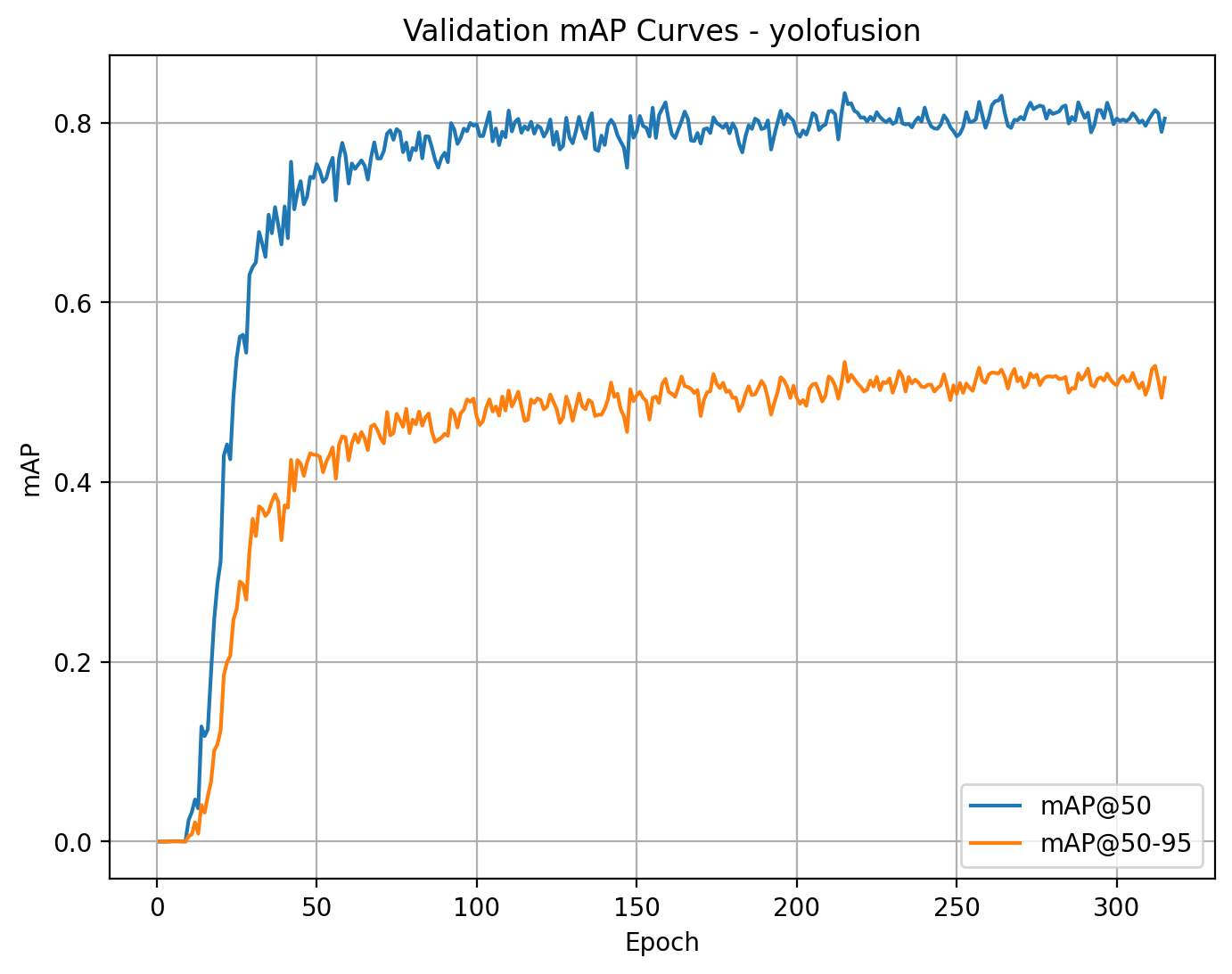
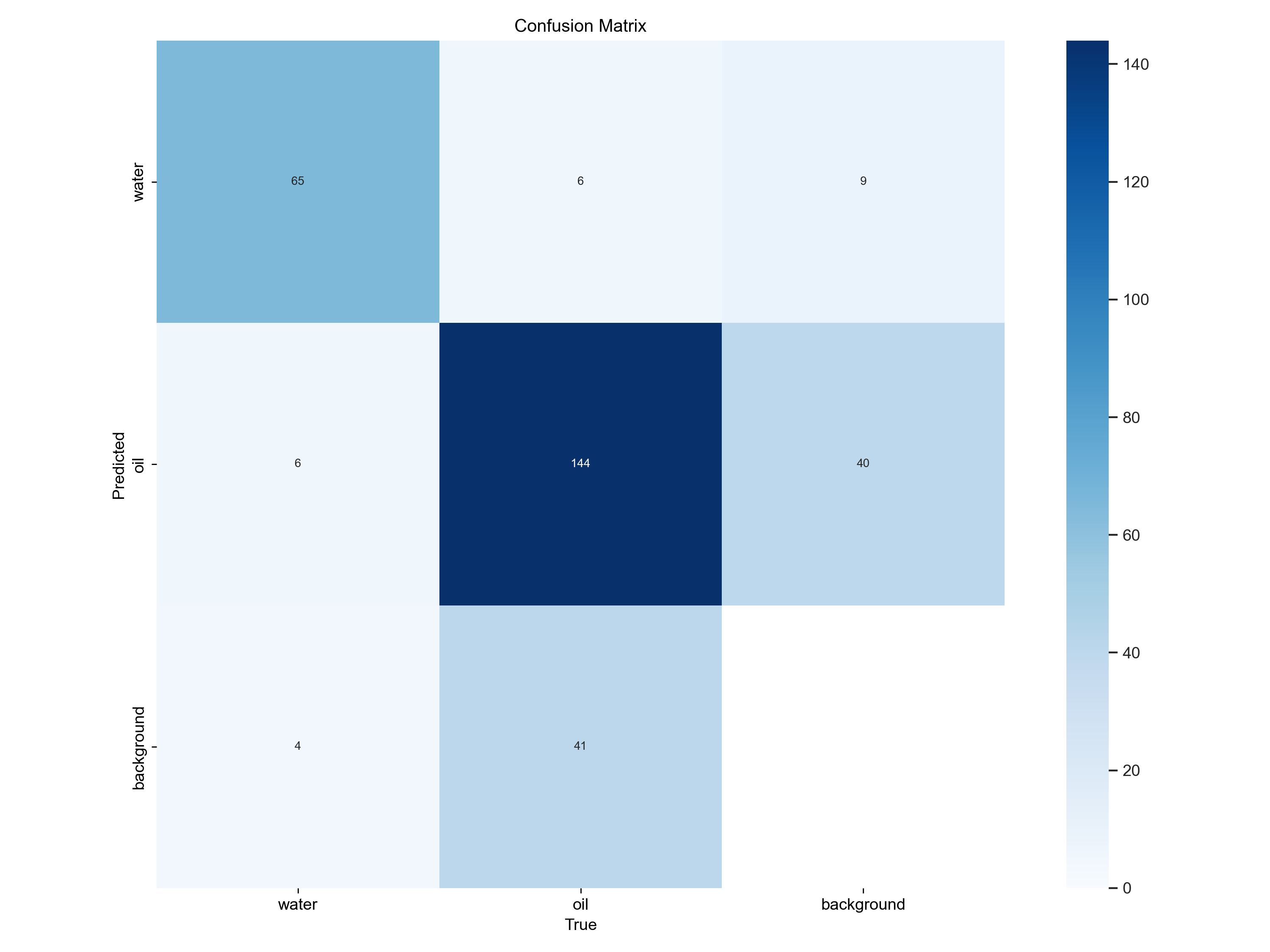
Model Performance - YOLOv11-RGBT (fusion)
The model achieved an accuracy of 75.9% for Oil and 81.3% for Water.
| Class | mAP@50 | mAP@50:95 | Precision | Recall | F1-score |
|---|---|---|---|---|---|
| Oil | 0.751 | 0.397 | 0.8208 | 0.6649 | 0.7347 |
| Water | 0.887 | 0.663 | 0.9340 | 0.8267 | 0.8771 |
| Overall | 0.819 | 0.512 | 0.8321 | 0.7369 | 0.7816 |
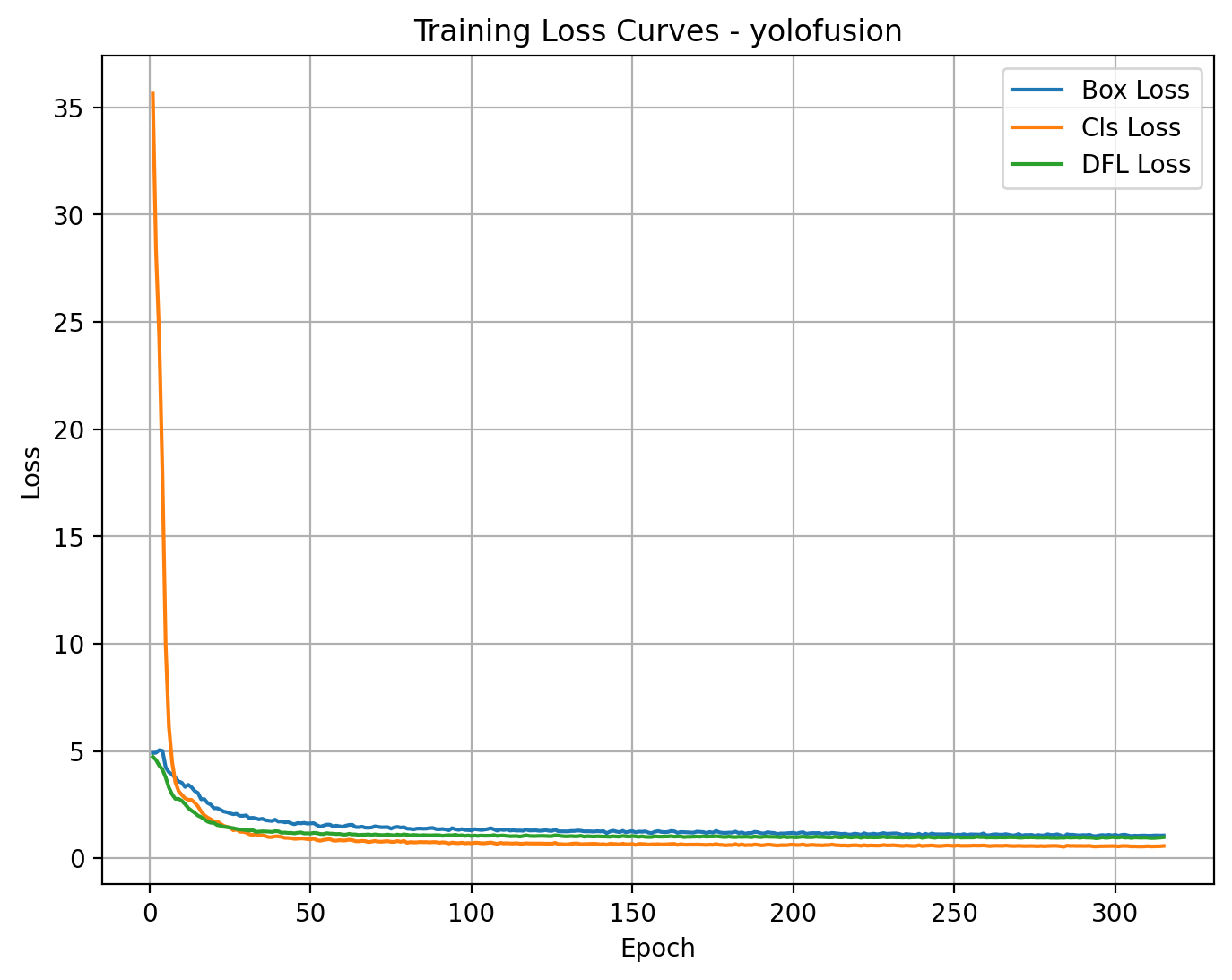
Training Loss
Validation mAP
Confusion Matrix
Test Results (YOLO-Fusion)
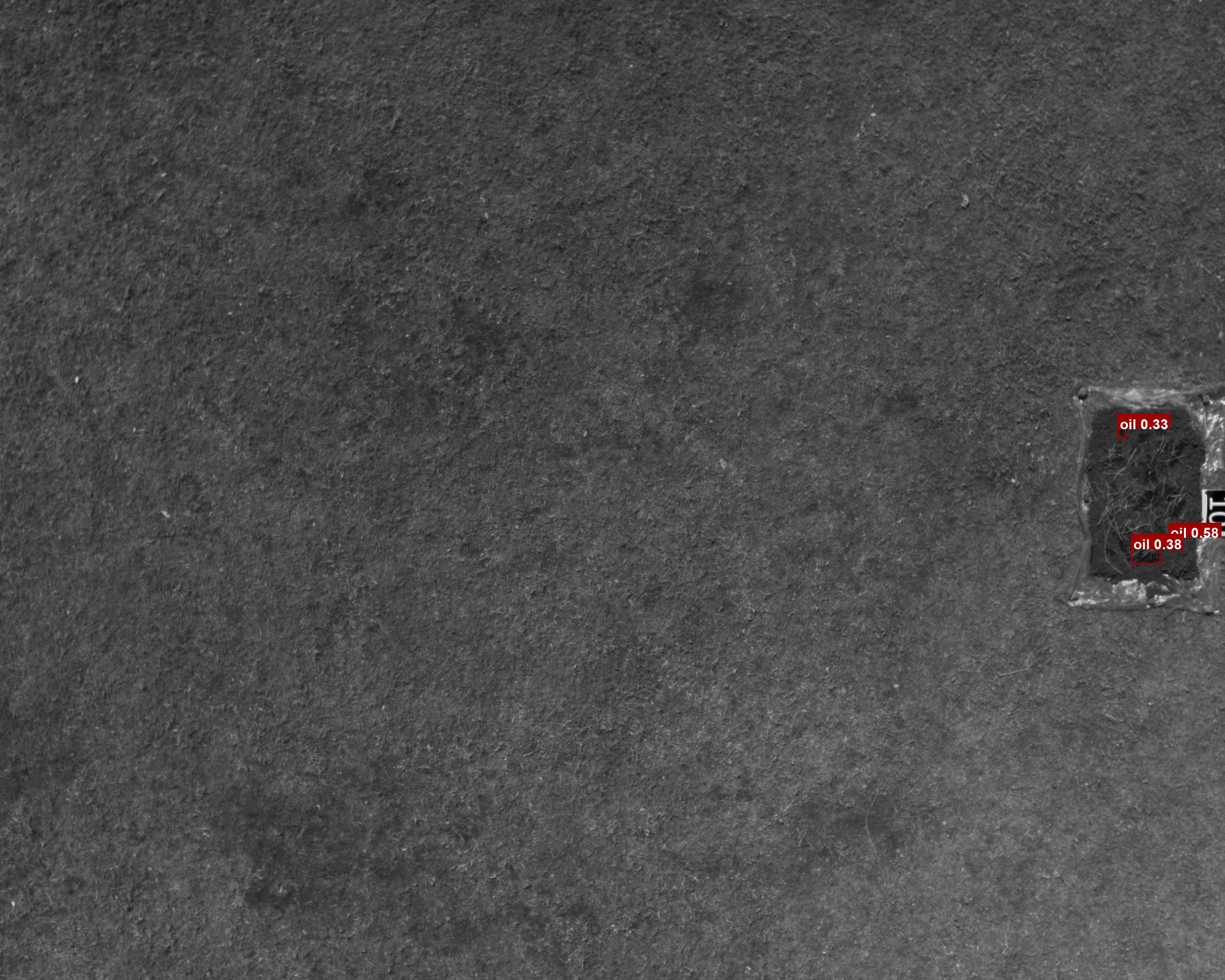
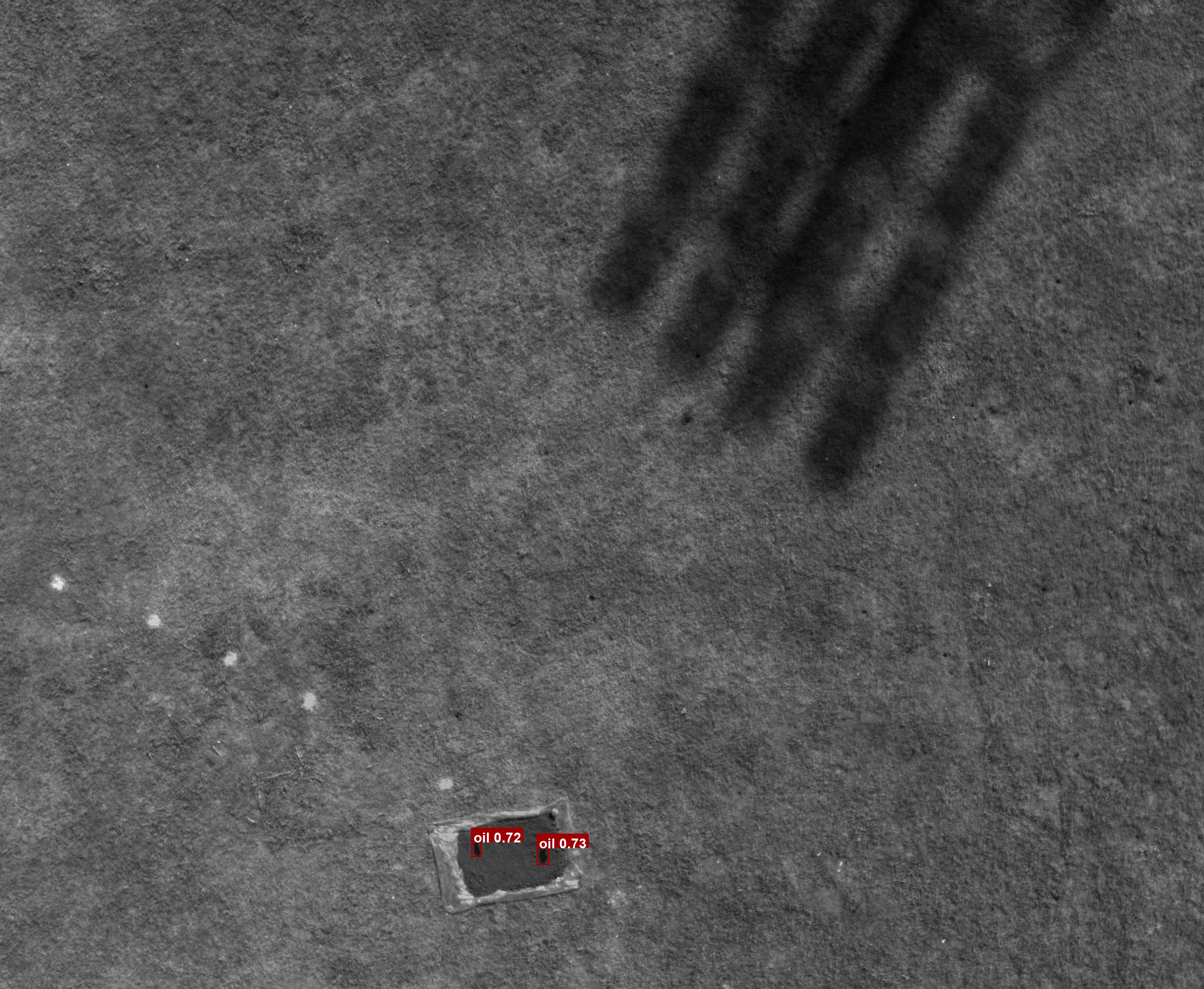
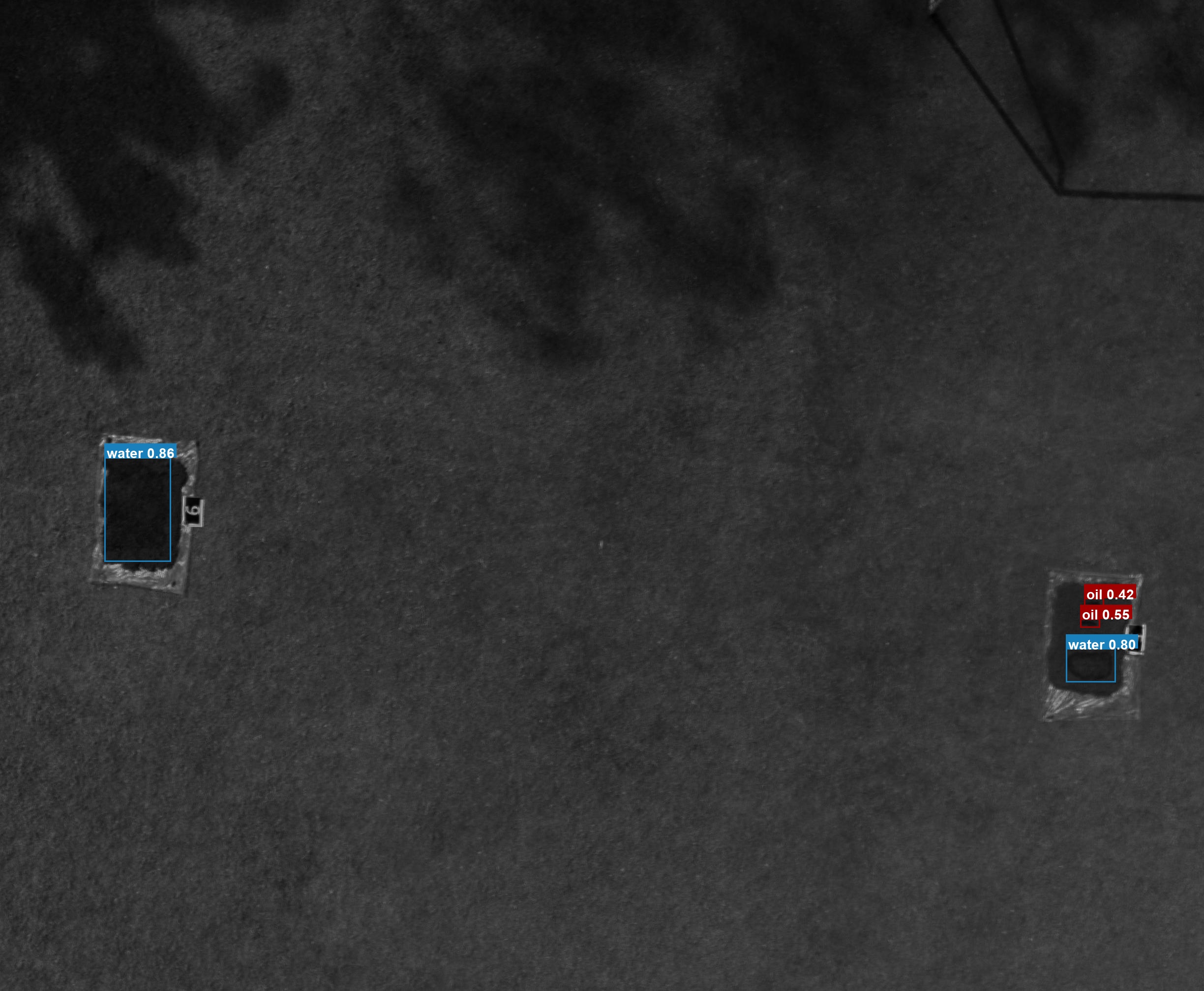
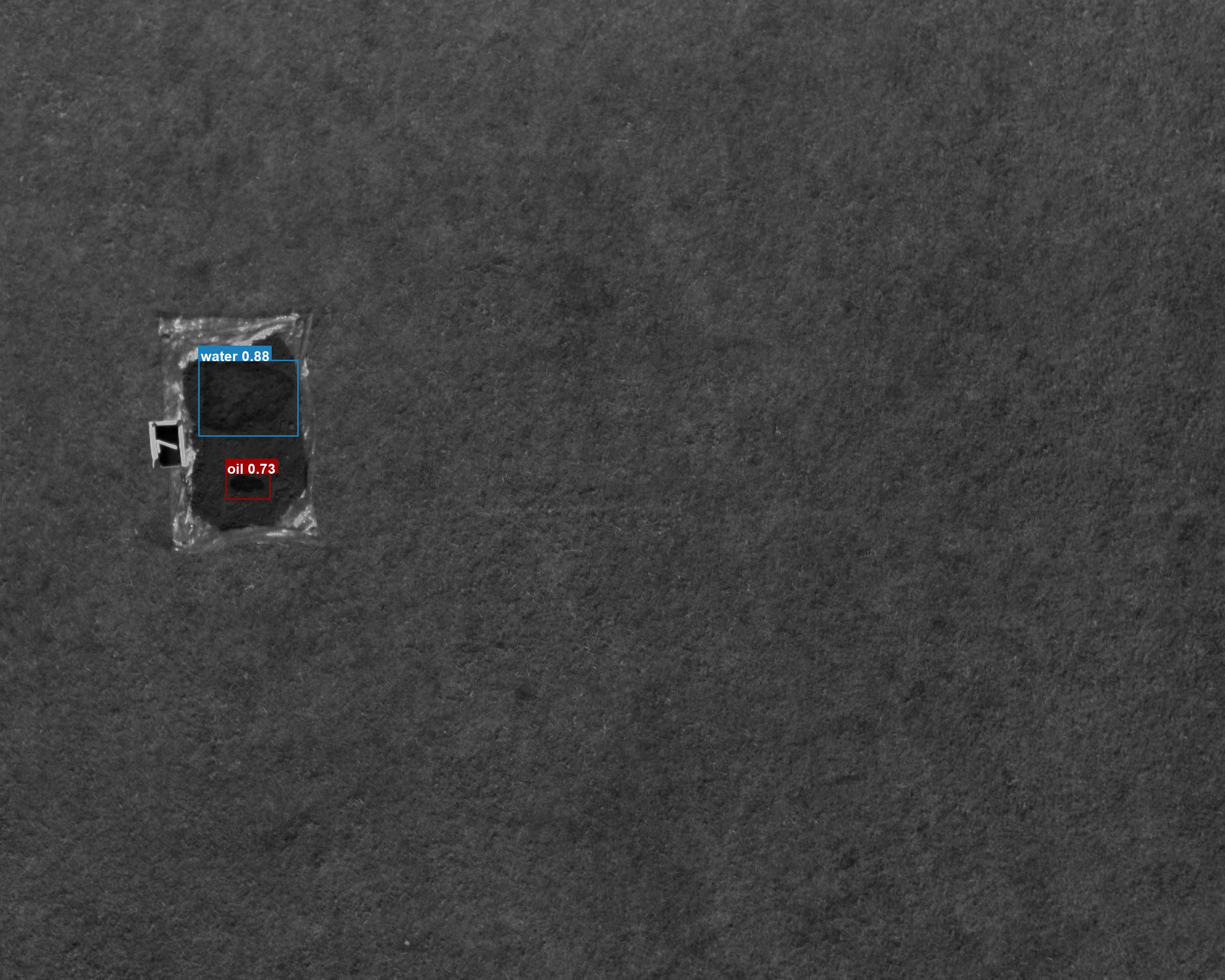
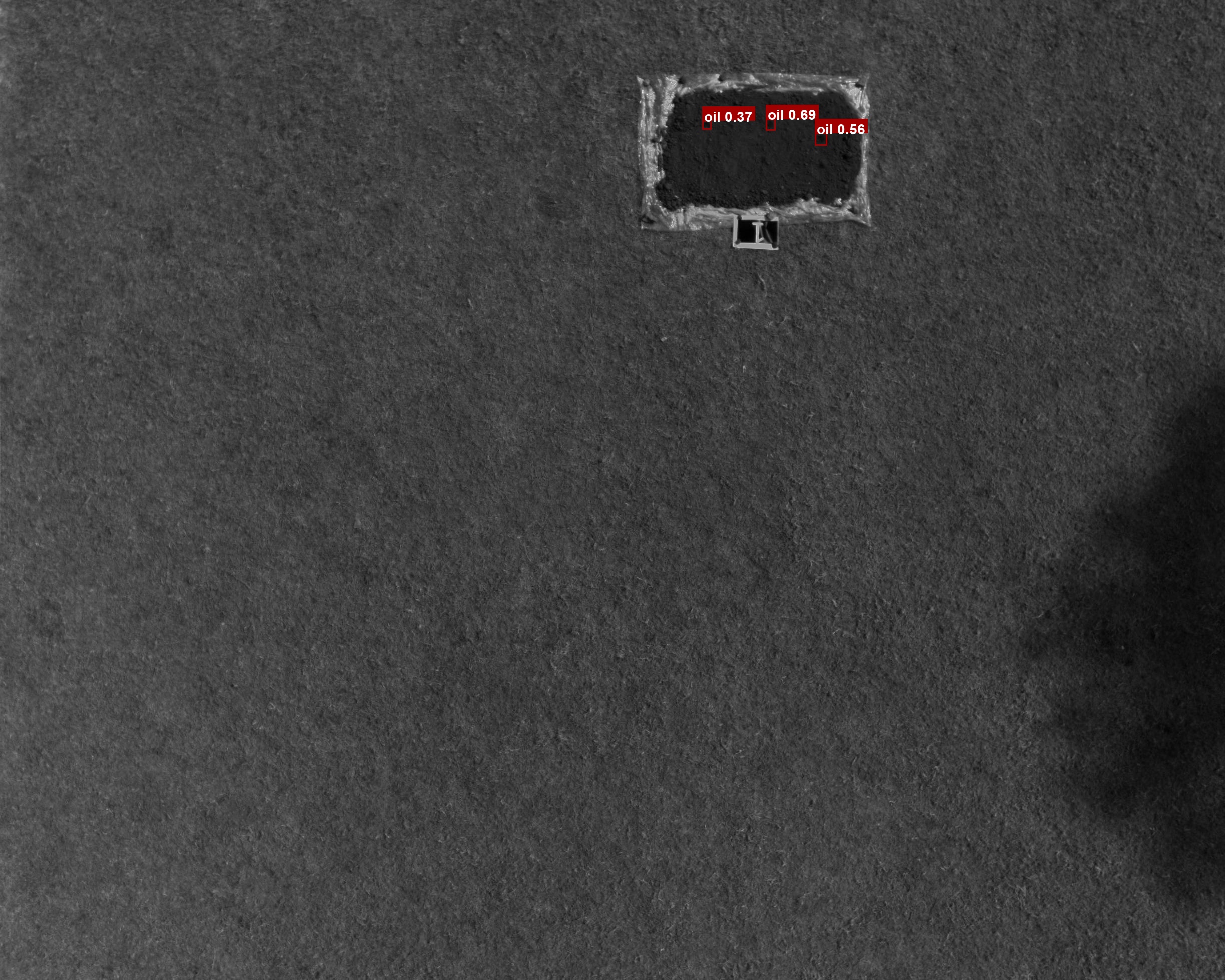
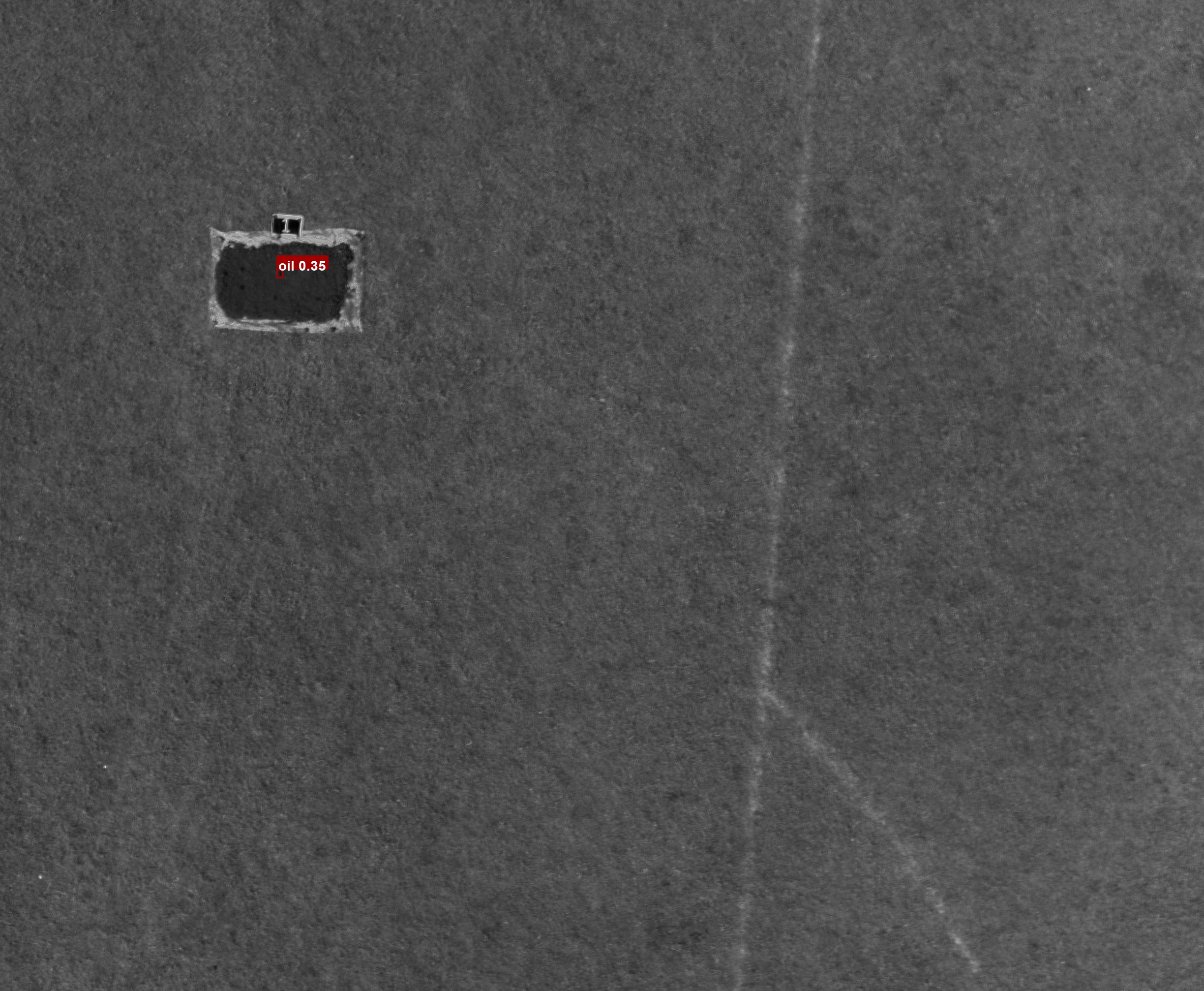
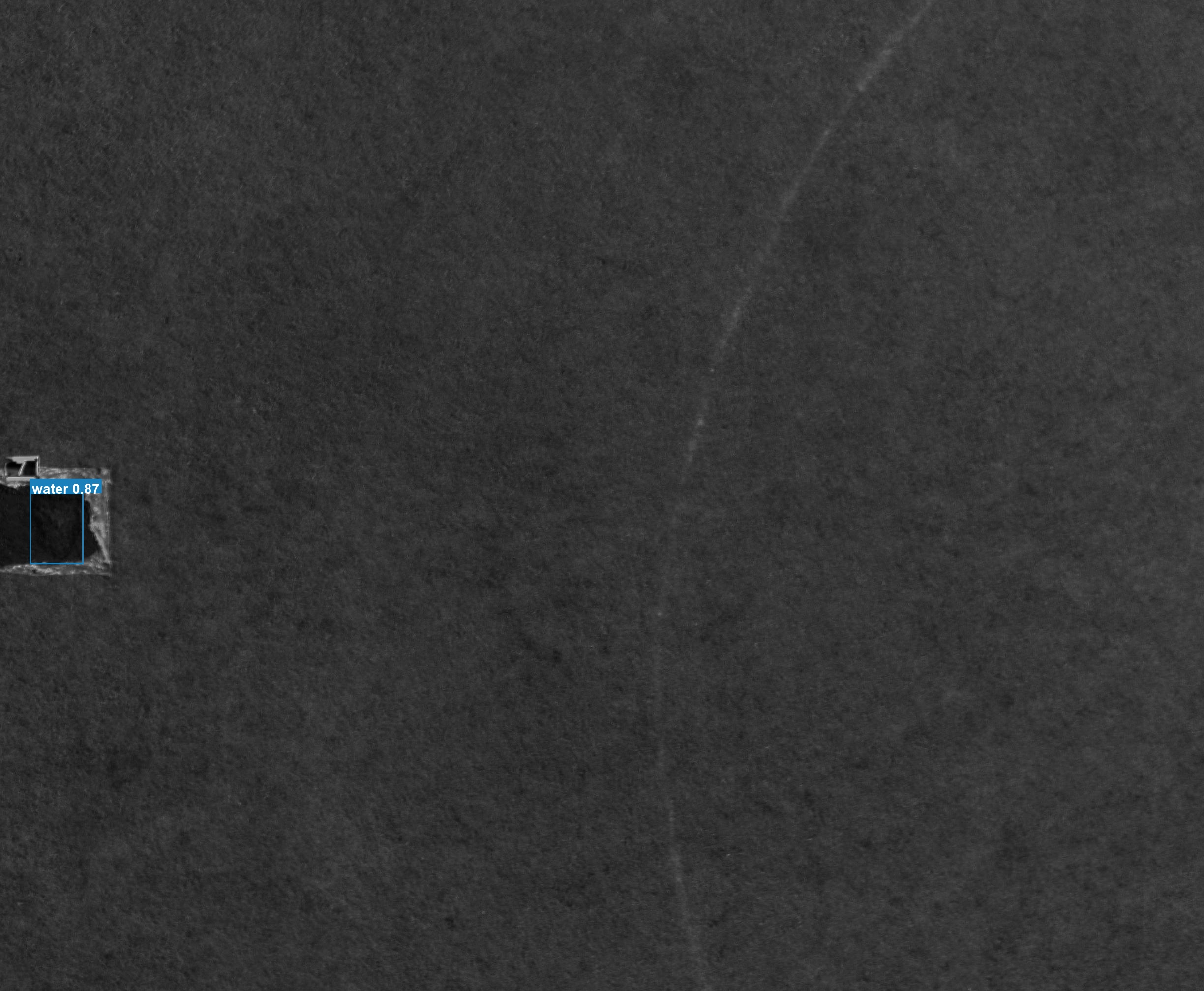
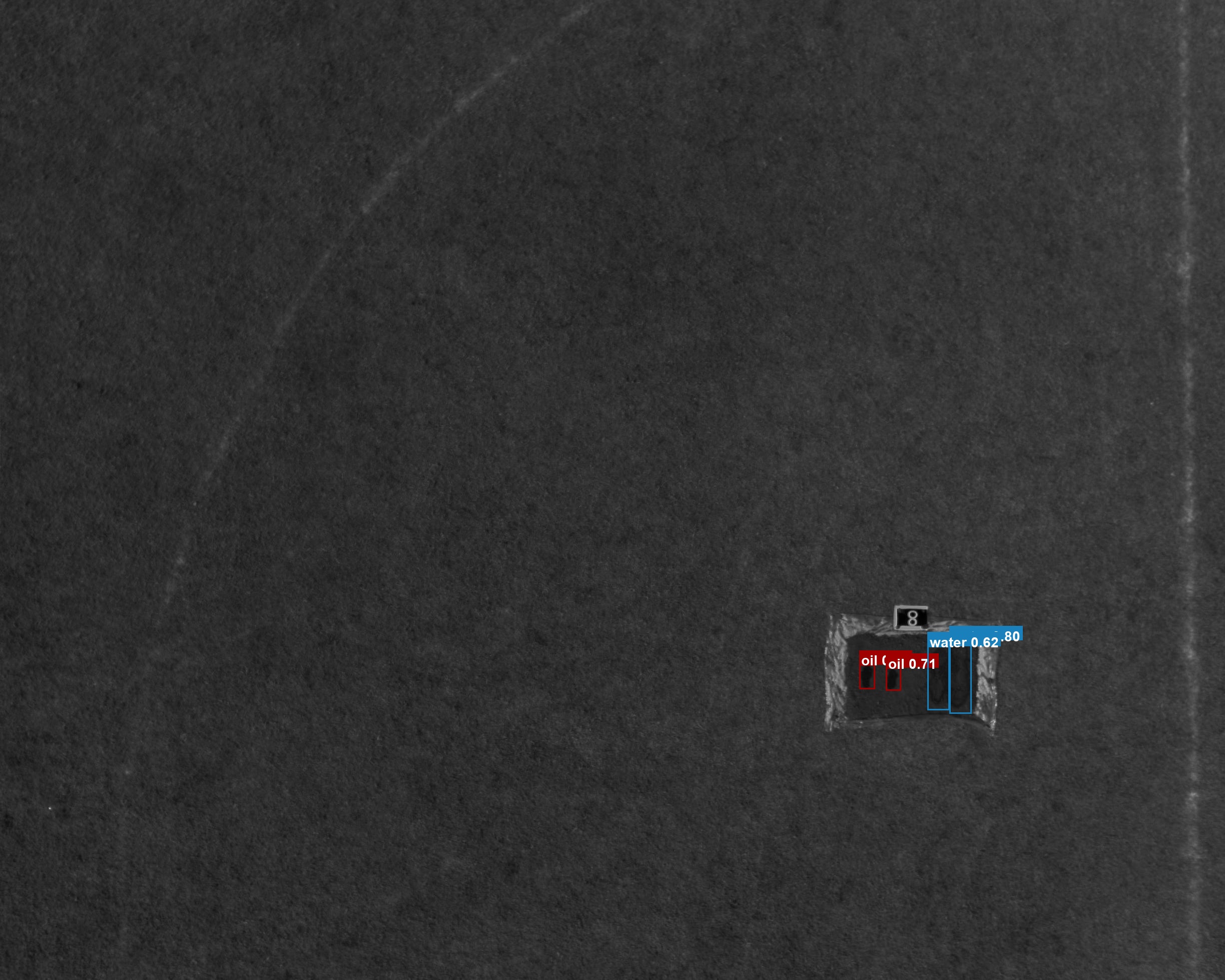
Comparison of Models on Key Processing Metrics for a Single Image (Image pair for YOLOFusion)
| Metric | YOLOv11 | YOLO-Fusion | RT-DETR | Faster R-CNN |
|---|---|---|---|---|
| Warp Matrix Generation† | 38.0 s | |||
| Alignment & Saving Rate | 72.73 µs | |||
| Processing Time | 0.0161 s | 0.10912 s | 0.0418 s | 0.0274 s |
| Total Time | 38.0171 s | 38.1091 s | 38.0422 s | 38.0275 s |
Setup 3: Dynamic Oil Drip Testbed
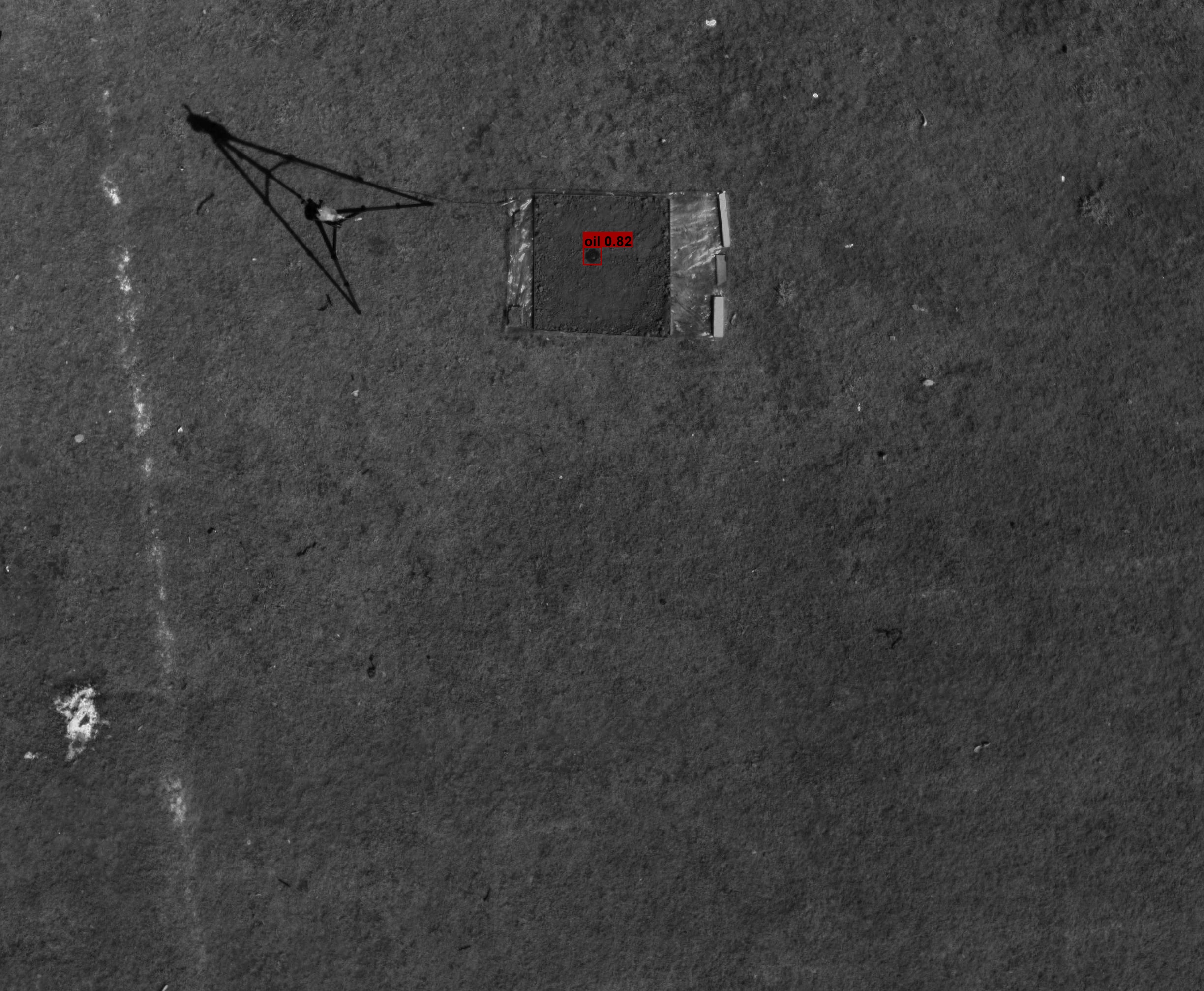
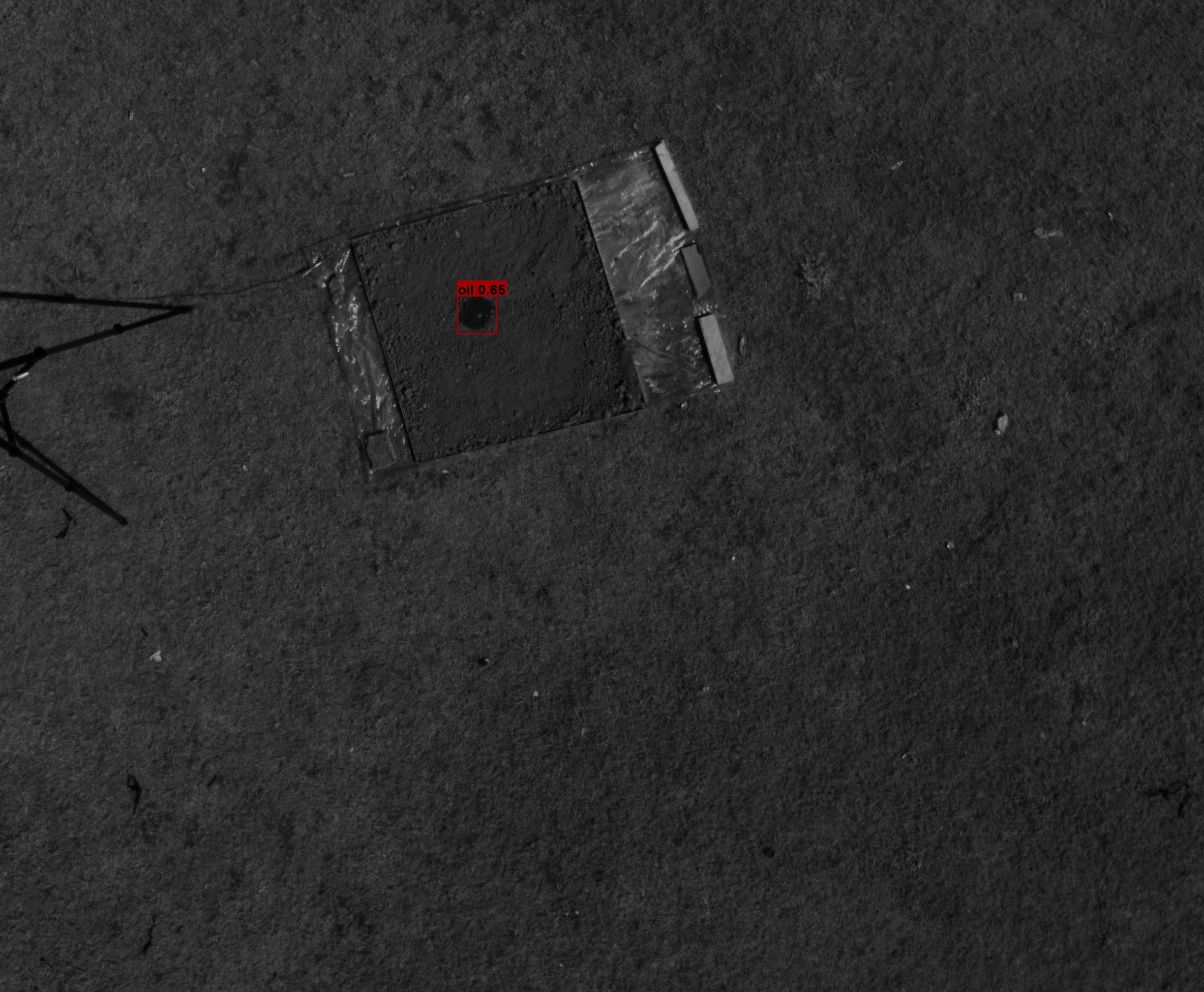
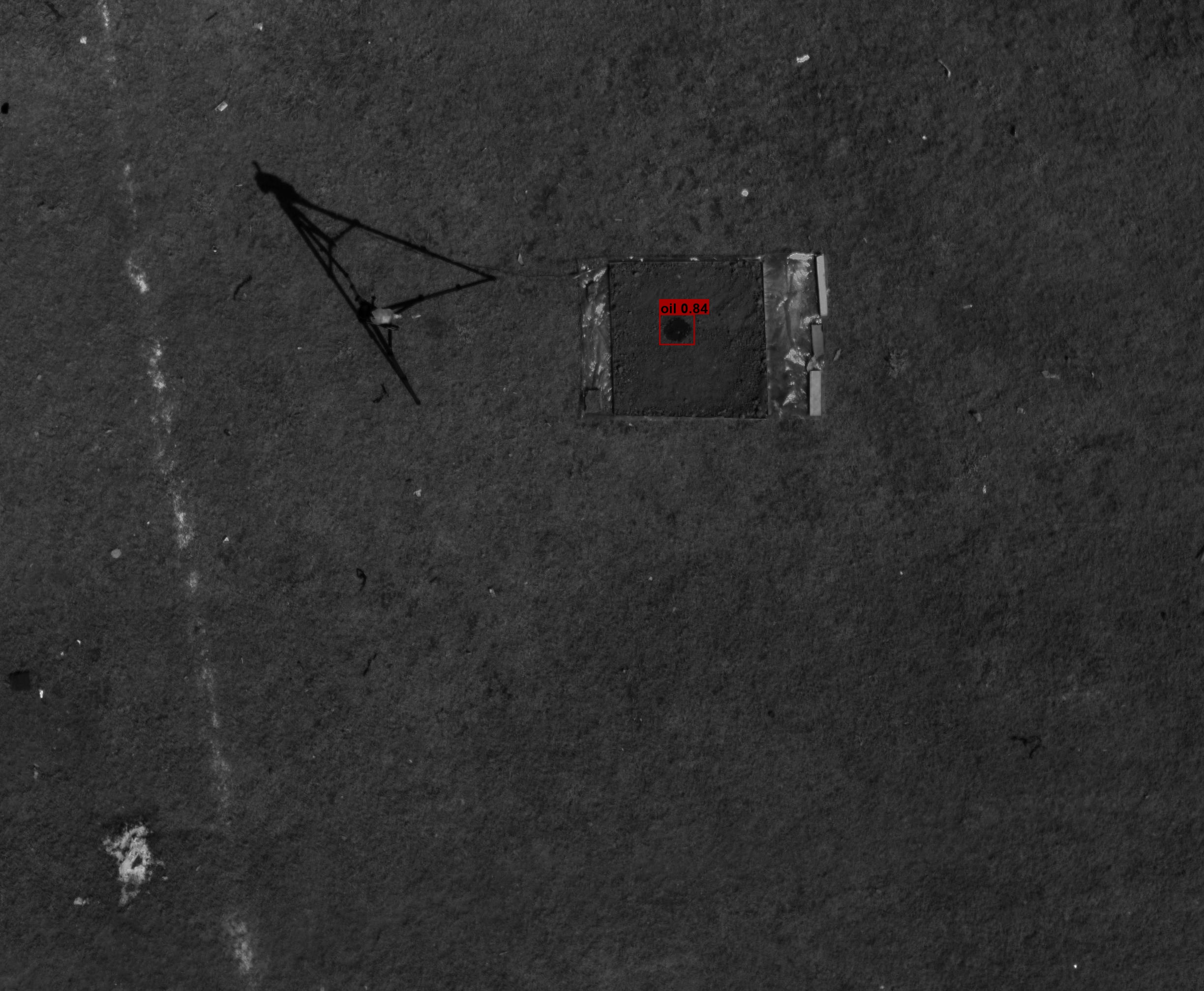
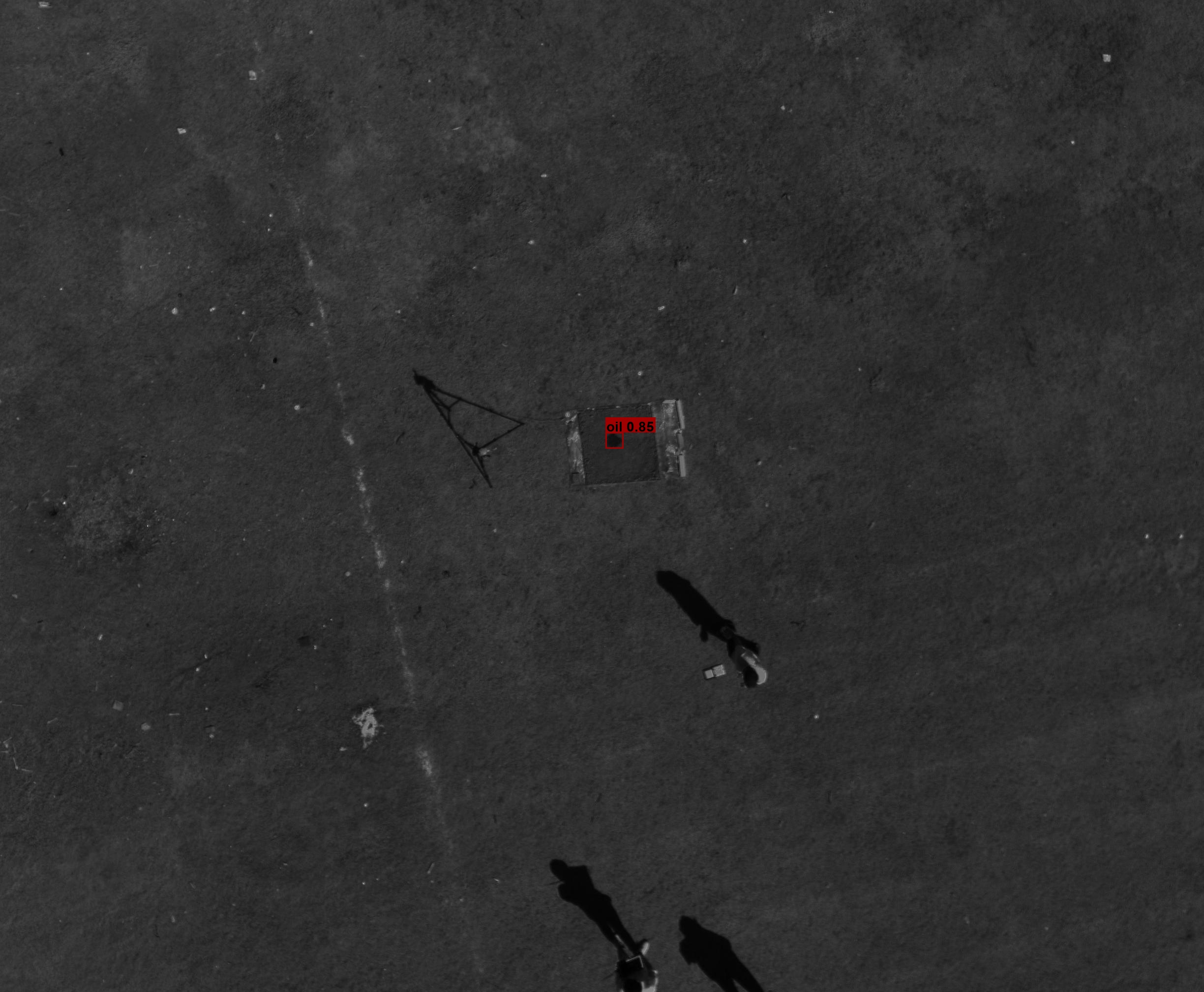
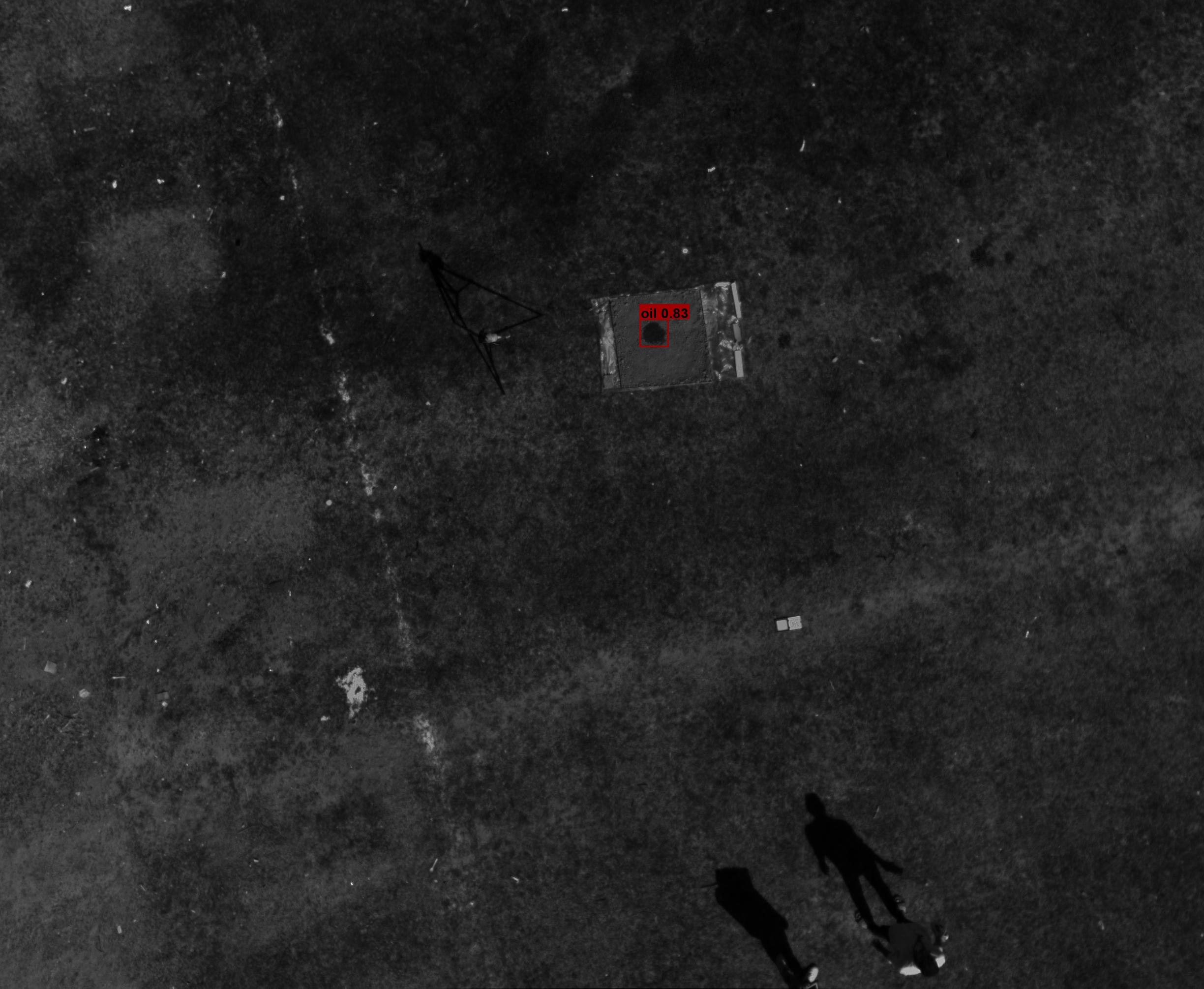
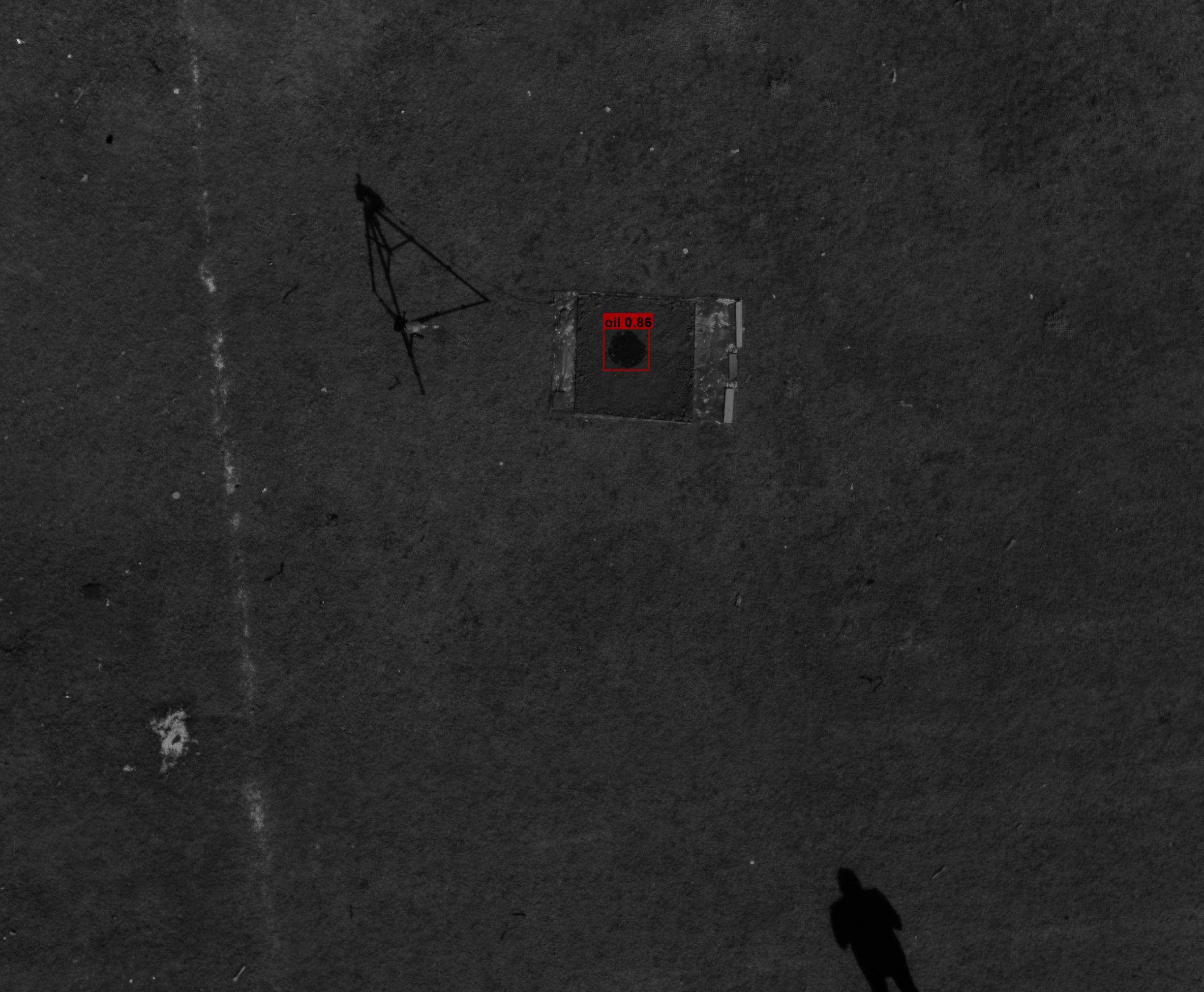
The experimental testbed designed to replicate realistic surface oil leakage scenarios is displayed in this section. In this setup, oil is continuously released using a controlled drip mechanism at a rate of 5 drops per second. Multispectral data are collected at fixed intervals of 15 minutes, with the UAV hovering directly above the test area at altitudes of 15 m and 25 m. This experimental configuration enables time-resolved monitoring of oil spread dynamics and facilitates evaluation of model robustness under progressively evolving surface conditions.
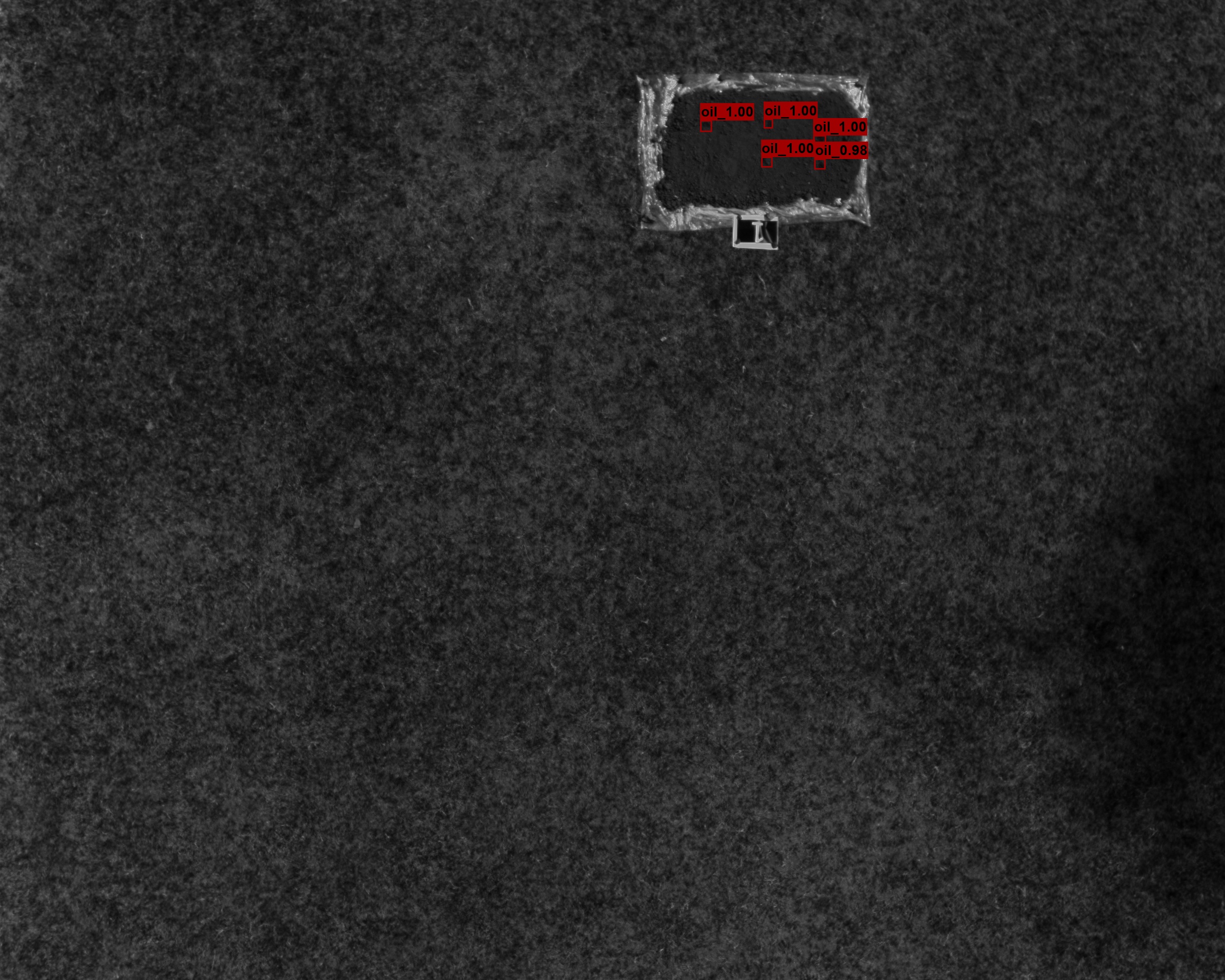
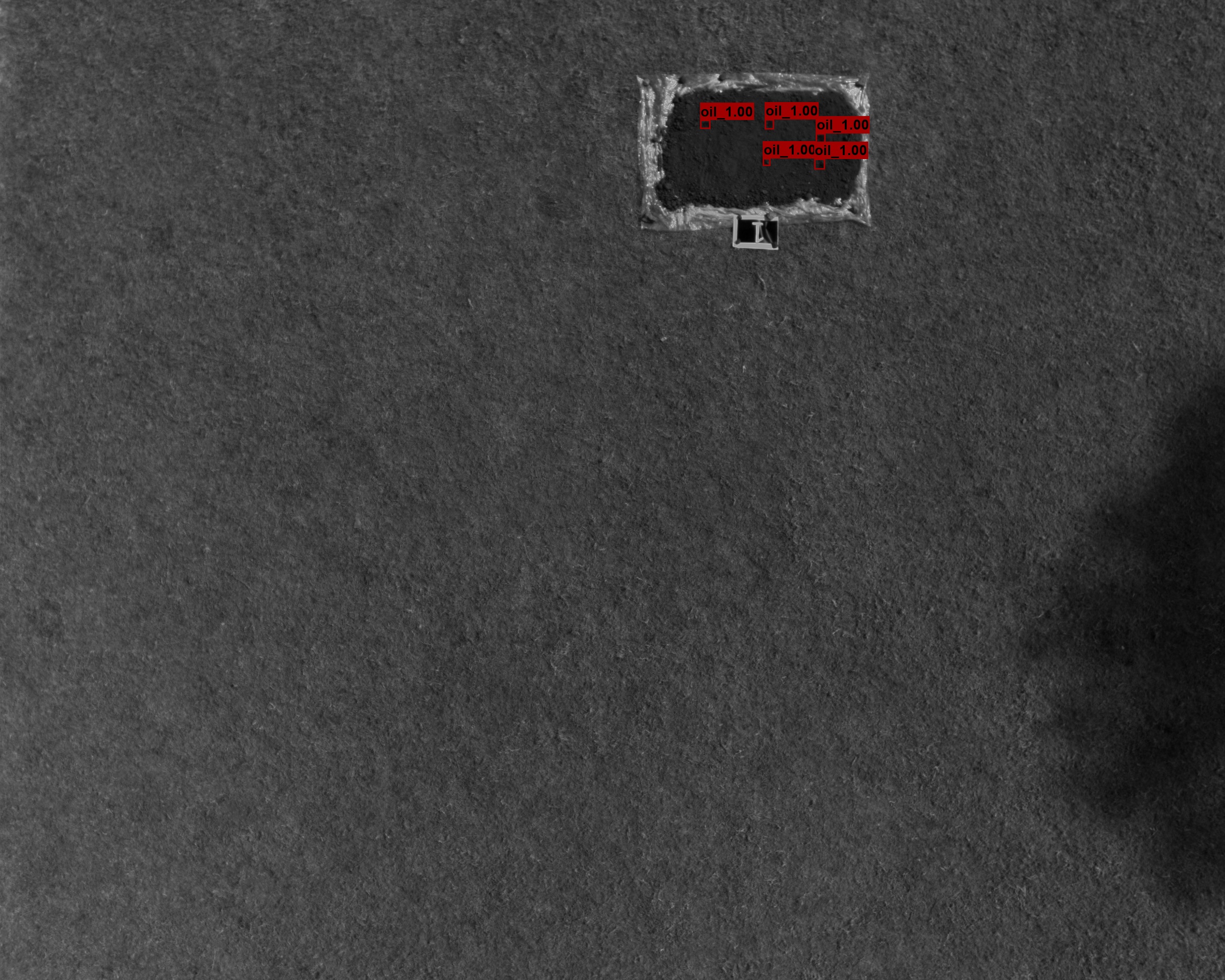
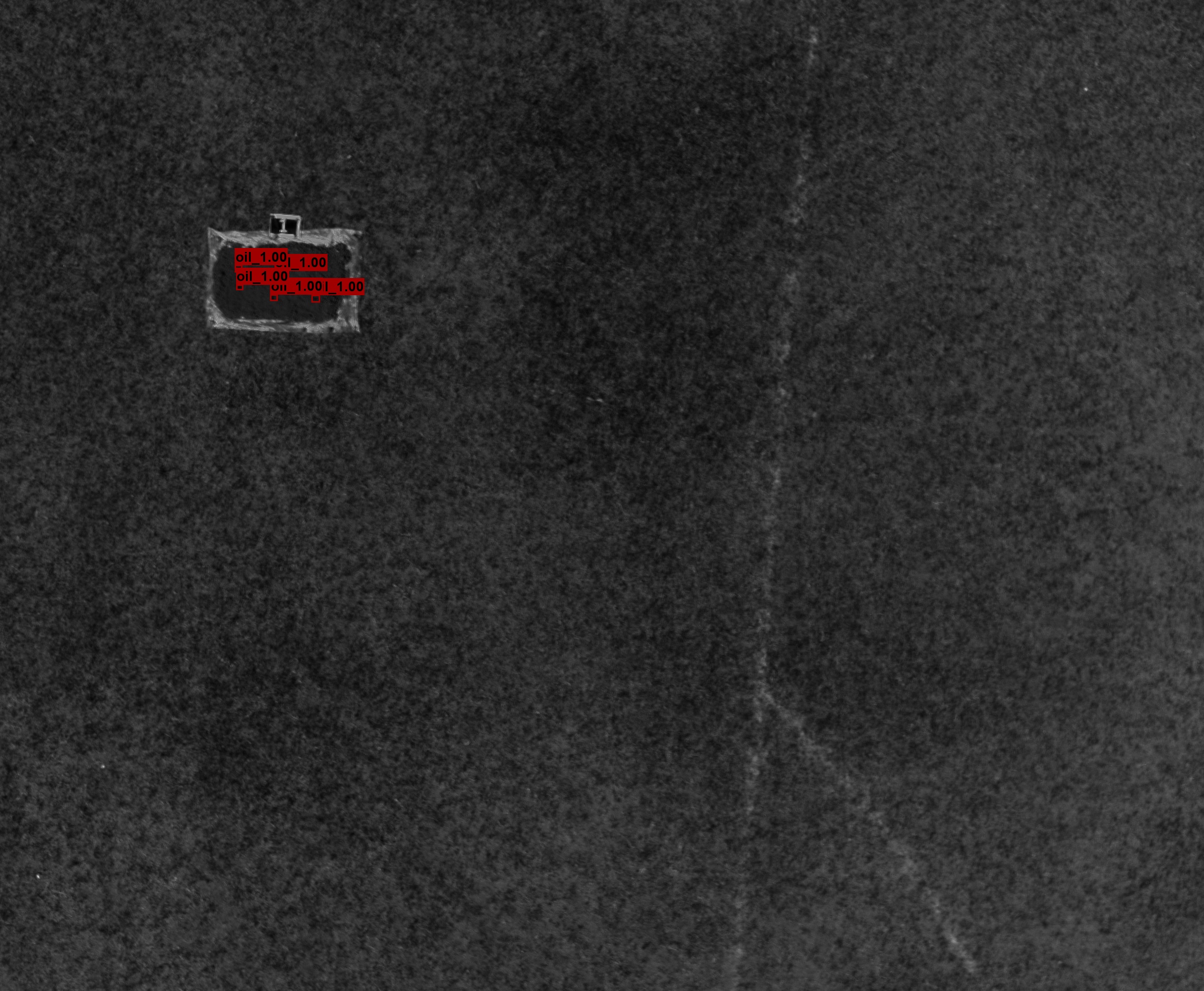
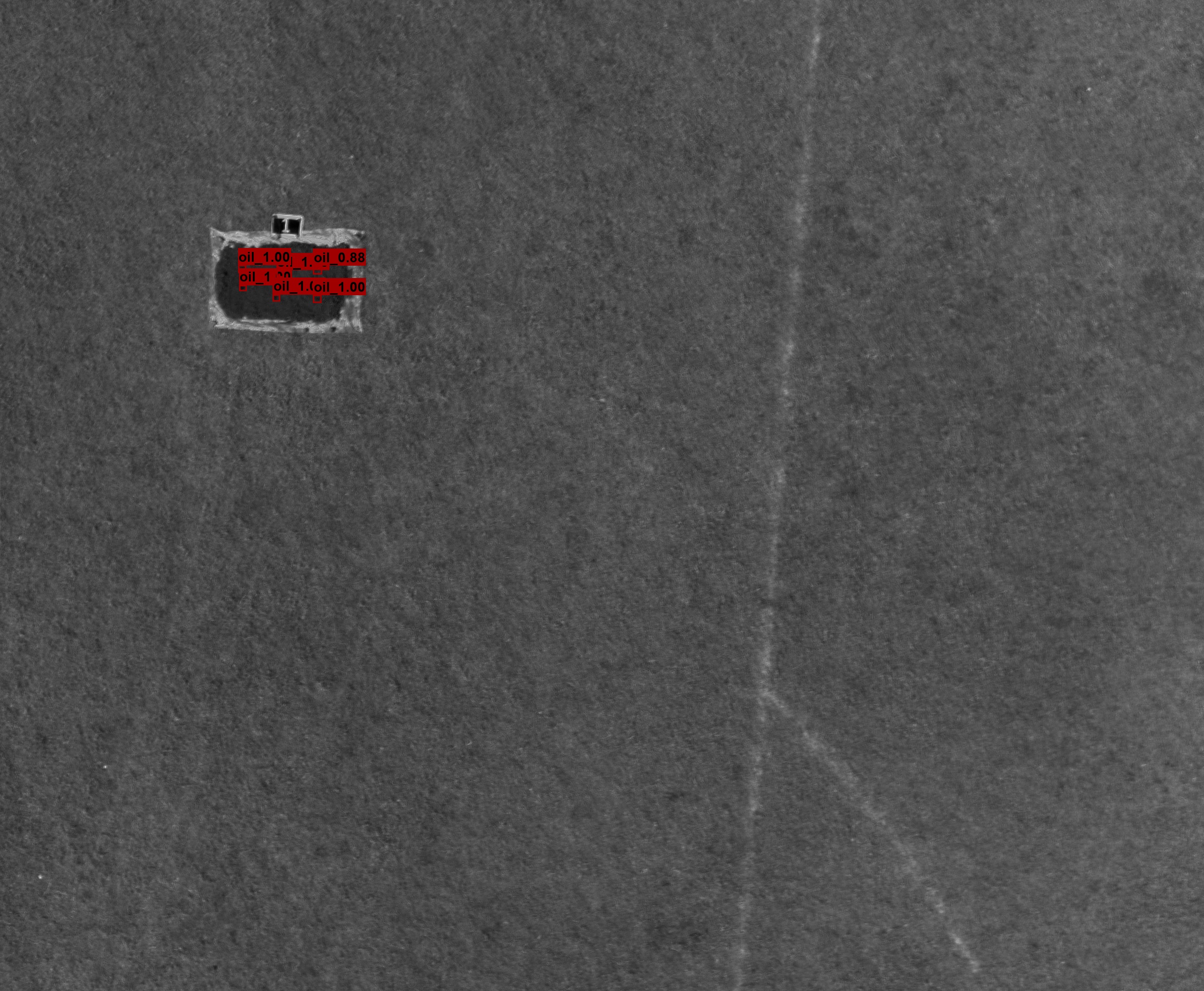
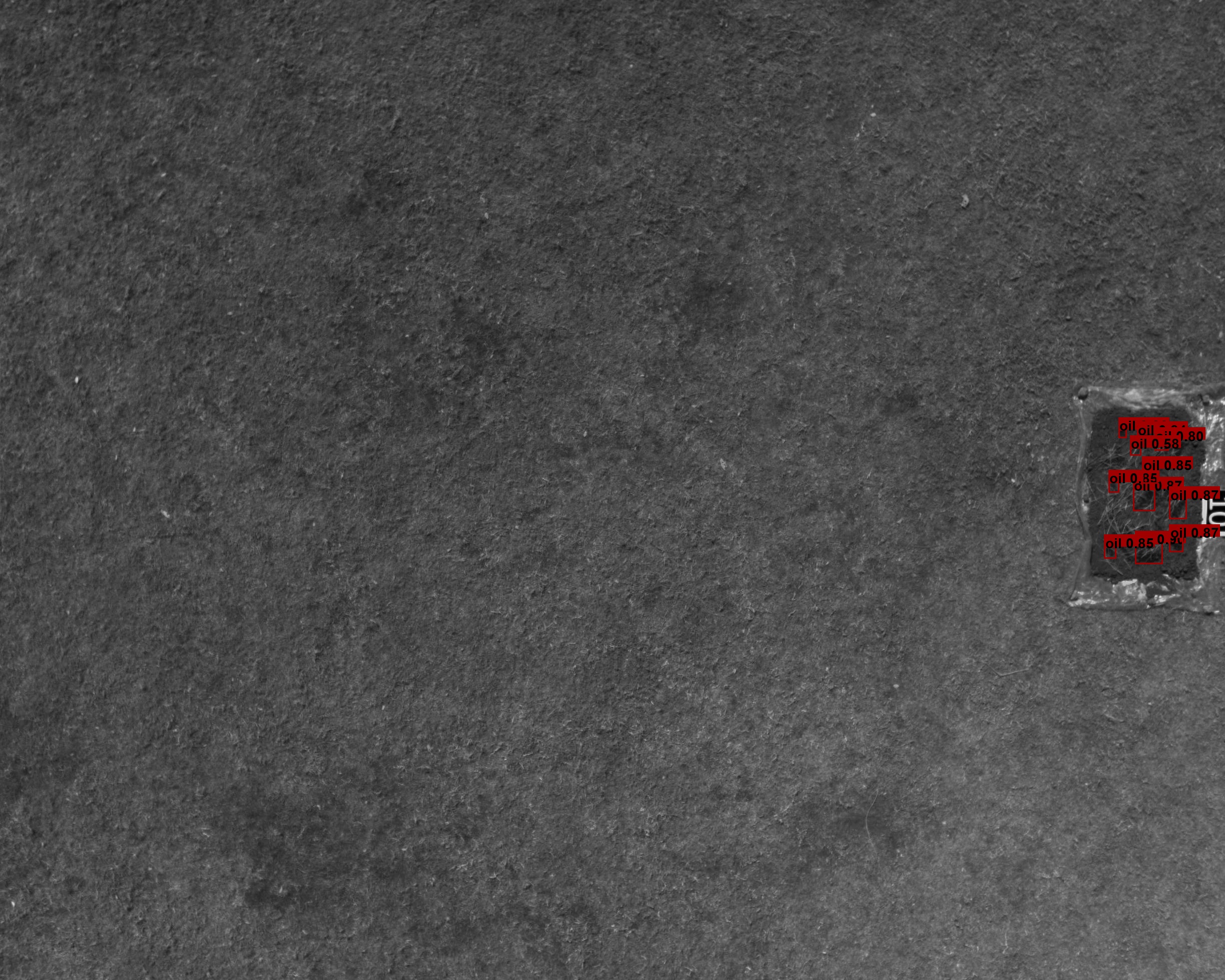
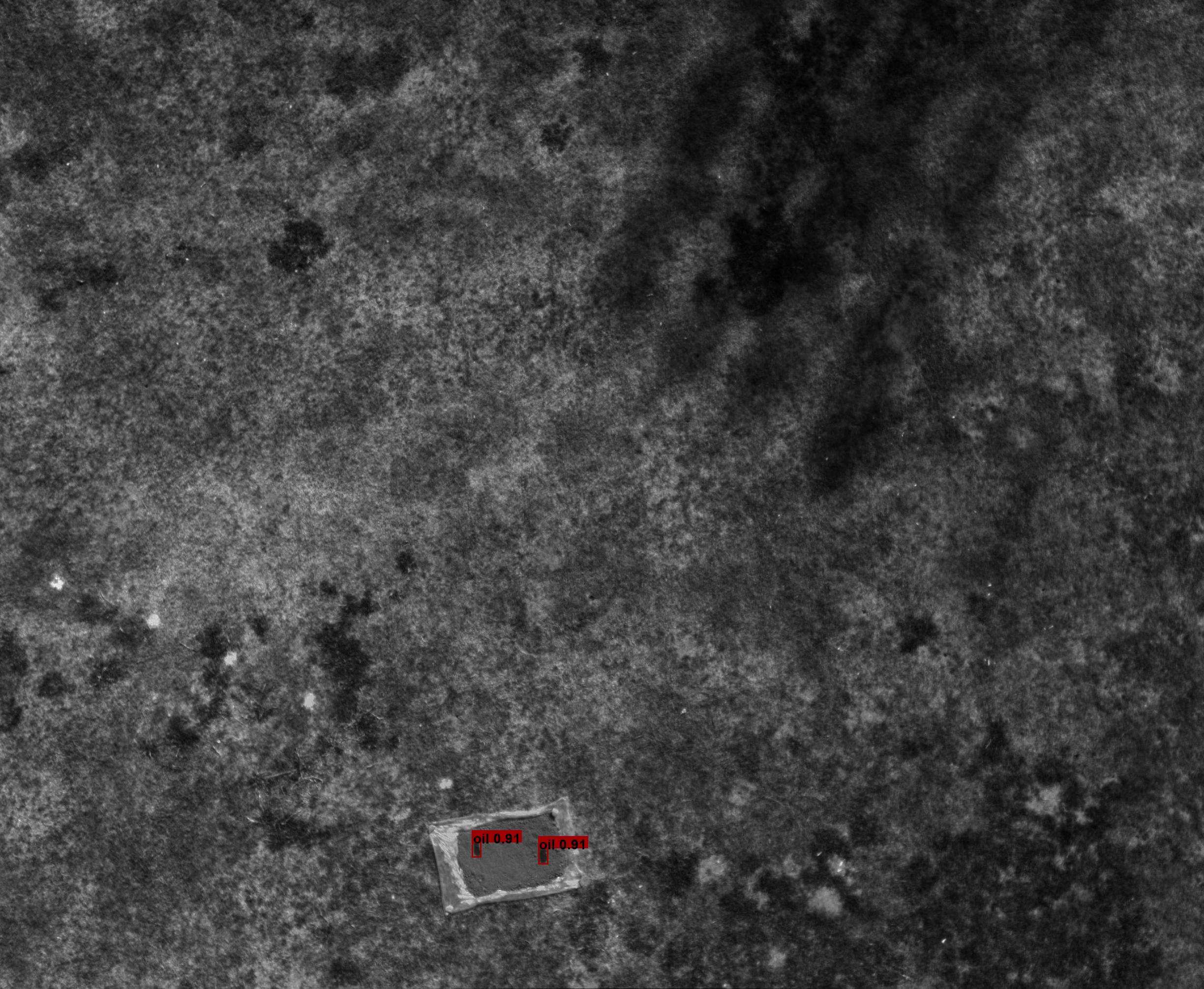
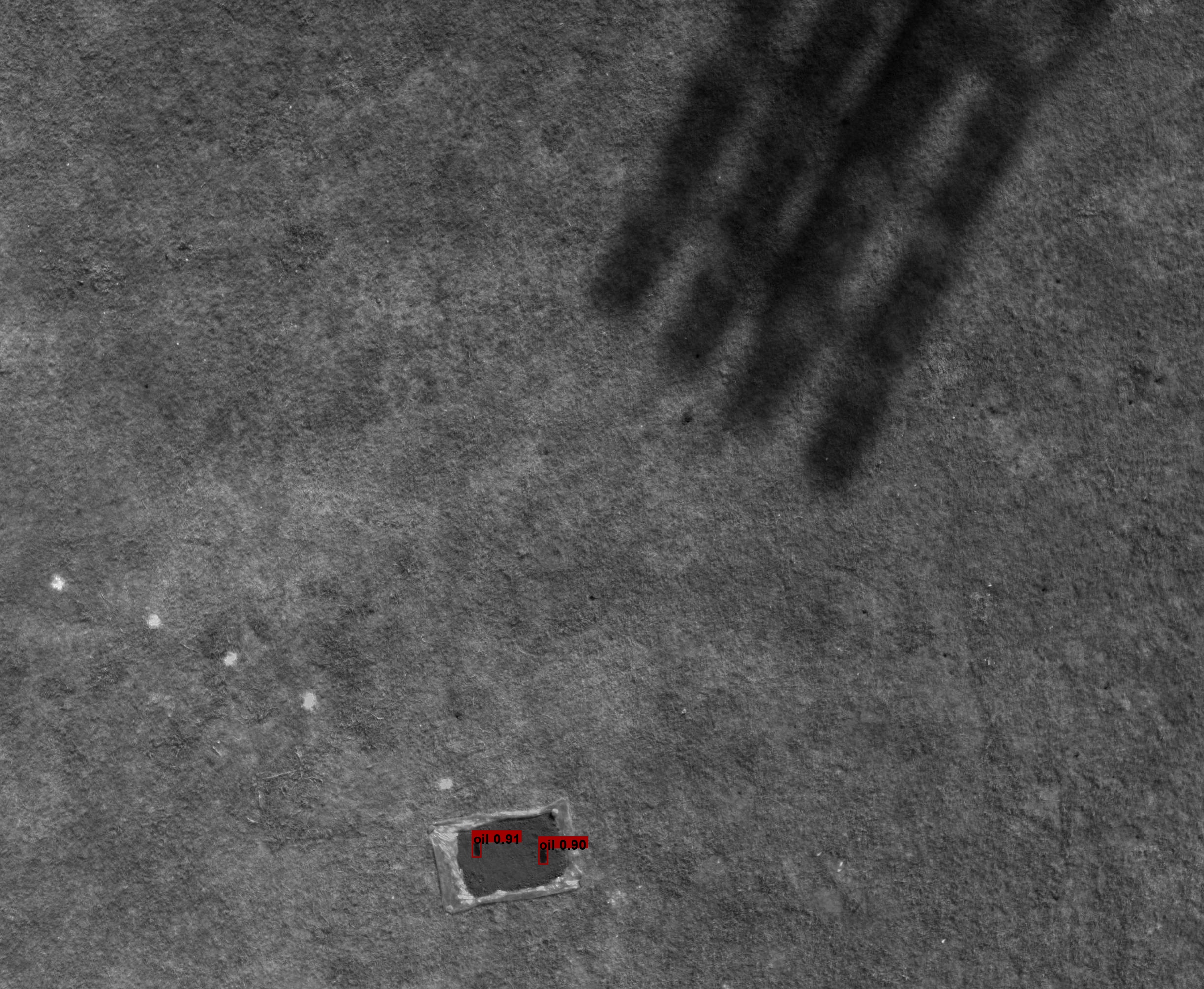
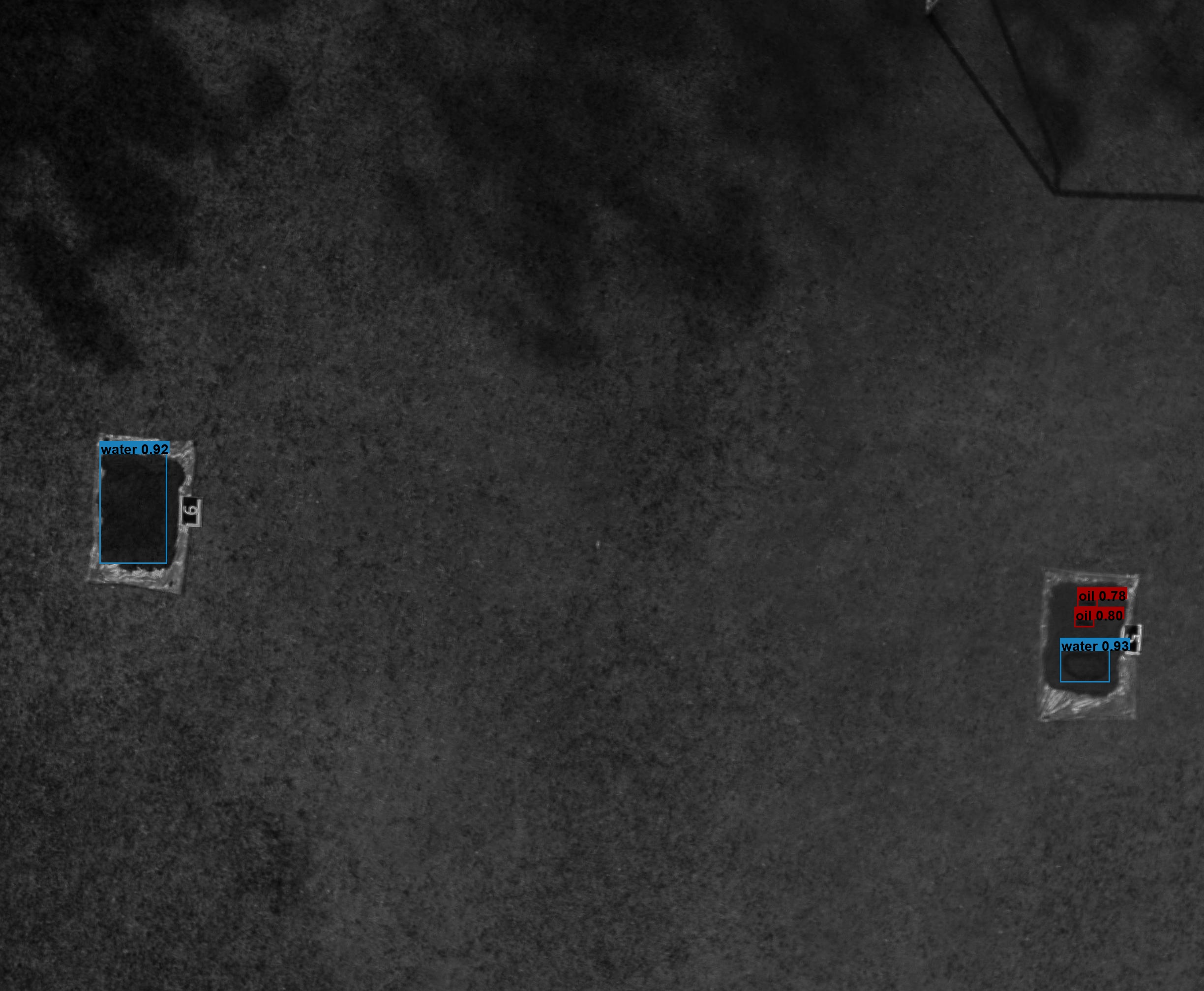
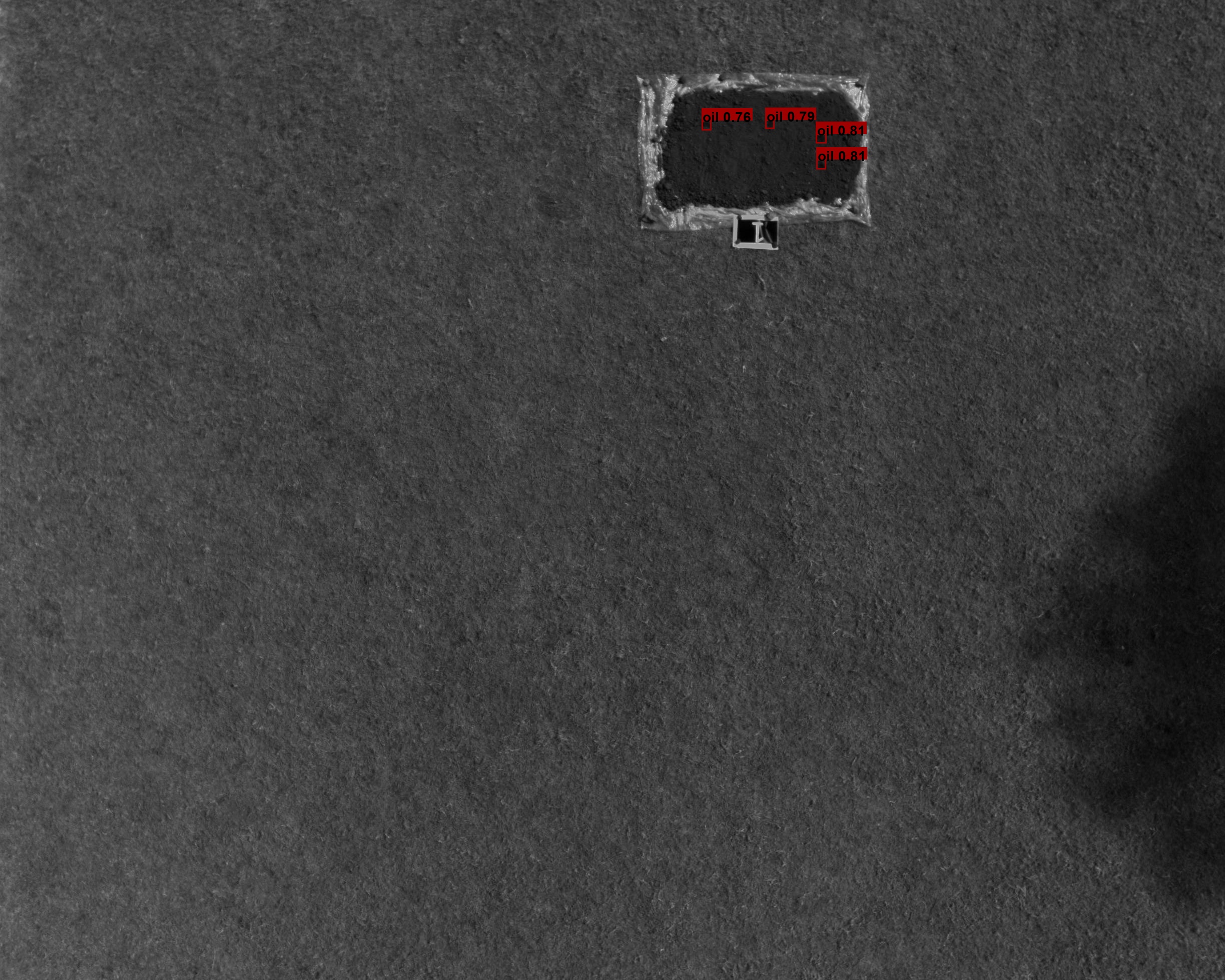
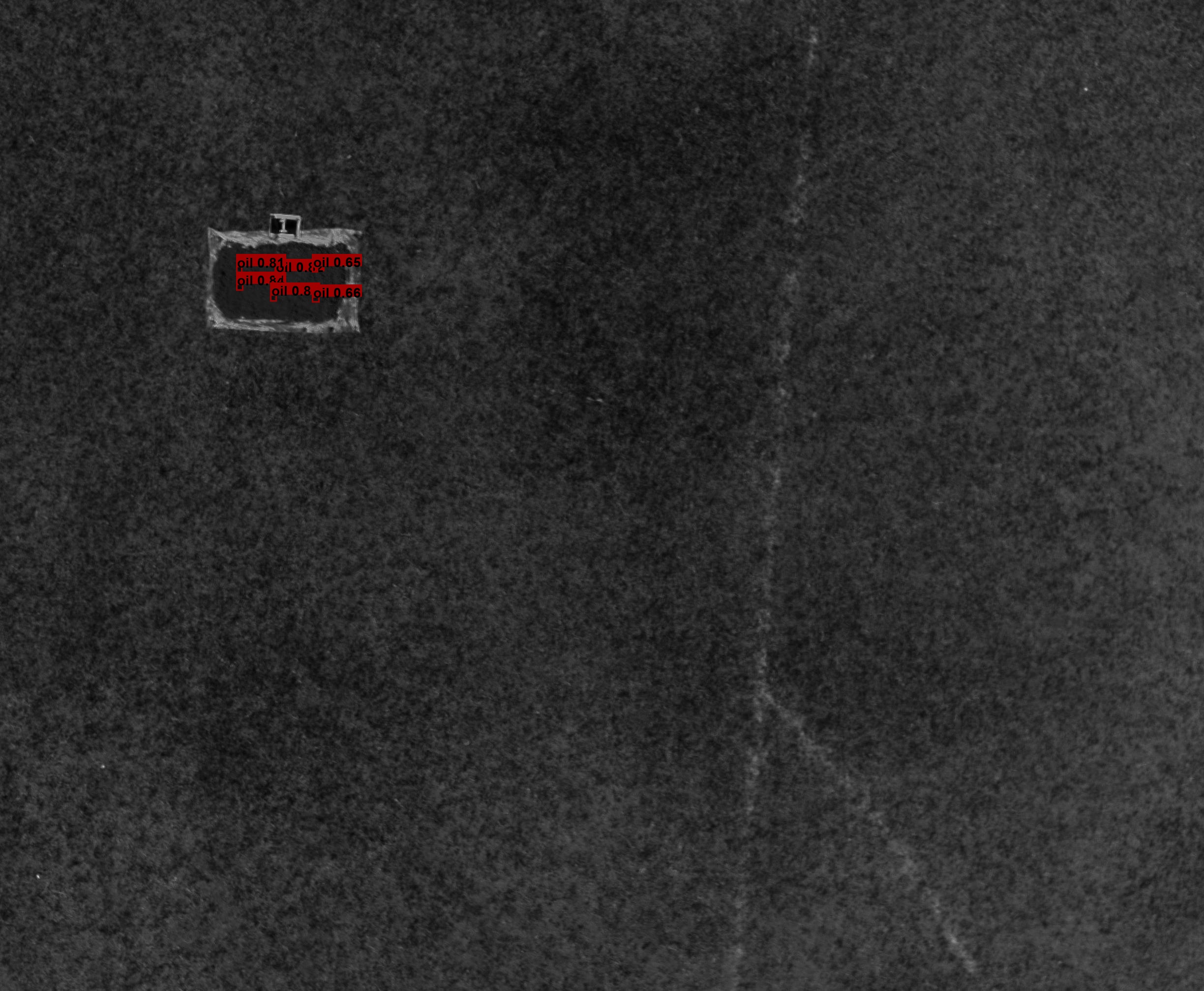
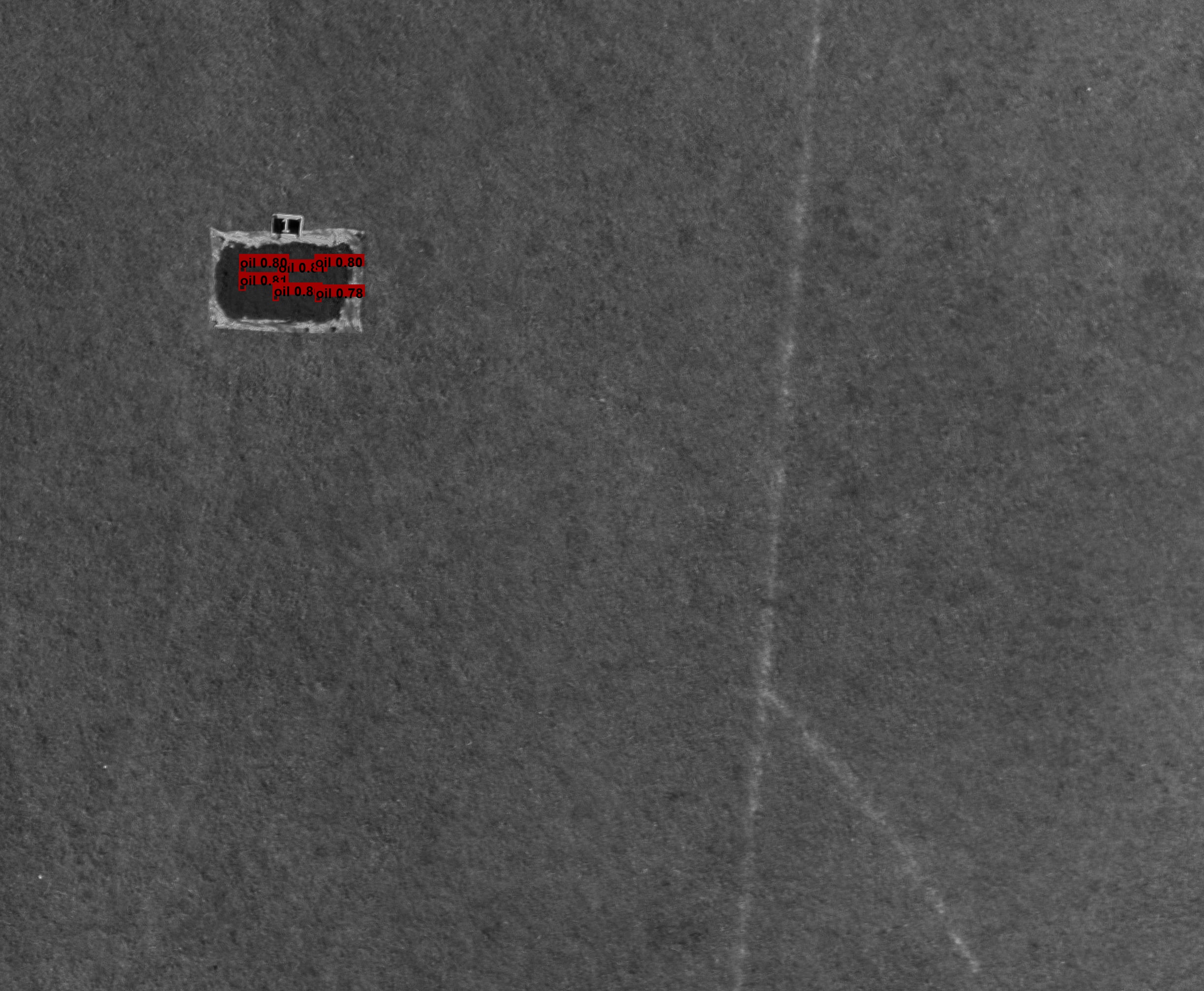
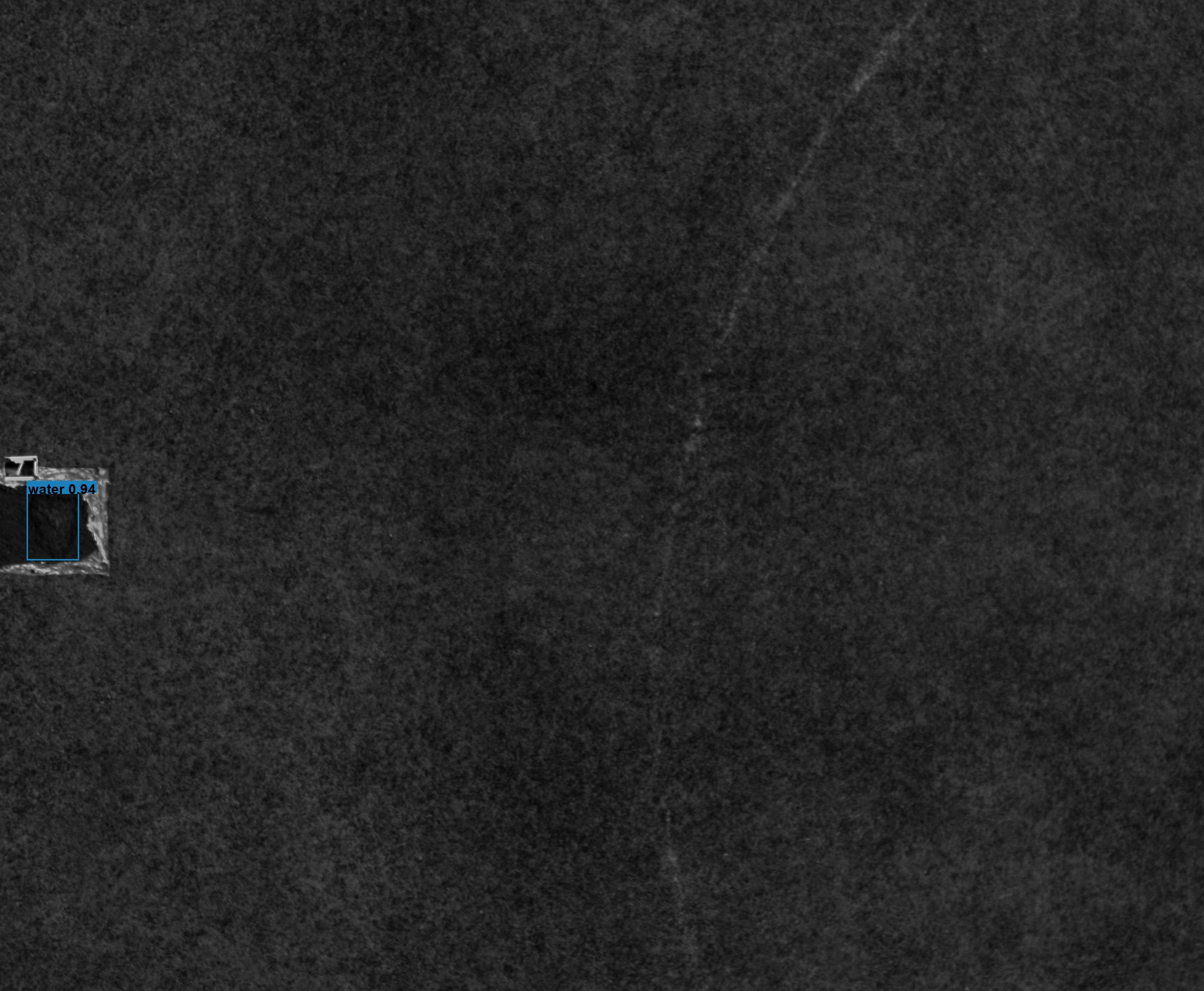
Test Results on Unseen Data (YOLOv11)
The following figures illustrate the detection performance of the YOLOv11 model on previously unseen data acquired from Setup 3. These results demonstrate the model’s ability to generalize to dynamic oil release scenarios and varying spatial extents of surface contamination.
Citation
    @misc{ovsw2025,
    title={UAV-Based Multispectral Imaging for Surface Oil and Water Leak Detection Using Deep Learning},
    author={},
    year={2025},
    journal={}
    }